Margaret Barthel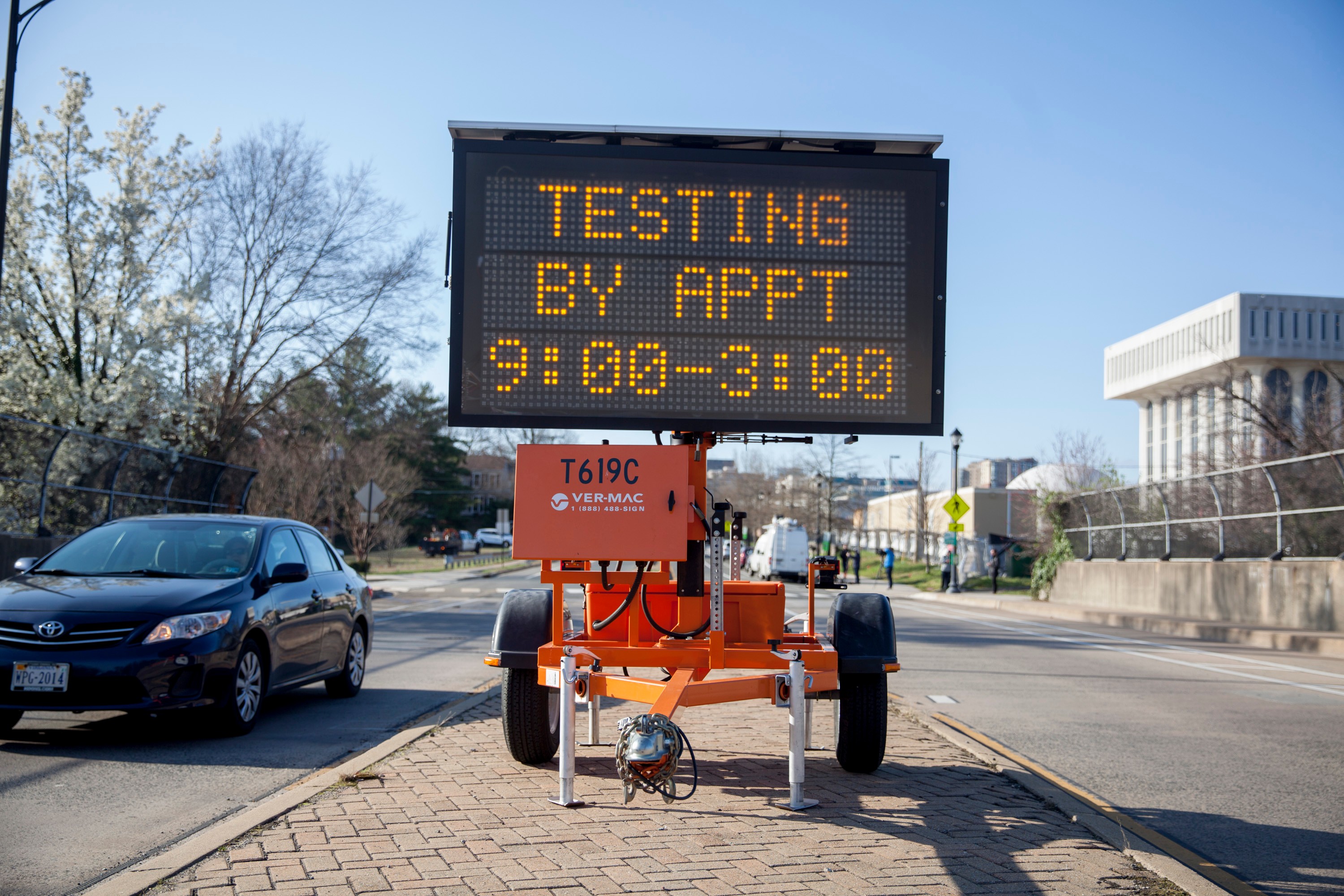
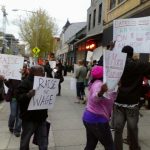
Two Saturdays ago, Chelsea Serrano Piche took a bus from her home along Columbia Pike up to North Arlington. There a crowd of protesters, led by the local NAACP chapter, gathered and marched together over Memorial Bridge into D.C. to join thousands of demonstrators calling for an end to police violence and racism. She wore a mask and noticed that most of the people she marched with did the same.
Piche didn’t think much about trying to get tested for COVID-19 until later in the week, when her employer requested that she get tested before returning to the office. She works at an architecture firm in Falls Church that is beginning a staggered reopening with groups of employees.
So Piche started Googling. But she quickly ran into a roadblock; most public testing options in Northern Virginia require that the patient be symptomatic, have a referral from a doctor or have had contact with a known case. Many also require an appointment. Piche, who does not have a primary care doctor, checked none of those boxes.
“It was a Friday morning and I was trying to see if I could get back in [to work] on Monday,” she told DCist. “I was looking for a place that neither required a referral nor an appointment.”
Piche couldn’t find any public testing place in Northern Virginia that fit the criteria.
Testing is limited to people with symptoms, or by appointment only
The D.C. region is in the midst of two significant public health events related to the pandemic at once: a large-scale, sustained season of protests against the killing of black people by law enforcement, and the reopening of the region’s economy. Both could result in the spread of the coronavirus.
The District has ramped up testing in recent weeks, with more than a dozen walk-up testing sites and additional free testing in some of the city’s firehouses and along protest routes, along with newly announced free antibody testing, too. Mayor Muriel Bowser has urged protesters to take advantage of the new options and get tested.
But in neighboring jurisdictions in Virginia and Maryland, there are still restrictions on quick and free access to COVID testing, as Piche discovered.
The Alexandria Health Department has been working with local partners to increase their testing capacity, according to population health manager Natalie Talis. But the guidance on who should get tested in Alexandria right now is limited to “people with symptoms,” she says.
Could that change in future as the economy reopens and protests continue?
“That would really depend on ongoing guidance from the Virginia Department of Health as well as the [Centers for Disease Control and Prevention],” Talis says.
The story is similar in Fairfax and Arlington counties. Many of the testing options require a physician referral, an appointment, and symptoms or recent contact with a known case. The guidance from those health departments focuses on protesters keeping themselves safe during protests, not getting tested afterwards.
In the Maryland suburbs, people without symptoms or who haven’t had contact with a person with COVID-19 can still get tested — but in most cases they’ll need to make an appointment, still a barrier to entry for some.
In Montgomery County, the health department is recommending that people who have been to protests try to get tested, according to spokeswoman Mary Anderson. The county-run free testing options are by appointment only — as are a significant majority of testing sites at urgent care clinics and pharmacies listed on the Montgomery County website — but patients don’t need to have symptoms to get a test. The county also hopes to begin sending mobile testing units to affected communities soon, which wouldn’t require symptoms or an appointment.
The Prince George’s County Health Department recently opened up a third testing location at the Laurel-Beltsville Senior Center. As in Montgomery County, an appointment is required at all the publicly run locations, but patients don’t need to have symptoms to get tested.
D.C. appears to be picking up the slack
“We would suggest demonstrators wear face coverings, wash hands frequently, stay six feet apart from others in crowds, and, if symptoms appear, stay home and call their health care provider,” wrote Fairfax Health Department spokesman John Silcox in an email. “Anyone should get tested if they experience symptoms of COVID-19 or if they believe they have been exposed to others with infection.”
The testing restrictions in Northern Virginia are in line with the guidance from the CDC about who should get tested. The CDC currently recommends that people take a test if they have symptoms, if they’ve been in close contact with someone who has contracted the disease, or if they live or work in settings such as nursing homes, jails, or factories.
“Clinicians should use their judgment to determine if a patient has signs or symptoms compatible with COVID-19 and whether the patient should be tested,” CDC guidance reads.
On Friday, the CDC recommended that people attending protests or other large gatherings wear masks in an attempt to mitigate spread.
Similarly, the Virginia Department of Health released a statement in early June, supporting protesters’ rights to express themselves and noting concerns about the spread of the virus in the midst of protests. But the department ultimately only urged people who had been to protests and were showing symptoms to consider getting tested — though it acknowledged that asymptomatic or mildly symptomatic cases could spread the virus.
“We support the right to protest, and we also want people to be safe. People can have COVID-19 and not show symptoms or have only mild symptoms and unknowingly spread the virus to others. For some people, particularly those with underlying health conditions, the virus can be life-threatening. We urge people who have symptoms such as fever and cough to stay home and to get tested,” said Virginia State Health Commissioner M. Norman Oliver in the statement.
Piche says the fact that mildly symptomatic or asymptomatic people can transmit the disease complicates the decision making of friends of hers in the restaurant industry, who want to attend protests but don’t have the ability to work from home and quarantine afterwards.
“They’re having to choose whether to exercise their civil rights or go to work, because our government has not enabled us to enable ourselves to make informed decisions,” she says.
Piche is frustrated that testing in the suburbs isn’t as readily available as it is in D.C.
“It’s just one of those reminders that you may be part of one region, but you are not in the same place, once you cross that river,” she says.
It appears that the District’s testing expansion is picking up the slack from neighboring jurisdictions. Last week, D.C. reported that over 60,000 people had been tested in the city — and more than one-fifth (21.4% to be exact) were not residents of the District.
Arlington and Alexandria health officials say they’re planning more one-day neighborhood testing events to offer free, no-appointment, no-referral COVID testing in hard-hit areas. In Arlington, officials are planning a second day of community testing at Barcroft Community Center in South Arlington on Friday, according to an emailed statement from Dr. Reuben Varghese, the county’s public health director.
“This will be very similar to the event we held last month done in conjunction with the Virginia Department of Health,” Varghese wrote. “Through VDH, no doctor’s orders or health insurance or appointments is needed. Testing will be drive up or walkup.”
Talis says that the Alexandria Health Department’s focus is on making sure patients have sustained access to health care as the pandemic continues, and less on one-off testing opportunities.
“That same person who got a negative test in that immediate way might get exposed or might get sick even later that day or the next day,” she tells DCist. “And so our priority is really about making sure that people know where they can get care, not just for that one day, but seven days a week if they’re ill.”
But what Piche needed was a one-off test. So when a friend advised that she “play the system back,” she took that advice.
A few days ago, Piche did: She was experiencing some muscle aches, a possible symptom of COVID-19. “You never know, maybe my cramps were masking COVID systems,” she says. So she went to a local CVS and got tested.
Having the tests results nearly two weeks after attending the protests “won’t necessarily change my behavior at this point,” Piche says. “But just knowing will be better.”