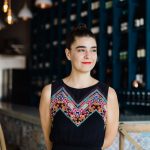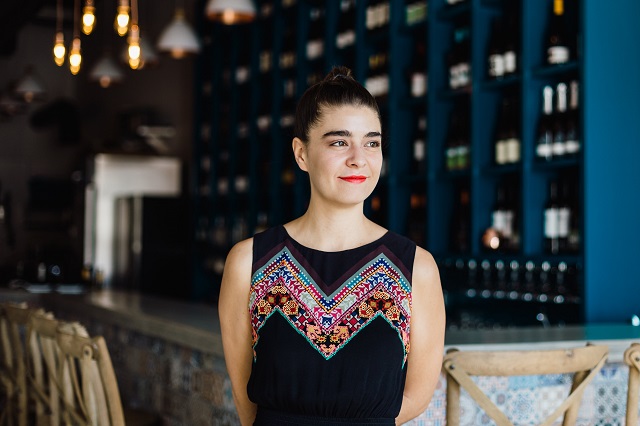
Dio Wine Bar, an H Street mainstay for almost three years, is temporarily closed while owner Stacey Khoury-Diaz recovers from the toll of running a business in the era of COVID-19.
Her “last day for a while” came Sunday after she sold out of all of the natural wine bar’s inventory last week, Khoury-Diaz tells DCist. She’ll ideally reopen Dio whenever the city moves to Phase Three of reopening.
For now, D.C. remains under Phase One of reopening, and restaurants are permitted to offer outdoor dining with restrictions. Phase Two could come as early as Monday, and would allow restaurants to reopen indoor seating at half capacity; in the third phase, restaurants can apply to offer more seating.
But even then, Khoury-Diaz says, it’ll depend on staff members’ comfort level and what’s financially feasible.
“Because of our sales, I do have some rent covered for future months so I am hoping to reopen,” she says. “There’s just so much uncertainty. I’m trying to wait for a period until we know more.”
Sharing her thoughts in a statement on Facebook last week, Khoury-Diaz wrote, “I’ve been fighting so that I can give myself a livelihood. I’ve been fighting to keep my business alive. I kept thinking, I got through my first year of business while pregnant—this can’t possibly break me. I was wrong.”
Khoury-Diaz isn’t the only restaurant or bar owner grappling with uncertainty about operating during the pandemic. Mayor Muriel Bowser suspended sit-down service at every restaurant and bar in mid-March to prevent the spread of COVID-19. The move cut off many establishments‘ main source of revenue and forced them to shift to delivery and takeout service. Others opted to remain shuttered during the pandemic. The initial hit to the service industry has led to widespread layoffs and restaurant closures.
As restaurants scrambled to partially reopen with outdoor seating for Phase One last month, owners wondered if the revenue they would generate with patio-only dining would make it worth it—or if customers would even show up. Waitstaff weighed the risks of coming back to work, and some have considered switching career paths altogether.
“Everything is a big question mark right now,” Jenay Doganay, a manager at Ankara, told DCist at the time. “It’s not going to be easy.”
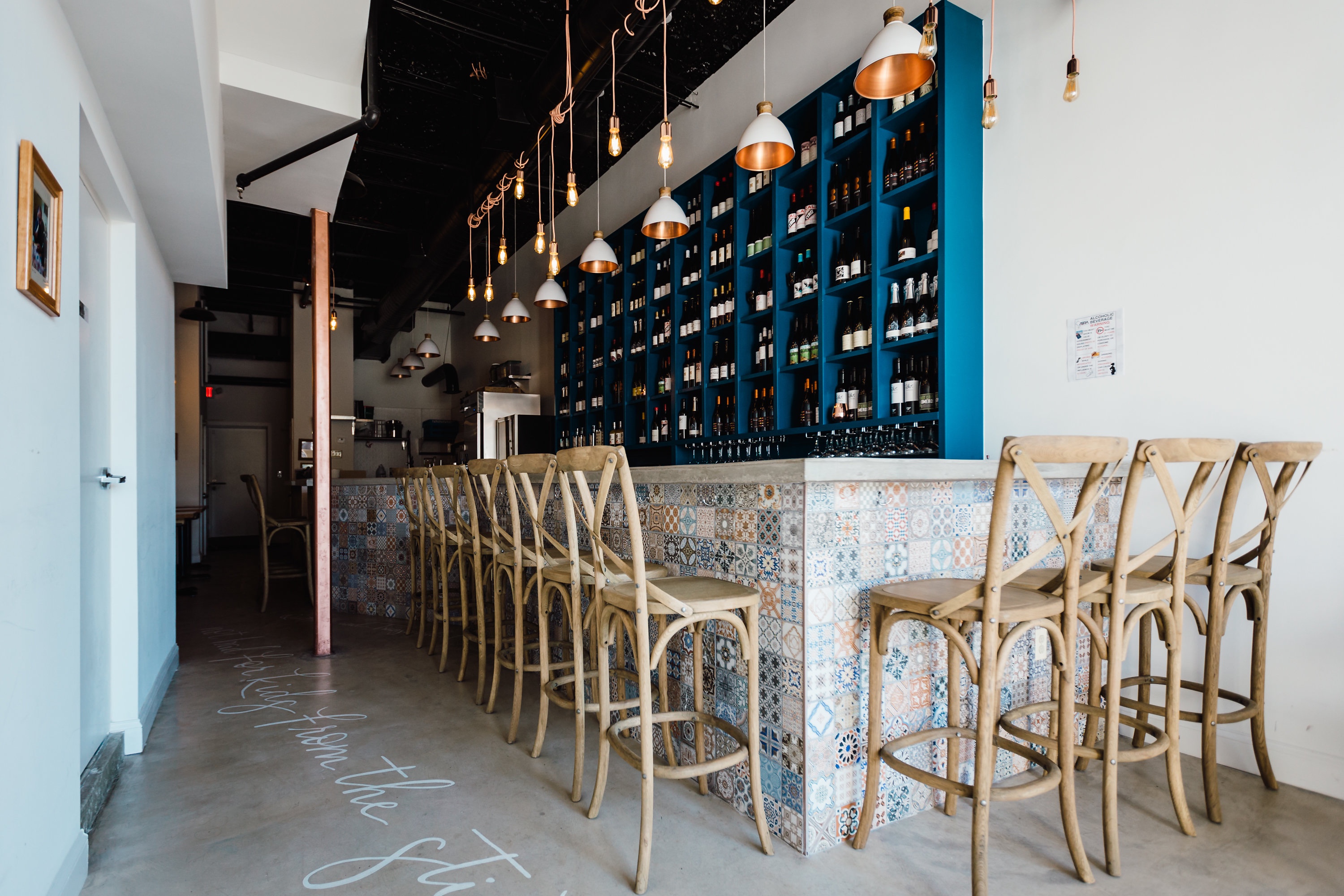
Khoury-Diaz opened Dio in September 2017, making it one of the first bars in the District to specialize in natural wine—vino that’s made out of organic or biodynamically grown grapes. The intimate, 30-seat bar is named after Dionysus, the Greek god of wine and festivity.
She considered keeping Dio closed in the first few weeks of the pandemic. But she ultimately reopened it as a pickup and delivery wine shop on April 1 to keep her staff employed while they figured out their next move. Sales were strong at first, but have since slowed: Dio didn’t make any money during the first week of Phase One, Khoury-Diaz says.
Dio was also one of the restaurants in D.C. to have an employee test positive for COVID-19. Khoury-Diaz promptly closed the bar for two weeks in mid-March as a result—the employee has fully recovered and nobody else got sick, she says.
Later that month, someone threw a rock through Dio’s window and stole $2,000 in wine. On social media, Khoury-Diaz called the burglary a “sucker punch.”
“A lot of orange wine was stolen last night,” Khoury-Diaz wrote on Instagram. “And someone out there is drinking some really funky shit today. And for the first time, I hope they don’t like it.”
COVID-19 complicated every aspect of the business, Khoury-Diaz says. An employee who went on vacation wasn’t allowed to return to work because she’d been around new people and staff didn’t feel safe around her. She remains on the payroll.
Khoury-Diaz also drove her three employees to and from work so they wouldn’t catch COVID-19 on public transportation in D.C. and Arlington.
“It’s what made us feel safe,” she says. “I don’t know how I would have felt or how anyone on my staff would have felt if we had made everyone find their own way to work, especially early on.”
And there was cleaning—lots of it.
Not only did staff sanitize things like bottles, doorknobs, light switches, and themselves, but Khoury-Diaz deep cleaned her car on a regular basis because she used it to make wine deliveries and shuttle her employees. By the end, Khoury-Diaz was spending six days a week at the wine shop.
“It’s become more than I literally have time in a day for,” she says.
Dio has had some financial help: Insurance payments made the wine bar whole again after the burglary. Money from the Small Business Administration’s Paycheck Protection Program loan will pay her employees through the end of June. And a D.C. Small Business Recovery Microgrant helped with rent, insurance, and all operation costs.
As D.C. reopened in late May, Khoury-Diaz opted not to serve wine outside, as restaurants are permitted to do during this phase, because she wasn’t convinced it would help the restaurant’s bottom line. Besides that, her staff didn’t feel safe doing it. And figuring out how to market the business and what products to move presented another challenge because people’s spending habits are changing during the pandemic.
In the end, Khoury-Diaz needs a break. “There’s just so much unpredictability and uncertainty,” she says.
For now, Khoury-Diaz plans to spend more time at home with her husband and 23-month-old daughter. And she’ll keep Dio alive on its social media where she’ll continue promoting its partners. She can’t wait for Dio to reopen as a bar again. She just doesn’t know when that will be.
“The space will still be Dio for a while,” Khoury-Diaz says. “It will just be a quiet Dio.”