 Victoria Chamberlin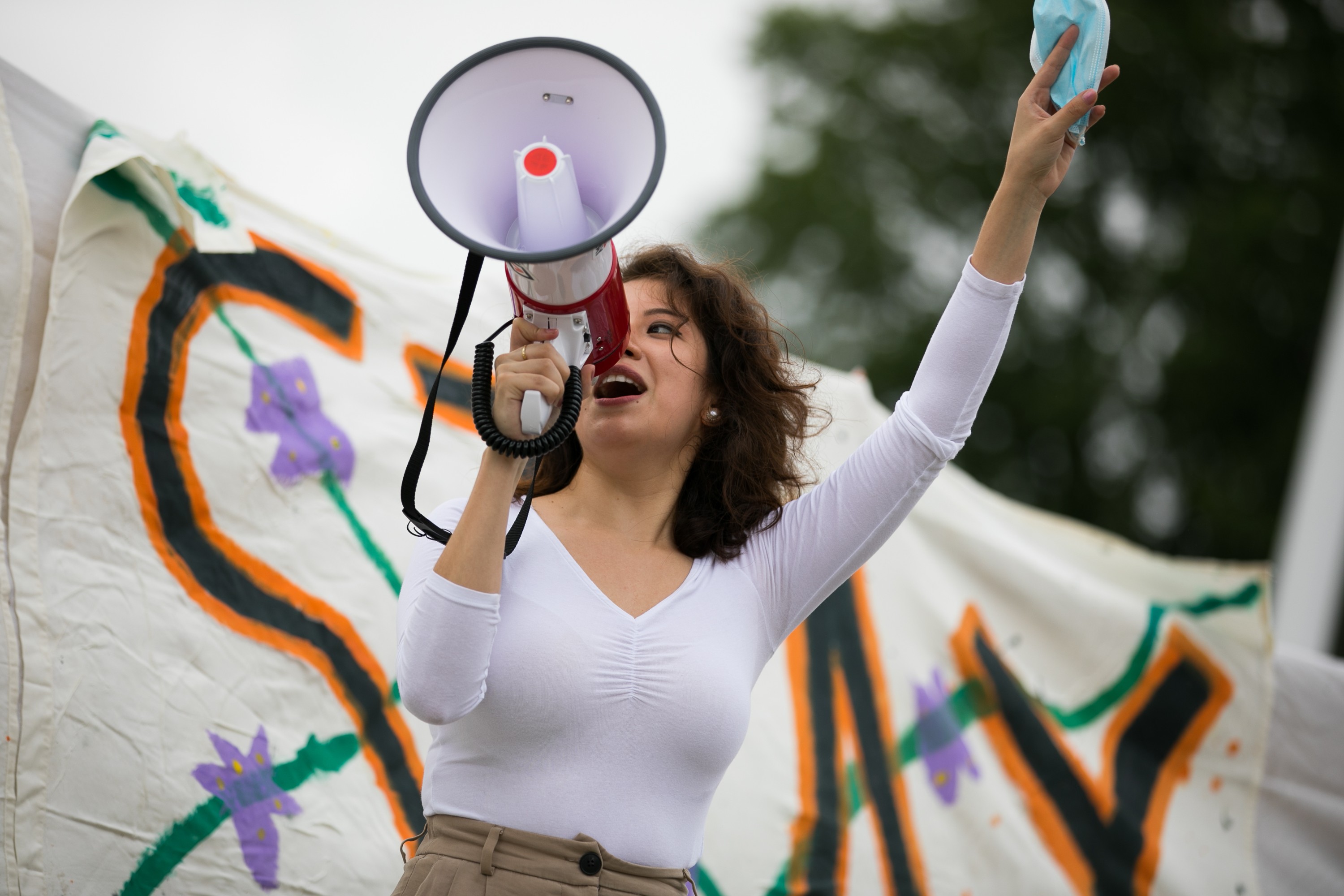
A group of young immigrants gathered Thursday morning at the Quaker Welcome Center in Capitol Hill to hear the Supreme Court ruling on DACA, or the Deferred Action for Childhood Arrivals program.
Claudia Quiñones, a DACA recipient and regional leader for the youth-led immigration advocacy group United We Dream, gave instructions to the group through a megaphone. In matching orange t-shirts, they walked toward the Supreme Court, where they planned to unfurl a thirty-foot banner with “here to stay” painted in giant, colorful letters.
About halfway there, Quiñones got a text.
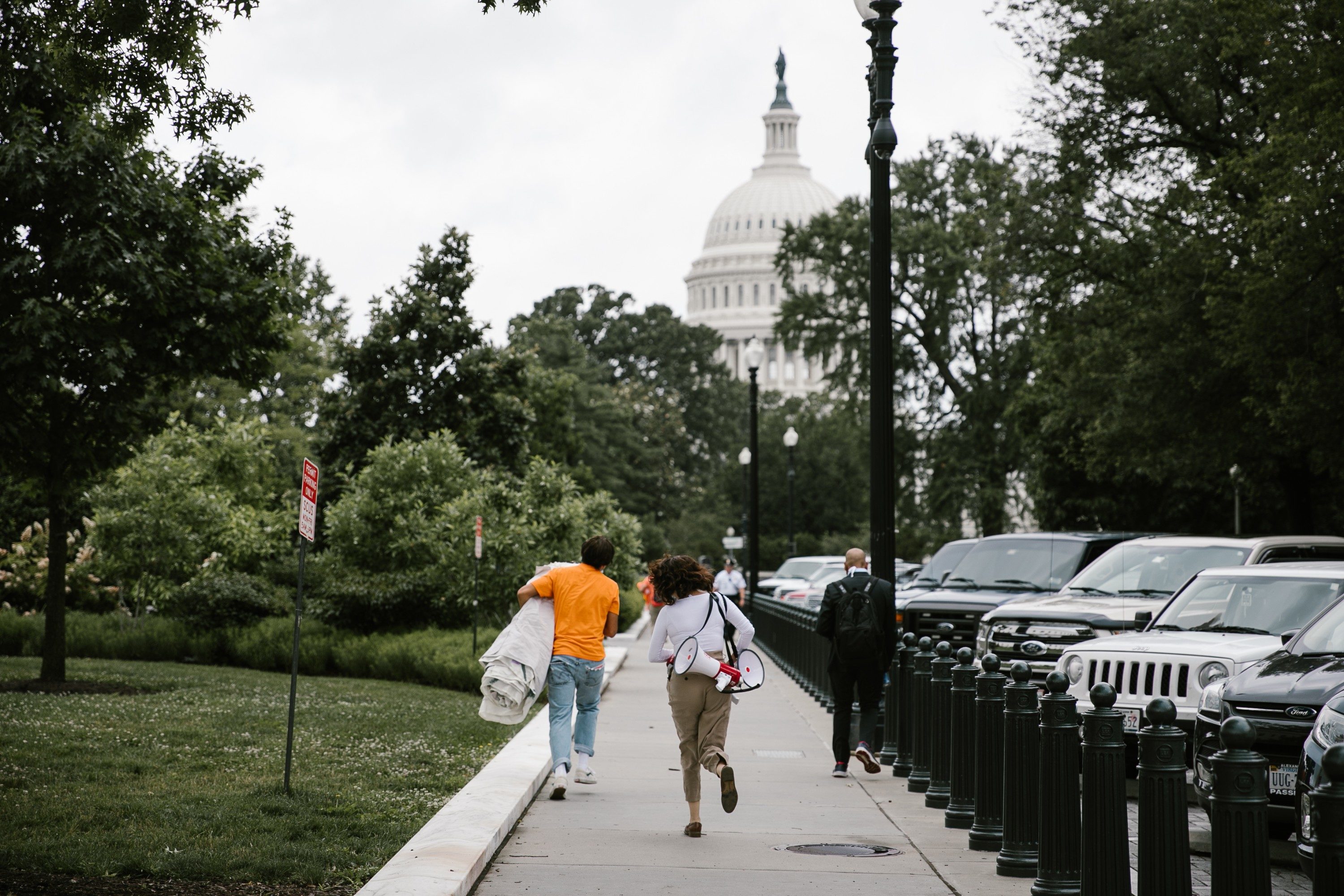
“There’s a decision!” She shouted to the rest of the group who had already crossed the street ahead of her. “Run! ¡Corra!”
They ran, struggling at times to carry the heavy canvas banner. But they made their way to the steps of the Supreme Court with big smiles on their faces hidden under face masks. They didn’t know the details of the decision yet, but they did know the decision was in their favor. There was no time to read, just to run and be part of history.
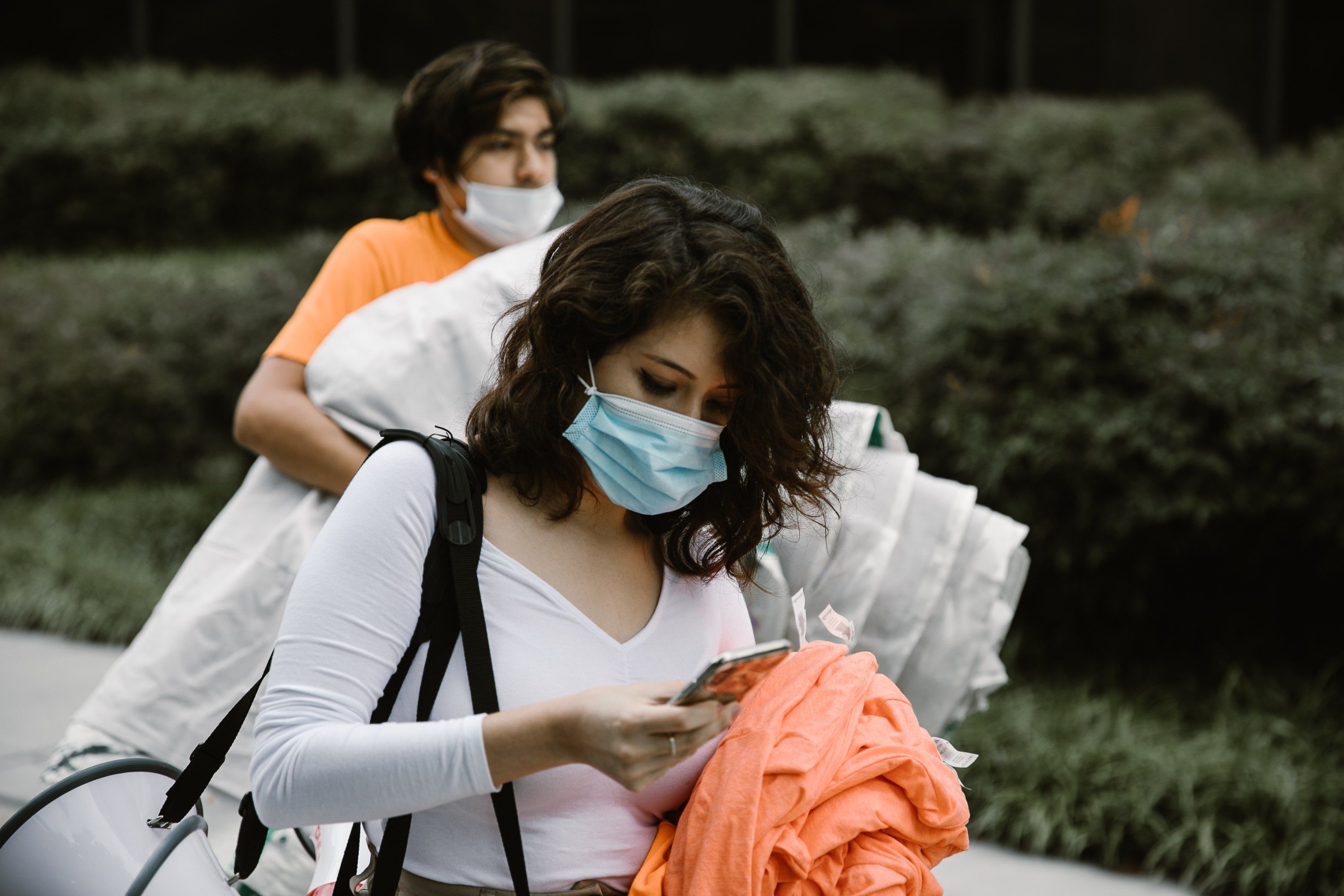
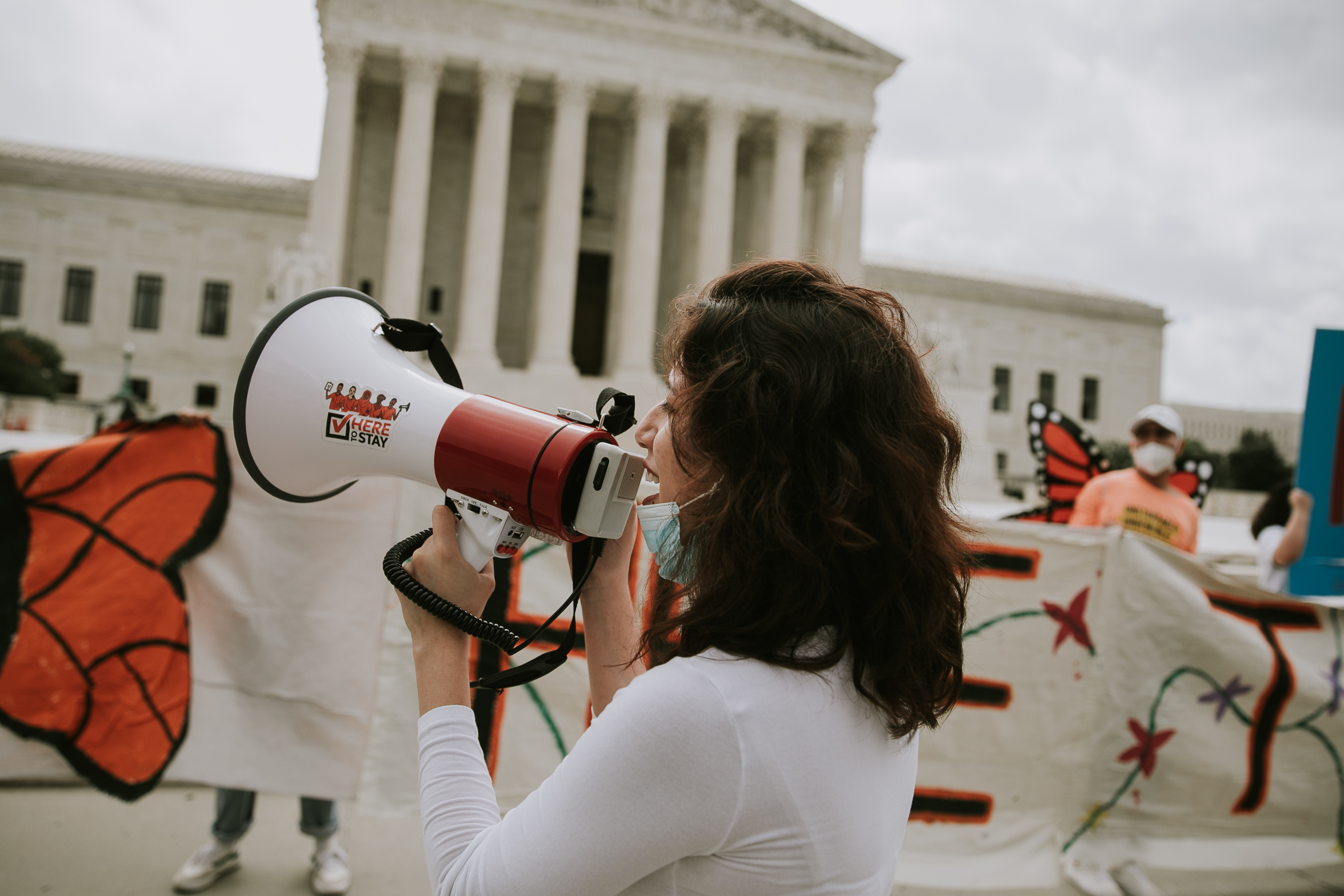
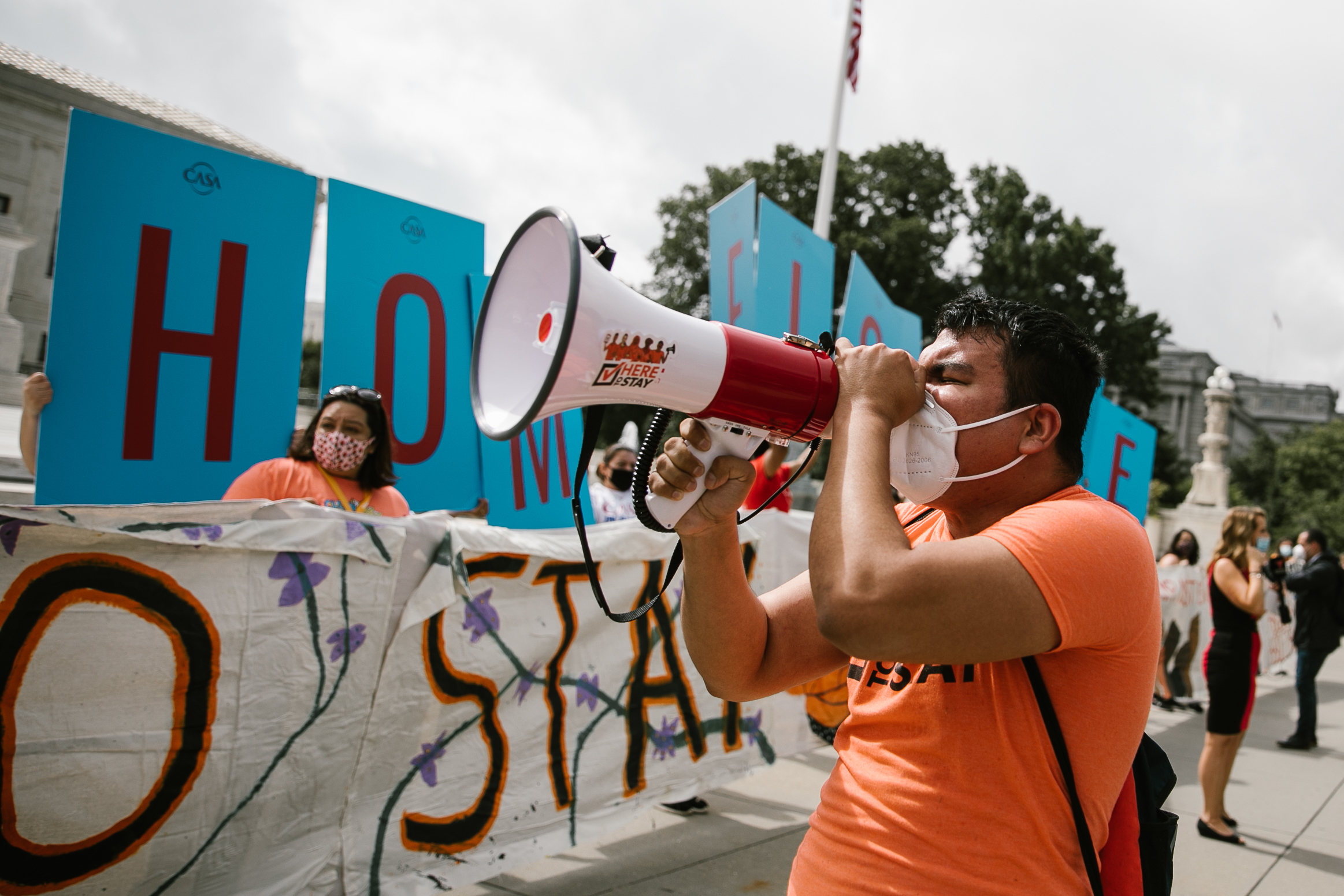
When they got to the steps, the group joined about 50 other immigrants and activists with banners that connected to each other, stretching the entire length of the steps to the Supreme Court. Quiñones grabbed her megaphone and led the group chanting, “Show me what democracy looks like!”
Quiñones came to Prince George’s county when she was 11 years old on a tourist visa from Bolivia. She didn’t speak English and remembers struggling to fit in among other immigrant children at school, having a hard time understanding different dialects of Spanish.
“Are you a mojada,” other students would ask, using derogatory slang to describe when an immigrant crosses the border through a body of water.
But Quiñones said after she got through the culture shocks of being in America and living among other Latinx people for the first time, she gained a strong sense of community among them.
“These experiences unite you,” she said.
Stepping away from the crowd to catch her breath on the sidewalk in front of the Supreme Court, Quiñones reflected on Thursday news about DACA.
“I’m feeling happy that I’m out here with everyone and that I get to celebrate and represent people that cannot be here. I feel … feel a sense of tranquility,” she said.
Quiñones graduated from Trinity Washington University this year and just bought her first car. Two things she said would be impossible without the program. “DACA completely changed my life.”
Chief Justice John G. Roberts Jr. wrote the majority 5-4 decision arguing that the Trump administration’s decision to end the program in 2017 was “arbitrary and capricious.”
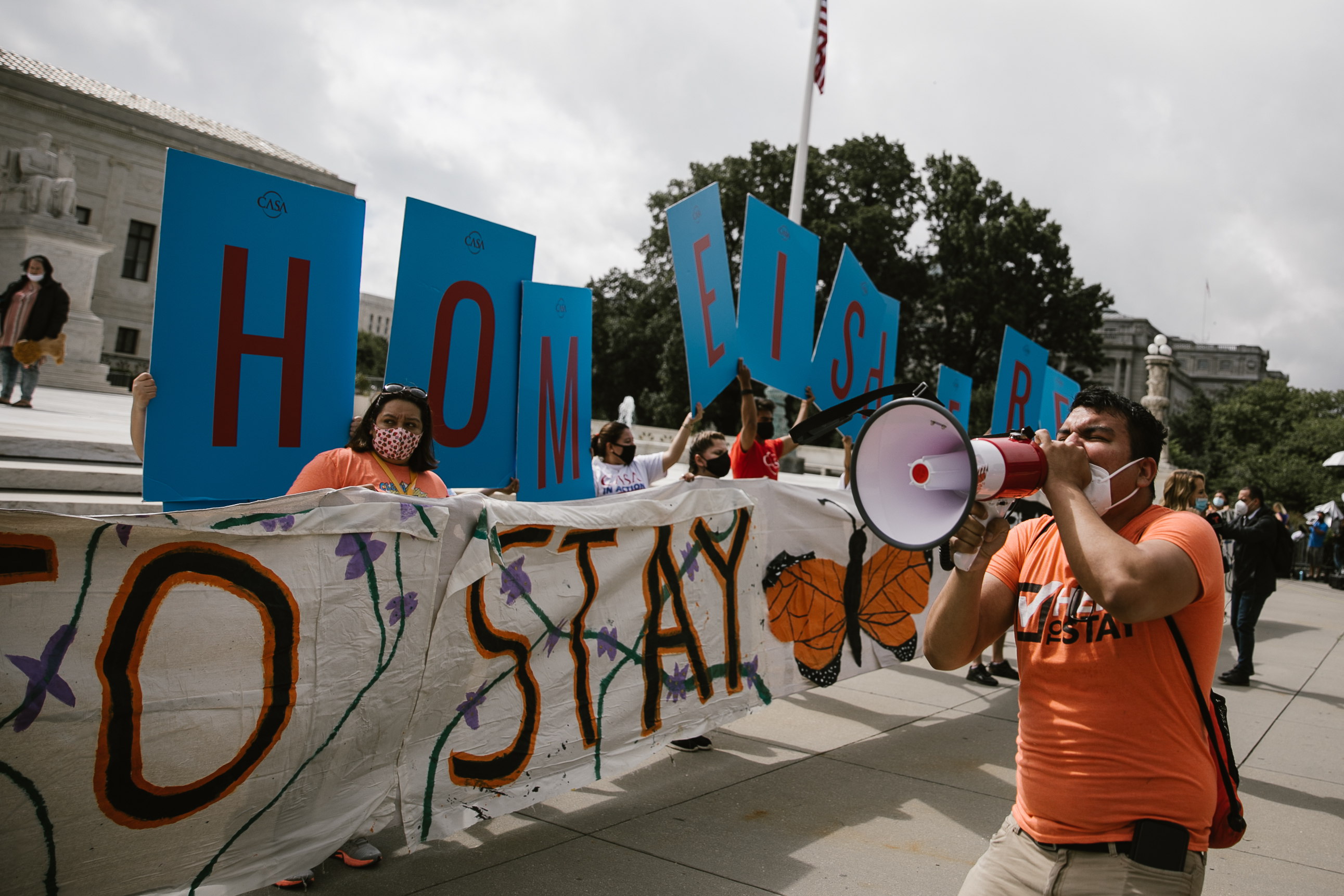
First enacted in 2012 by the Obama administration, the DACA program allowed young people known as “Dreamers,” brought to the United States without permanent legal immigration status, to obtain authorization to live and work in the country, with mandatory renewal every two years.
Thursday’s ruling provides a hard-fought sense of security for DACA recipients, but it doesn’t result in a clear path to citizenship. Congress failed to pass comprehensive immigration reform over the last two decades, but may find renewed hope if former Vice President Joe Biden is elected in November. The presumptive democratic nominee has pledged to send a bill to Congress on “day one.”
Victoria Maqueda has worked with hundreds of DACA immigrants in the Washington metro area as an immigration attorney with Ayuda over the last three years. She said yesterday that she was losing sleep over the fate of her clients should the program be forced to end. But today’s decision gave her a reason to celebrate.
“While the fight for DACA recipients is not over yet, I’m so glad to celebrate with them and all the other Dreamers today. I’m so excited to keep working with DACA clients and play a small part in their continued success going forward.”
With nearly 20,000 DACA recipients in Maryland, Virginia, and the District, local officials, advocacy and aid organizations shared messages of support to immigrants after the news. In a statement, D.C. Mayor Muriel Bowser “pledged to continue to protect all of our immigrant residents.”
“DREAMers represent the best of us and our values as a nation of immigrants …Today’s decision will help to end the uncertainty on whether they can stay and thrive in the only country they know as home,” Bowser said.
In a statement to WAMU/DCist, the Capital Area Immigrants Rights Coalition said it recognized the trauma suffered by the immigrant community as the DACA program made its way through years of litigation:
“CAIR Coalition is so relieved and happy for our community and the many DREAMers who have been waiting in a state of anxiety for this decision. Justice rules for them, but more than that, this decision finally acknowledges the humanity, which existed all along, of the many young people for whom home is here. This decision would not be here today without years of action by incredible organizers and community members.”
Ayuda has provided legal, social and language services to immigrants across the region since 1973. “Today confirmed that our voices matter, and that this is the time for hope, and empowerment. I cried tears of joy this morning as I read about the ruling, with my life no longer on pause, it is an amazing feeling to be able to continue making plans, and setting goals for my future,” said Ayuda staff member Giancarla Cazzol.
Quiñones and the other activists part of United We Dream plan to spend the afternoon celebrating together and reading the full Supreme Court opinion.
“For now,” she said, “I’m still here and I still have DACA.”