Martin Austermuhle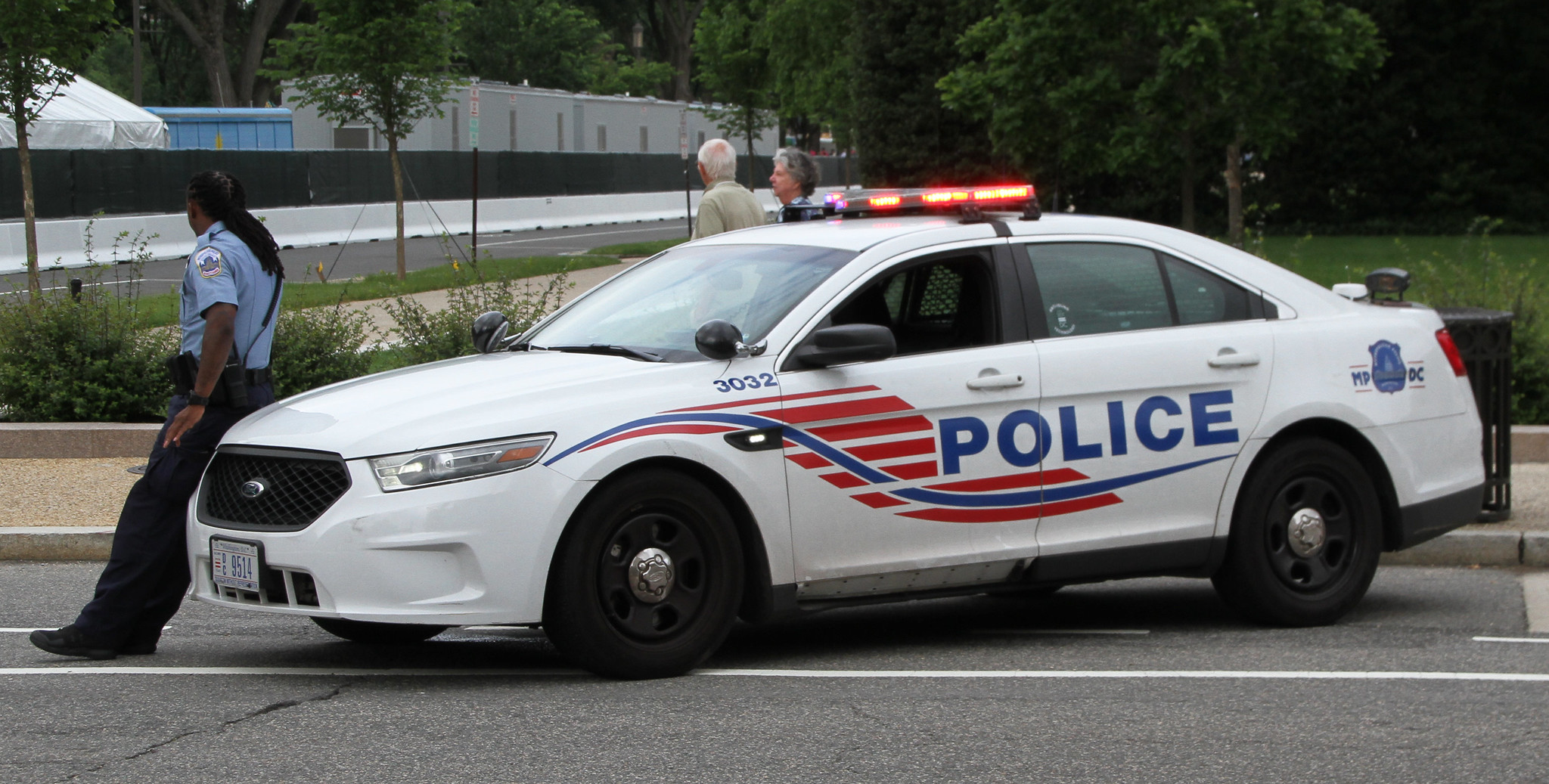
Five members of the D.C. Council are pushing to cancel a $24 million contract that places more than 300 private security guards in D.C. Public Schools, responding to demands from protesters and activists more broadly fighting for sweeping changes to how policing happens in America.
“DCPS has one counselor for every 408 students. It has one psychologist for every 402 students and has one DCPS hired social worker for every 217 students. On the other hand, there is one security officer or special police officer for every 129 students,” said At-Large Councilmember David Grosso, who chairs the education committee and introduced a resolution on Thursday disapproving the city’s year-long contract with Security Assurance Management.
“To me it appears as if we are more interested in policing our students than we are in ensuring their academic success,” he added.
Grosso has been joined by Ward 1’s Brianne Nadeau, Ward 5’s Kenyan McDuffie, Ward 6’s Charles Allen, and At-Large Councilmember Robert White. The Council has the power to review and reject any government contract worth more than $1 million. With the resolution of disapproval, the legislature’s review period is extended to 45 days from the usual 10 days, during which lawmakers will have a chance to debate and take an up or down vote on the contract.
Police presence in schools is managed through the D.C. Public Schools contract for security guards, which is managed by the Metropolitan Police Department. That department also has its own School Safety Division, through which it places personnel known as School Resource Officers inside traditional public and public charter schools. Those SROs also help manage safe passage programs for students traveling to and from school, and offer outreach and mentorship programs.
In an interview with DCist/WAMU earlier this month, D.C. Public Schools Chancellor Lewis Ferebee defended the presence of police officers and security guards in school buildings.
“We don’t have a significant amount of armed law enforcement in our buildings. We actually have a security structure where we have security staff that supports the administration and the administration is the first line of response in critical situations,” he said. “We do have School Resource Officers, and what’s interesting is when we talk to our students some of the most positive relationships they have are with school resource officers. And we have a great working relationship with MPD to ensure those people are appropriately trained and are fostering positive relationships in our students.”
But activists say the presence of police inside schools can cause problems and make students of color less safe. Not only could officers traumatize students who already have had negative interactions with police outside schools, but they can contribute to a system that already suspends and expels Black children at higher rates than many other groups. Additionally, they can steer kids into the criminal justice system early.
“Given that school policing originated and is concentrated in Black neighborhoods, it should be no surprise that school arrests disproportionately affect students of color. Nationally, Black students are more than twice as likely as their white classmates to be referred to law enforcement,” wrote the American Civil Liberties Union in a 2017 report.
Earlier this month, a Prince George’s County School Board committee recommended ending the contract with county police for SROs in schools. Last week, the Montgomery County School Board passed a resolution ordering Superintendent Jack Smith to analyze the system’s use of SROs in schools.