Nearly every job in the District has been upended by the coronavirus pandemic. Some people are working from their homes instead of going into an office; others have taken pay cuts or lost their jobs entirely. But there are plenty of people who are still doing their work in person, even as the world has changed dramatically. This series features the voices of the “still at workers,” telling us what their lives are like right now and what they wish other people knew about being an essential worker during a pandemic.
Dan Teich, 43, operates District Veterinary Hospital, which has locations in Brookland and Eastern Market. He’s been a practicing veterinarian since 2005 and started his own operation in 2014. During the pandemic, Teich and his 35 employees have been hard at work caring for cats and dogs at the office while their human owners wait outside in their cars. (There are exceptions, Teich tells us via email: “We absolutely have pet parents accompany their pets when concerning end of life conversations and when the time comes.”)
Teich spoke to DCist via Zoom from his office during what was ostensibly his day off. This interview has been edited for length and clarity.
How has your job been affected by the pandemic?
Initially we stated limiting the number of clients—instead of three people coming, only one person was allowed at a time. We removed public furniture from the lobby. We turned exhaust fans on in every room to get very good air circulation. As regulations and recommendations tightened, we moved from having clients in the building to doing almost everything without the client inside.
We generally take payment over the telephone. We are able to do a lot of our forms online, instead of the client coming in and filling out a clipboard. It frees up our staff a little bit from having to ask the questions they normally would ask. Going forward, no matter what happens with the physical distancing requirements, we’re going to keep it.
How has your staff been affected by the procedure changes?
It was a whole paradigm shift in how we practice. I’ve got a very, very professional, adaptive staff. To them it was not a big deal. We had to add a couple more phone lines to adjust for added phone conversations. It more was a mental challenge than a physical challenge to us.
I’ve been able to keep everybody employed. We have a few people that due to their own personal circumstances are on furlough, but pretty much the rest of the staff is still here.
It’s harder to talk to people and discuss tough things if you can’t talk to them directly. Some of our doctors use FaceTime or Zoom, so that’s working okay. For a number of us there’s nothing like meeting somebody in person—especially when they have a new puppy they’re so excited to show you.
How have interactions with customers changed?
Most people have been very accommodating. Anybody who challenges, asking ‘Why can’t I come in, I’m special,’ I say, “My staff is very special to me, they are my family, I’m responsible for them. By me letting you in, I put some of these people at risk. I am not willing to do that. Maybe there’s somebody else who might be a better fit for you if you’re insisting on this.”
We can do anything without the pet owner. Some people may not be comfortable with it and I fully understand that. But my number one priority is the health and safety of the staff.
What kinds of personal protective equipment are you and your staff using?
One of our doctor’s spouse’s mothers was kind enough to make some cloth masks for us. We made a pact with ourselves that we will do anything we can to preserve PPE that can be used for human health. We use reusable gowns instead of disposable gowns, so we haven’t had to order any of them.
How has your patient load during the pandemic compared with normal?
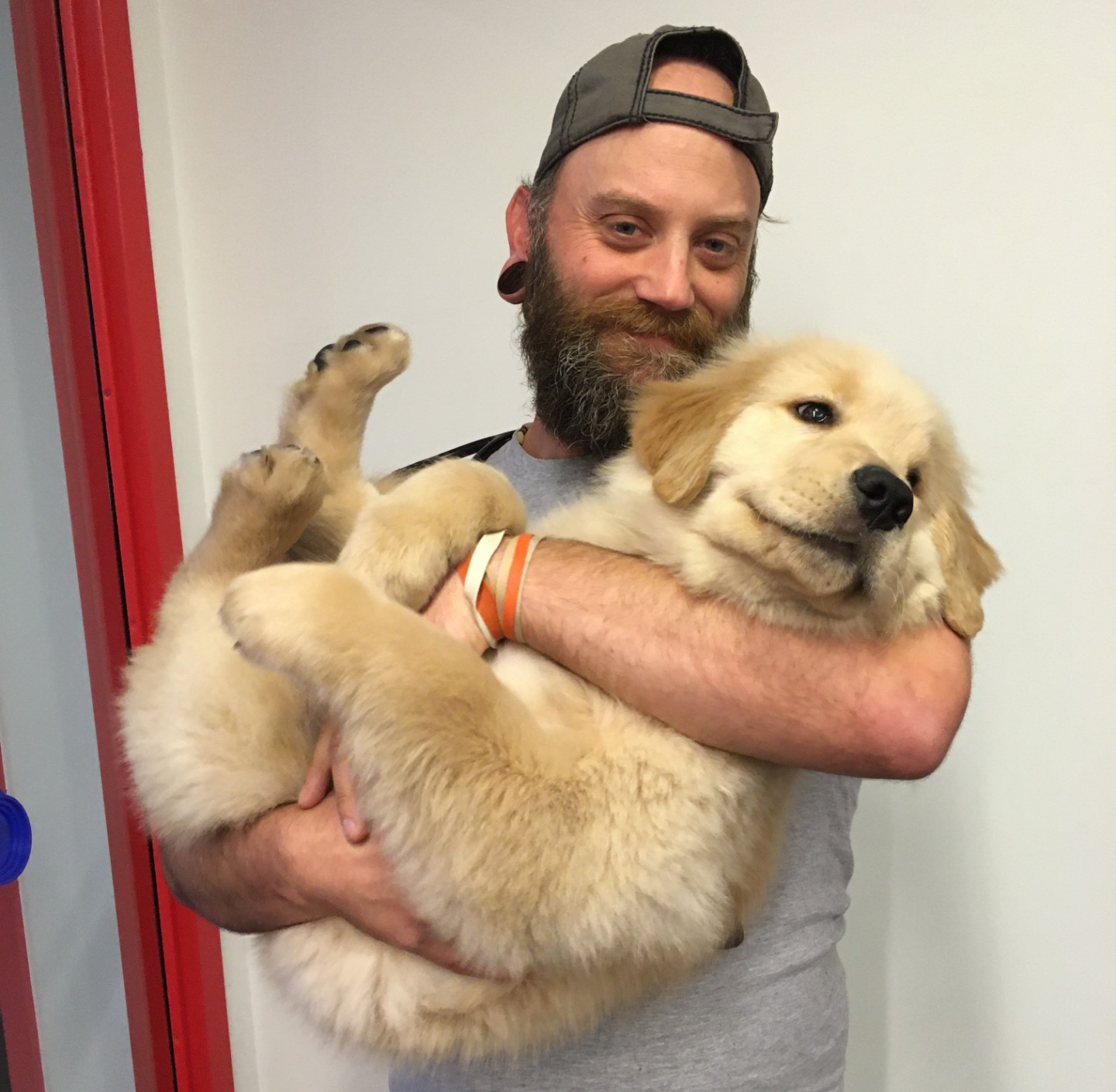
There’s been a little bit of a puppy boom. I’ve never seen anything like that in my career. I’ve had days where I’ve had nine new puppies in a day. For somebody like me, that is a lot of fun. Give me a puppy every day of the week. In a large way, it’s really uplifted us here. It’s depressing outside. Everybody looks somber, wearing a face mask. They look like the world’s going to end. What do we get? We get puppies.
The problem is that with some of the measures we’ve taken, it’s harder to see the number of people we saw previously. But lots of people are working from home now, seeing that the cat isn’t walking as well as it used to, the dog doesn’t look great, and thinking, “We should see the vet for this.” In that regard we’re seeing our clients a little bit more than we probably would have.
How has the pandemic affected your family?
My other half is home now—he’s a neuropsychologist. He’s not seeing patients because many of them are old and infirm. I’m happy to be able to go to work. I’m really bloody tired. This is overdrive.
I think that not having to work would affect my family life much worse. I can’t sit still. I still see lots of people. I go home—first thing I do, take my shoes off at the front door, go inside and wash my hands. I’ll get home around 8—I’m just wiped out.
How can people help you and your staff?
Number one: Everybody needs to have a little bit more patience than they used to. Number two: We are a small business. We ship things—we are able to send the same things that any other online pharmacy can send you, and we can do it the same day.
The last thing I would tell every single person for this: Always remember to be nice to your fellow humans. You get a lot more with honey than you do with vinegar.
Is there anything else people should know about your job?
This is a tough job. Every single one of those puppies gets old and dies. I see from the day you bring the puppy home to the day you go home without them. I don’t think people quite understand the veterinary staff, what we go through on a daily basis. Every patient I see will die. My job is to make sure that that interim period is full of joy, health, and happiness. I want people to know that we see this every day and it really affects us. Don’t be mean.
Previous Still At Workers:
A Home Health Aide Is A Companion To Members Of D.C.’s Most Vulnerable Population
A Farmers Market Vendor Says Regulations On Markets Are ‘A Mistake’
This Cashier-Turned-Delivery Driver Misses Joking With Regulars