Martin Austermuhle
This post was updated at 10:40 a.m.
A large marble monument for George Preston Marshall, the founder of the Washington football team who staunchly opposed integrating the team, was removed from the grounds of RFK Stadium on Friday morning after “Change the name” was spray-painted on it overnight.
Ward 6 ANC commissioner Denise Krepp took pictures of the defaced monument on Friday morning, as well as work crews who arrived on the site to remove it from the stadium grounds. She was told that the decision to remove it was made by Events D.C., the city’s sports and entertainment authority, which manages the RFK site. Ashley Forrester, the spokeswoman for Events D.C., confirmed to DCist that it is removing the monument permanently.
“This symbol of a person who didn’t believe all men and women were created equal and who actually worked against integration is counter to all that we as people, a city, and nation represent. We believe that injustice and inequality of all forms is reprehensible and we are firmly committed to confronting unequal treatment and working together toward healing our city and country,” said Max Brown, the chair of Events D.C.’s board, in an emailed statement.
“Removing this statue is a small and an overdue step on the road to lasting equality and justice. We recognize that we can do better and act now. We’ve heard from many of our stakeholders in the community, and we thank you. Allowing the memorial to remain on the RFK Campus goes against Events DC’s values of inclusion and equality and is a disturbing symbol to many in the city we serve,” he added.
The act of vandalism and the subsequent removal of the monument comes amid a growing national reckoning over statues and symbols of Confederate and racist figures. That reckoning has been in part fueled by the weeks of protests against police violence and racial inequality sparked by the killed of George Floyd. Locally, a 131-ton Confederate statue was removed from an Alexandria intersection earlier this month, while Montgomery County lawmakers are demanding that streets named for Confederate figures be renamed. In D.C., there have been renewed calls for Woodrow Wilson High School to be renamed.
In Minnesota this week, the Twins removed a statue of former team owner Calvin Griffith outside Target Field. Griffith made racist comments about the Black community in the late 1970s.
Marshall was awarded an NFL franchise in 1932 that came to be known as the Boston Braves, soon to be renamed the Boston Redskins and then moved to D.C. in 1937. He staunchly opposed integrating the team, becoming the last NFL owner to do so — and only after federal officials in 1961 threatened to prohibit the team from playing at RFK Stadium, which was built on federal land. In his will, Marshall barred his foundation from spending on “any purpose which supports or employs the principle of racial integration in any form.”
The team played at RFK until 1996, when it decamped to Prince George’s County, and fans fondly remember the time at the facility as the franchise’s glory years. But the years since have been a mixed bag at best for the team. There’s been a steady call for team owner Dan Snyder to change the team’s name, which many people — including Marshall’s granddaughter — acknowledge is a racial slur. In 2017, the Oneida Indian Nation and National Congress of American Indians also pushed for the monument to Marshall to be removed.
Snyder has steadfastly refused to change the team’s name, but the demands have gotten louder in recent weeks. Last week, D.C. Mayor Muriel Bowser — who has openly sought to welcome the team back to the city — said it was “past time” for the name to change. This week, At-Large Councilmember David Grosso repeated his demand that the team name be changed to “Washington Redtails.”
Still, it’s unclear whether the new political moment will lead to name changes for teams and brands that draw upon Native American history, names and symbols. In an op-ed published Friday in the New York Times, two California law professors expressed skepticism that the same effort that led Quaker Oats to announce that it was dropping the Aunt Jemima branding would extend to teams with Native American names.
“While Black Lives Matter has had success in retiring African-American stereotypes and brands, Native American brands face an uncertain outcome. Appropriations of racialized stereotypes of Native people are still big business, inextricably linked to the cultural and territorial history of dispossession,” they wrote. “All too familiar commercial products produced by non-Native companies — such as the Apache Helicopter, Jeep Cherokee and Yakima Bike Racks — abound in the commercial marketplace.”
Marshall’s name is also on the lower level of FedEx Field, where the team currently plays.
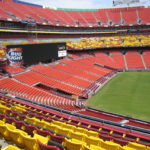
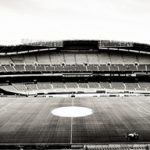
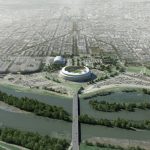
Events D.C. is planning on demolishing RFK Stadium, though no start date is set for the work to begin. City officials have been pushing for Congress to extend its lease over the large site or let the city outright buy the land, which would allow for a new football stadium and entertainment district to be built there. But some activists, neighbors and D.C. lawmakers are opposed to the idea, advocating instead for the land to eventually be used for housing.
This post was updated with an emailed statement from Events D.C.