 Jenny Gathright
 Mikaela Lefrak
 Mary Tyler March
 Debbie Truong
 Tyrone Turner
 Dominique Maria Bonessi
 Christian Zapata
 Margaret Barthel
Locals across the D.C. region marked the Juneteenth holiday with protests, joy, art, and service.
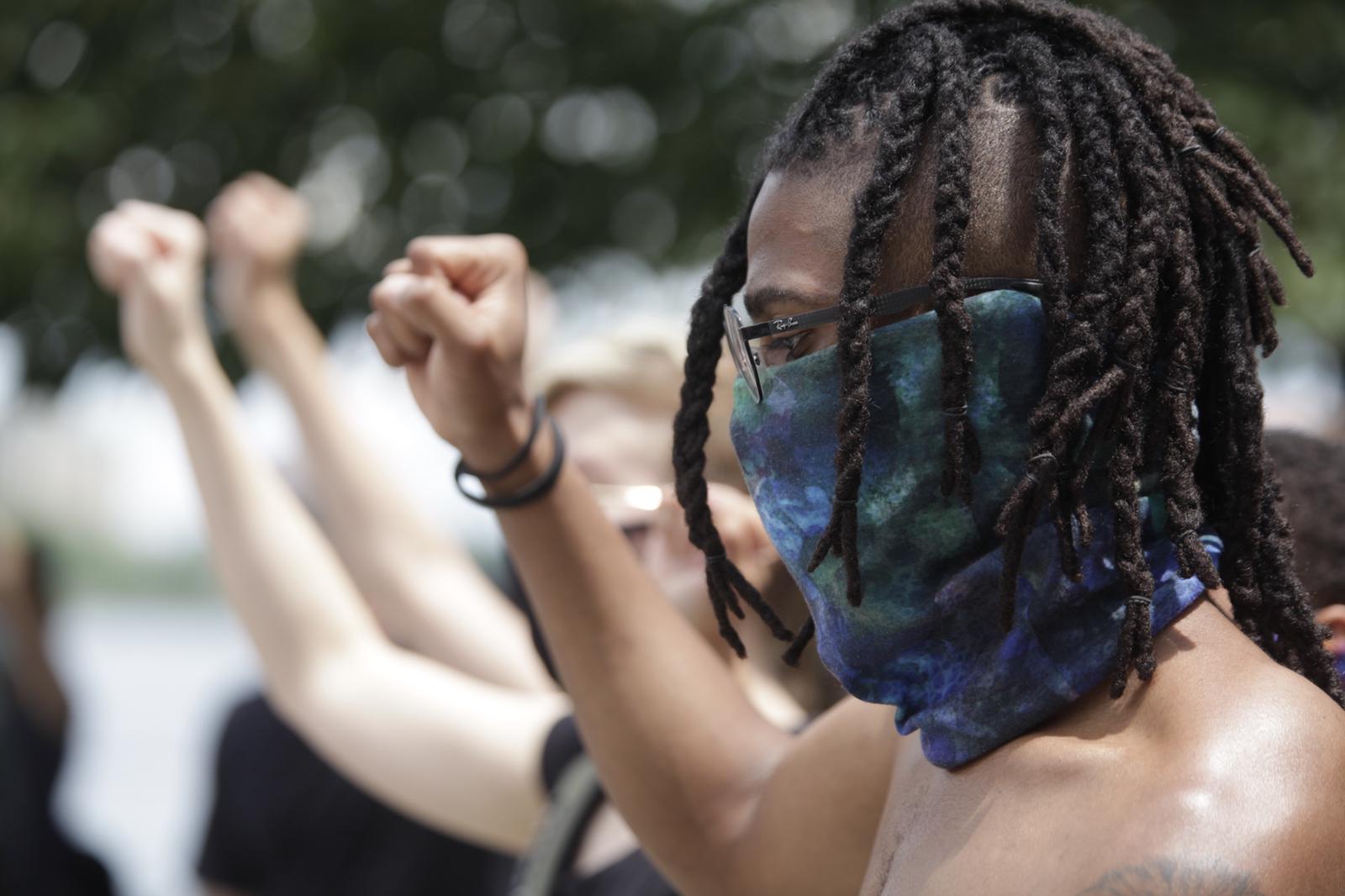
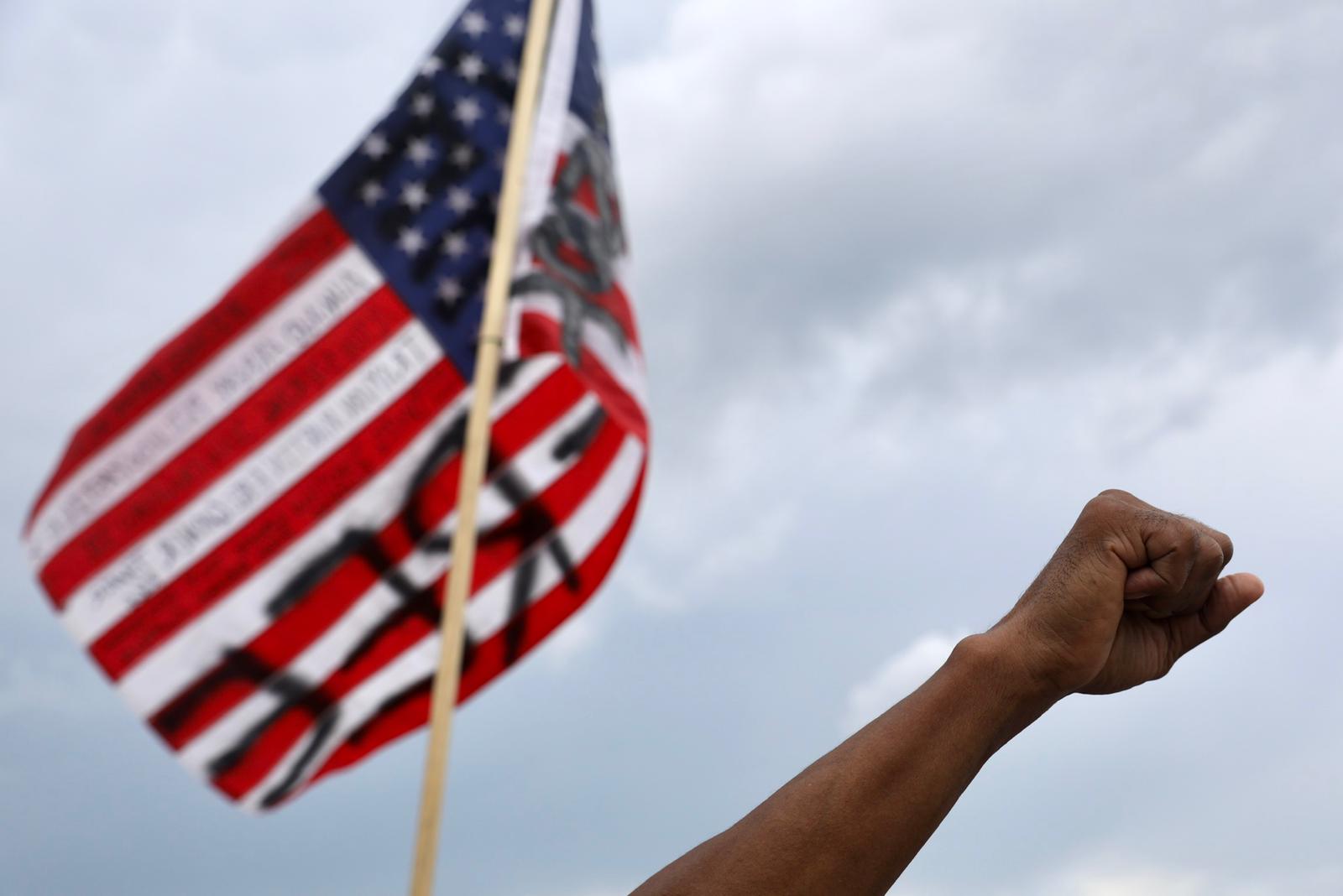
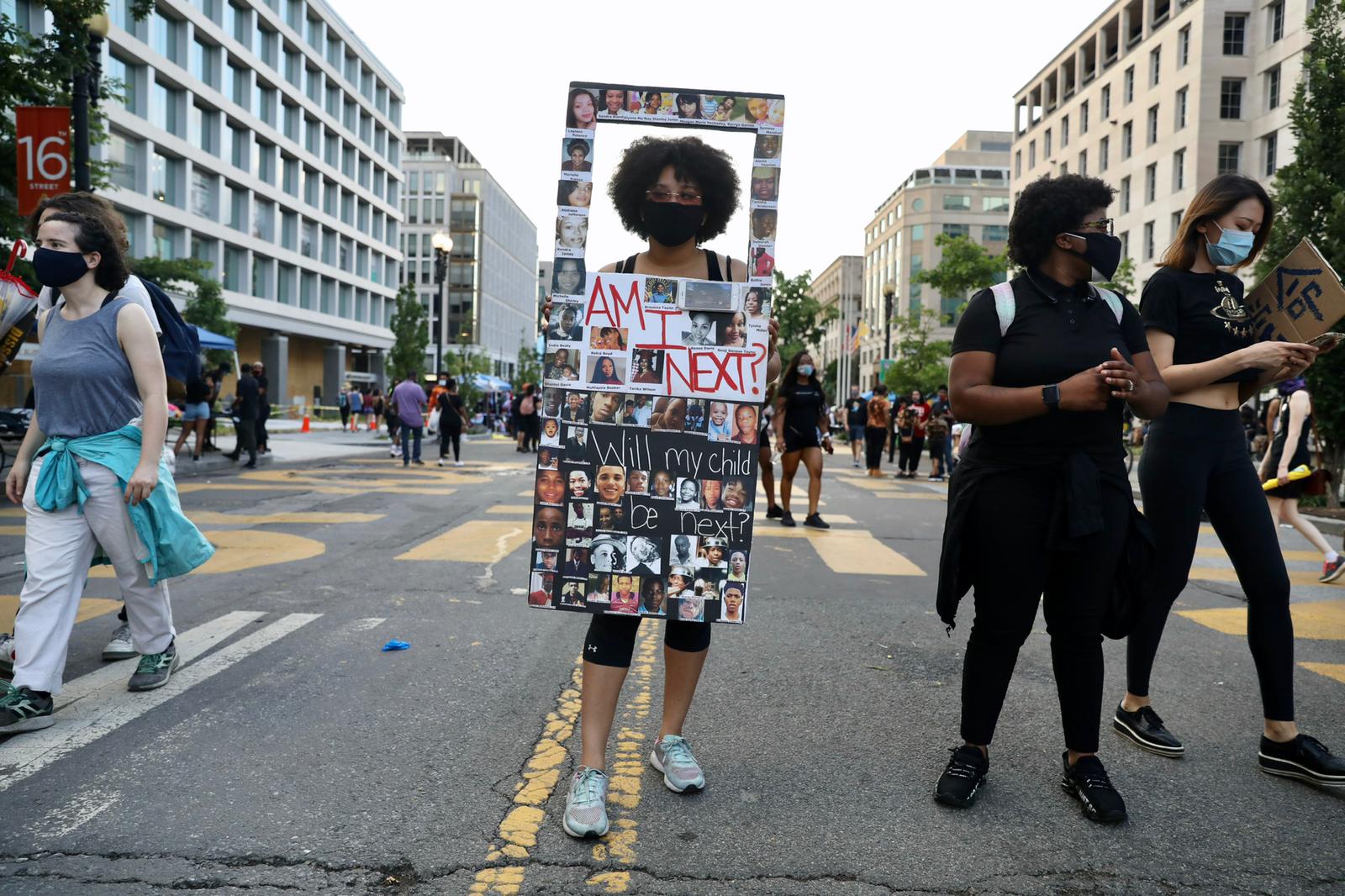
Neighbors checked in on neighbors. People danced to go-go music and made art at Black Lives Matter Plaza. Educators marched for better schools for Black and Brown children. Parents and children reflected on family and family traditions. Drum lines beat out rhythms in front of the White House. And hundreds of protesters — with demonstrations now entering a fourth consecutive week — vowed to keep showing up to demand an end to police violence and racism.
“There are truths that we have, like ‘white people have benefited from white supremacy.’ To be able to say those truths — and then the next step is to take action — is really important,” said Alisha Jaffe, a peace-building organizer.
Rain showers and thunder didn’t dampen the mood or decrease the crowds as the evening progressed. Around 11 p.m., a group of protesters on 3rd Street NW pulled down a statue of Albert Pike, the only statue of a Confederate general on public land in D.C.
The day took on a range of emotional tones: grief, anger, determination, and joy.
“This is not a barbecue,” said one organizer in a speech at the Lincoln Memorial, urging protesters to persist and organize. And yet, there were barbecues just blocks away at Black Lives Matter Plaza, where people who prepared the food said they wanted to contribute to the movement by keeping protesters fed.
Demonstrations coalesced in various parts of the city, each with its own focus. Several were under the banner of the Movement for Black Lives (M4BL), which is demanding that cities divest from policing and redirect funds toward community-based programs. Others, like Don’t Mute DC’s go-go celebration, coalesced around demands related to criminal justice reform and the needs of the formerly incarcerated — but were also about celebrating the city’s homegrown Black art, go-go, and claiming space for Black people born and raised in the city.
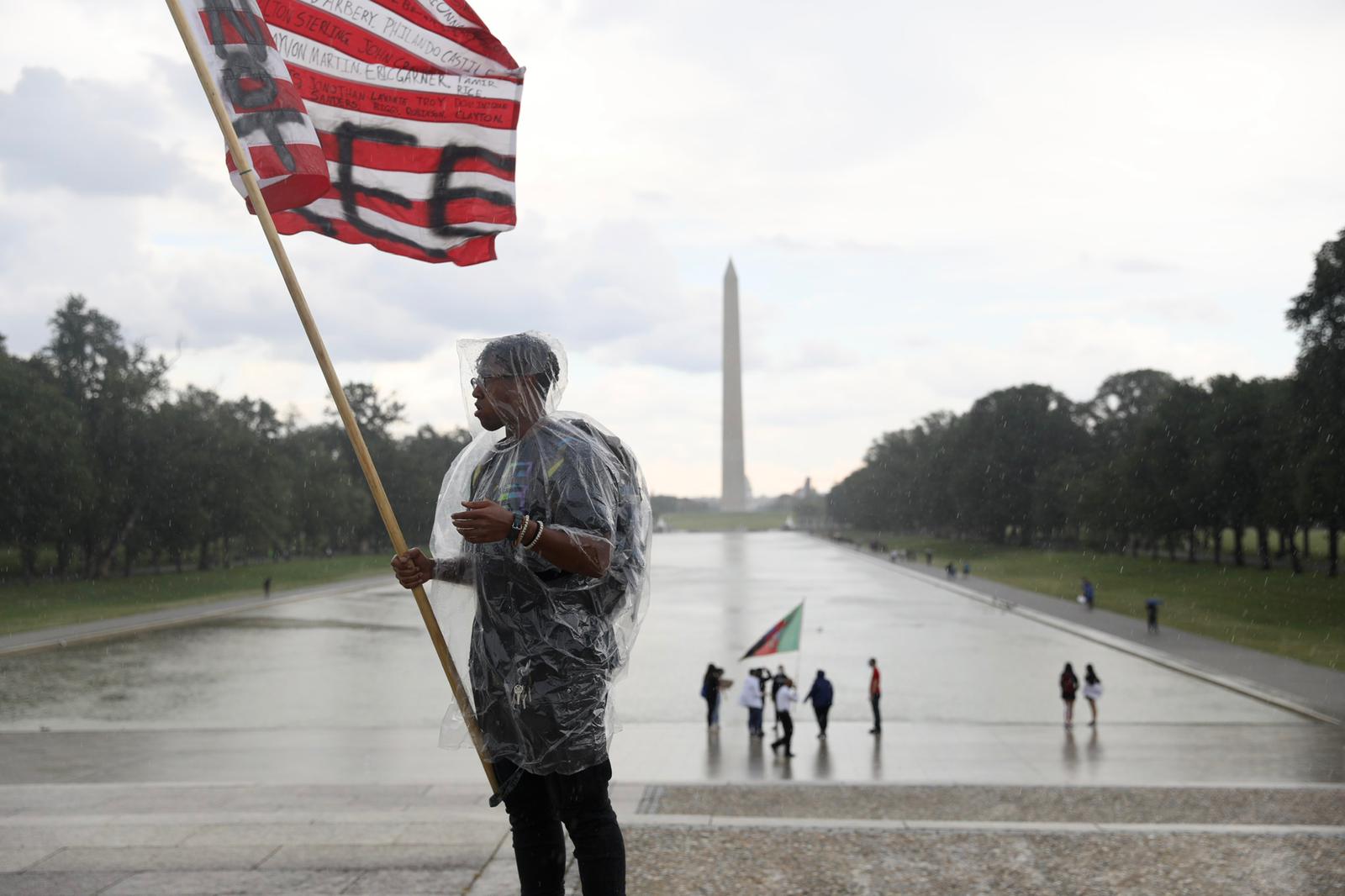
Juneteenth marks the day in 1865 when the Union army arrived in Galveston, Texas with news of the emancipation of enslaved people, which had taken effect in 1863. The holiday is recognized by 46 states and the District. For many, it’s a day for family, food, and truth-telling about the history and resilience of Black people in the United States.
That was the case for Tamara Davis Brown and her 20-year-old daughter Jessica, who visited Black Lives Matter Plaza early in the afternoon. Brown, of Clinton, Maryland, grew up in Texas and remembers celebrating Juneteenth with a big family reunion and a history lesson from her elders. She was excited that the Black Lives Matter protests meant more people marking the day outside of Texas.
“What better day and what better way to celebrate Juneteenth?” Brown said. She and her daughter planned to hang their handmade signs — Brown’s carried the name of her late father — on a fence nearby, a recognition that their family was part of what felt like a historic moment.










In the morning, one group of activists in Southeast D.C. marked the day with a “Walk of Love” to check in on their neighbors. The volunteer group went door to door, armed with purple gift bags stuffed with hand sanitizer, lip balm, crossword puzzle books, printouts with mindfulness exercises, a 40-question community needs assessment, and information about the coronavirus and the 2020 census.
“A lot of people are living in their own silos, especially in this pandemic,” said Beverly Smith-Brown, the founder of Momma’s Safe Haven in Ward 8. Her community support organization co-led the event along with the Alliance of Concerned Men and Serve Your City. “I think spreading love is one of the most important things we can do at this time,” she said.
Meanwhile, hundreds of educators gathered at Freedom Plaza and marched to the U.S. Department of Education building in Southwest D.C., shouting “Black lives matter” and “Black kids deserve more.”
Educators for Equity, the grassroots organization that organized the rally, made five demands to D.C. Public Schools, including redirecting money from school resource officers to mental health resources and revising the curriculum to accurately reflect Black history and the histories of other people of color.
Nandi Taylor, a fifth-grade teacher at Anita J. Turner Elementary School in Southeast said the group started two weeks ago to address the needs of Black students. Taylor said the presence of police officers in school is harmful to students.
“We need to do more, to be proactive to help our students deal with problems, instead of reacting with violence,” she said. “Reacting with violence incites violence and we need to break the cycle.”
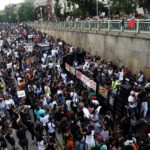
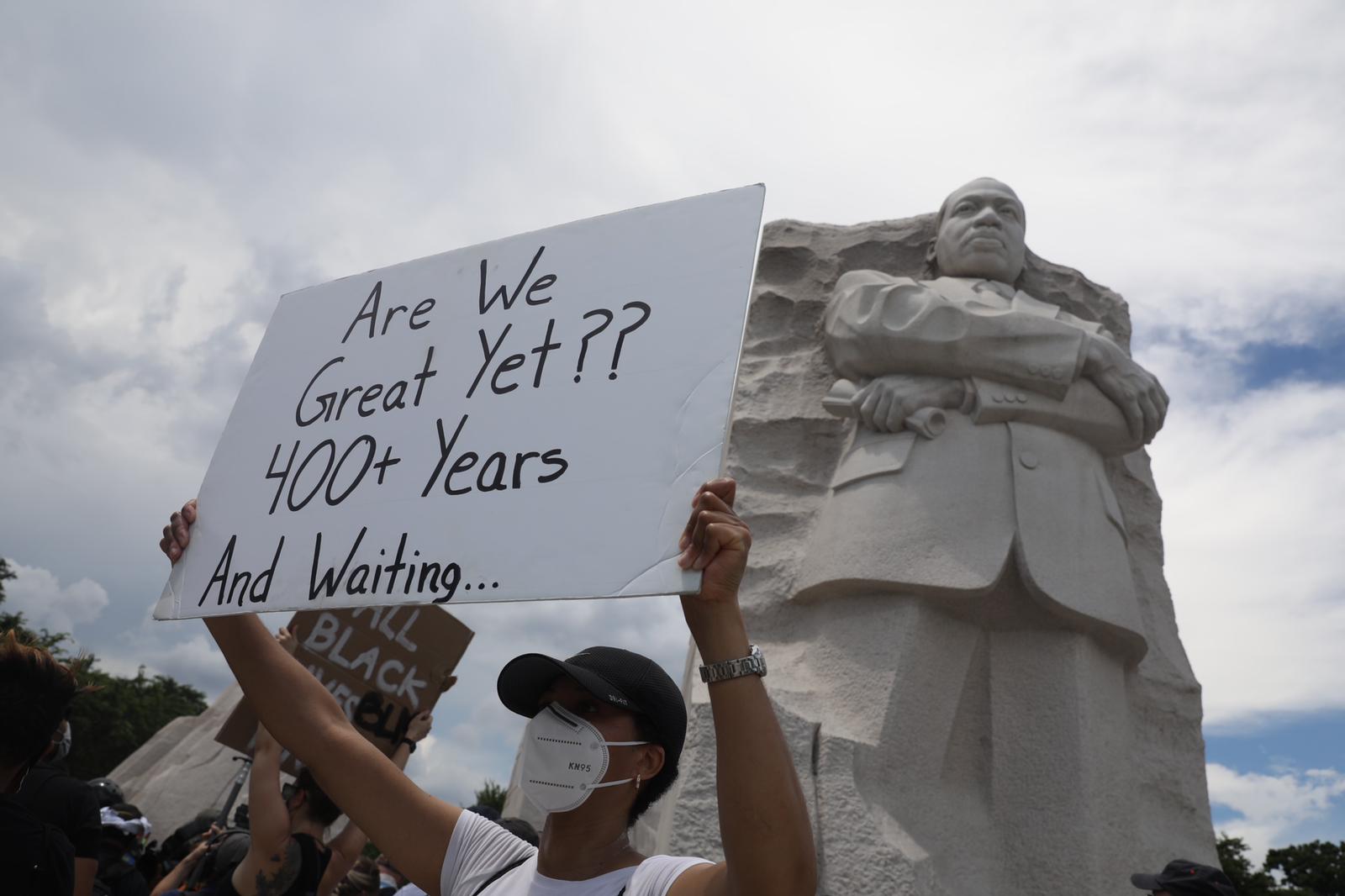
Late in the afternoon, protesters gathered at the Smithsonian Museum of African American History and Culture and marched to the Lincoln Memorial, in what organizers said they hoped would be the first annual Freedom Day March.
Some marchers were thoughtful about contextualizing the celebratory notes of Juneteenth with the ongoing struggle for justice and equality for Black people.
“This is not a block party,” said organizer Morgan Barnhart. “This is a protest.”
Morgan Sills, a Howard University law student, saw the protests as a way to deliver on Juneteenth’s promise of emancipation.
“We’re still in that fight,” she said. “We’re still in that struggle for full citizenship, for full protections of the law.”
At the same time, in Silver Spring, hundreds marched to demand the defunding of police, investments in Black communities, and the resignation of President Donald Trump.
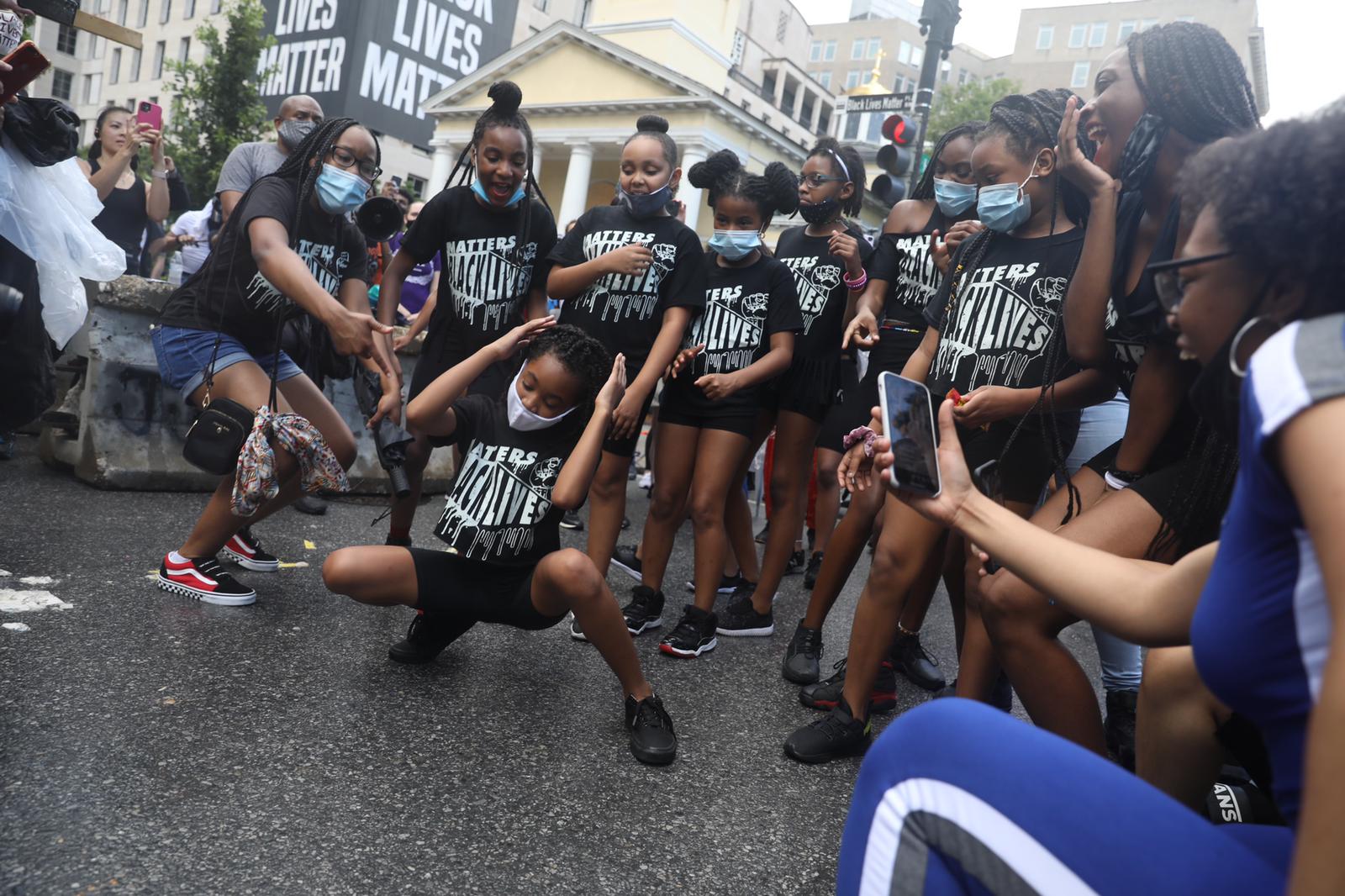
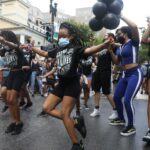
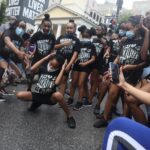
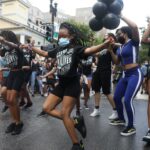
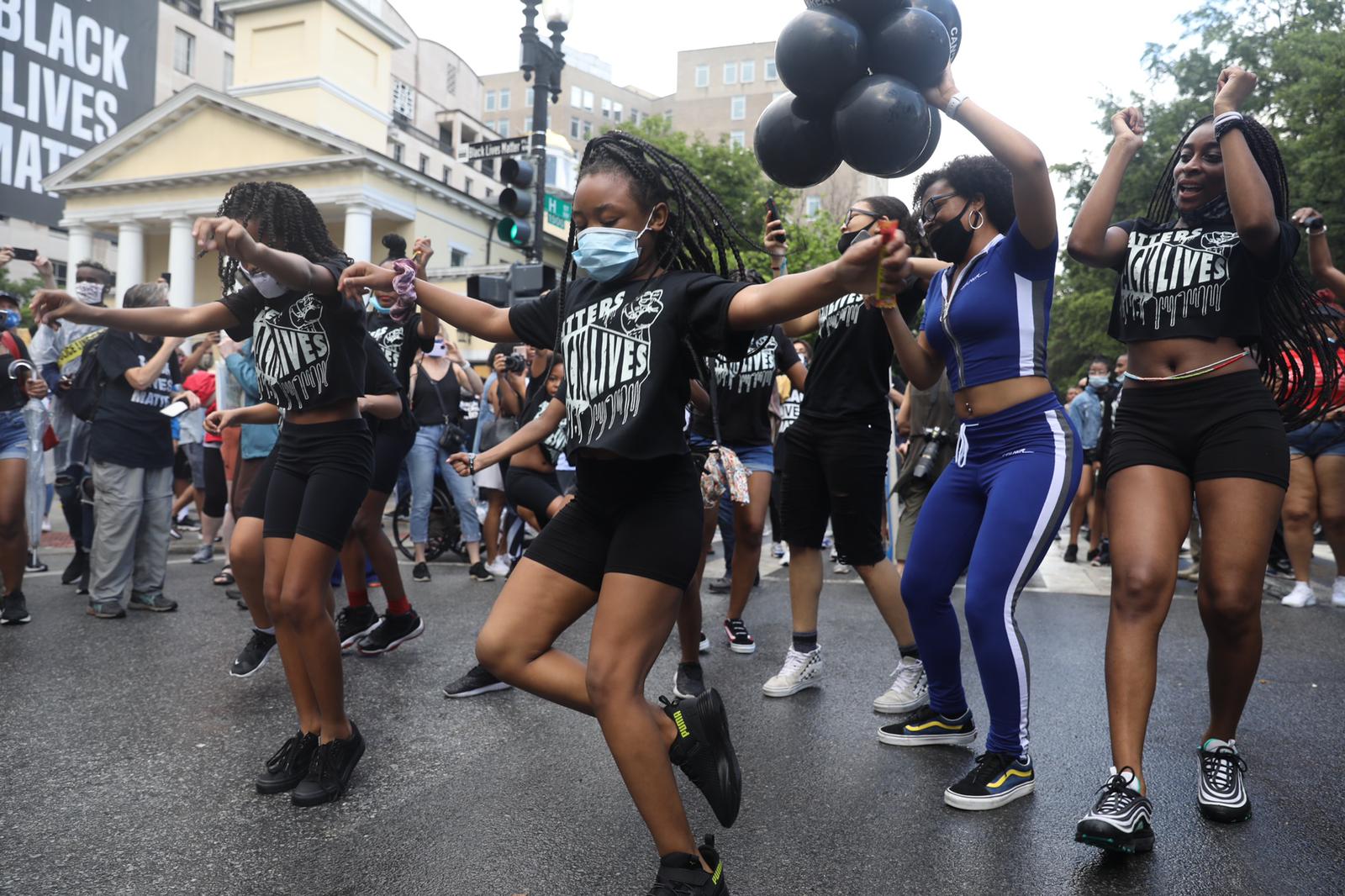
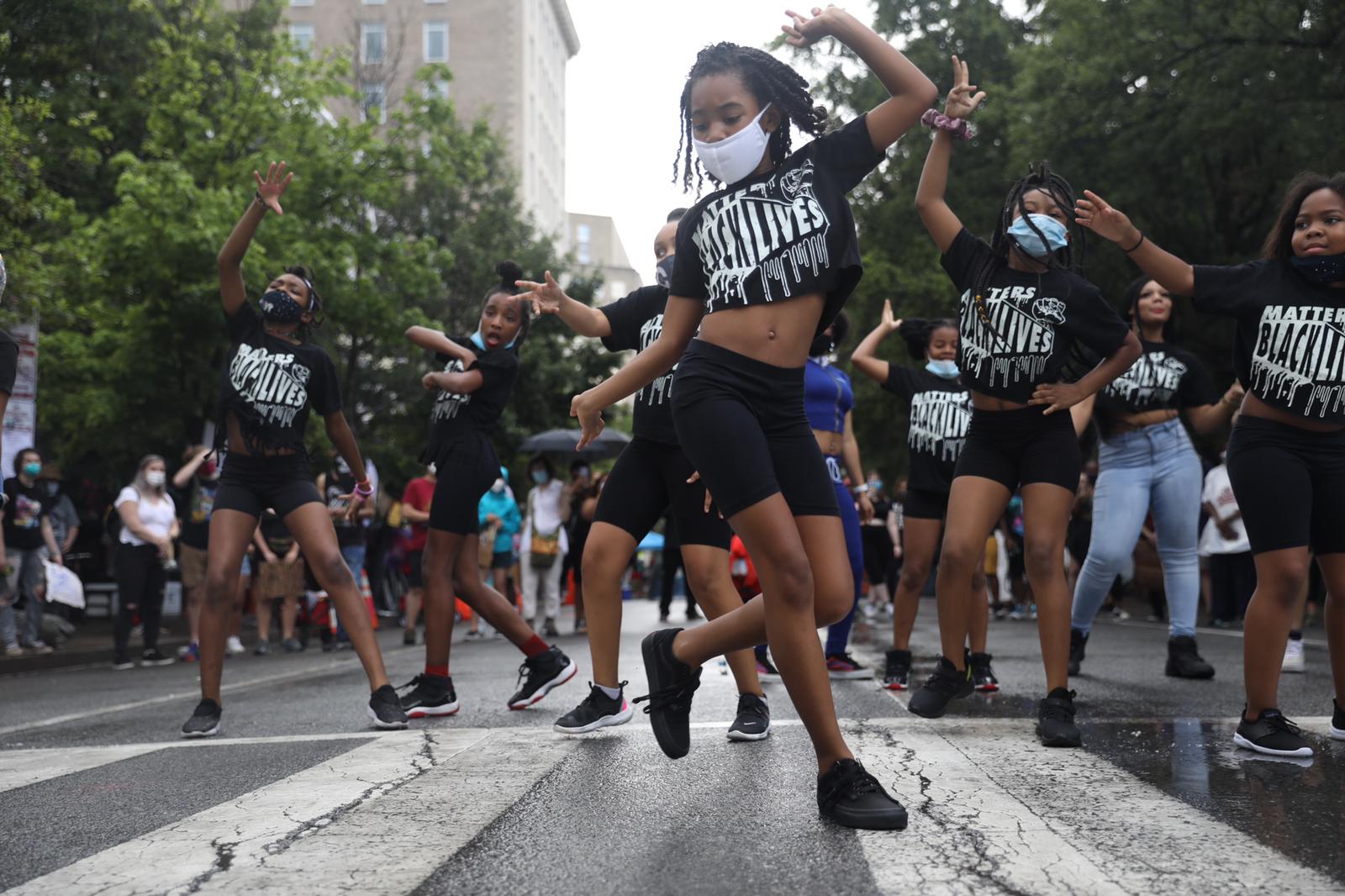
Art, music, food, and fellowship flowed at Black Lives Matter Plaza in the afternoon and into the evening. The Silver Starlet Dance Team from Temple Hills, Md., took over the plaza for a dance performance. Another woman danced with lit sparklers.
Don’t Mute DC, an organization that grew out of last spring’s debate over whether a MetroPCS store in Shaw could play go-go music over its sidewalk loudspeakers, set up an afternoon of go-go music. Don’t Mute DC organizers put together a march starting at the MetroPCS store and ending at Black Lives Matter Plaza. They also organized other events, including a rally with D.C.’s legendary Backyard Band, a virtual town hall on mass incarceration, and a virtual afterparty and DJ battle. Later in the evening, hundreds reconvened at 14th and U for Moechella, a protest-turned-block party and fireworks.
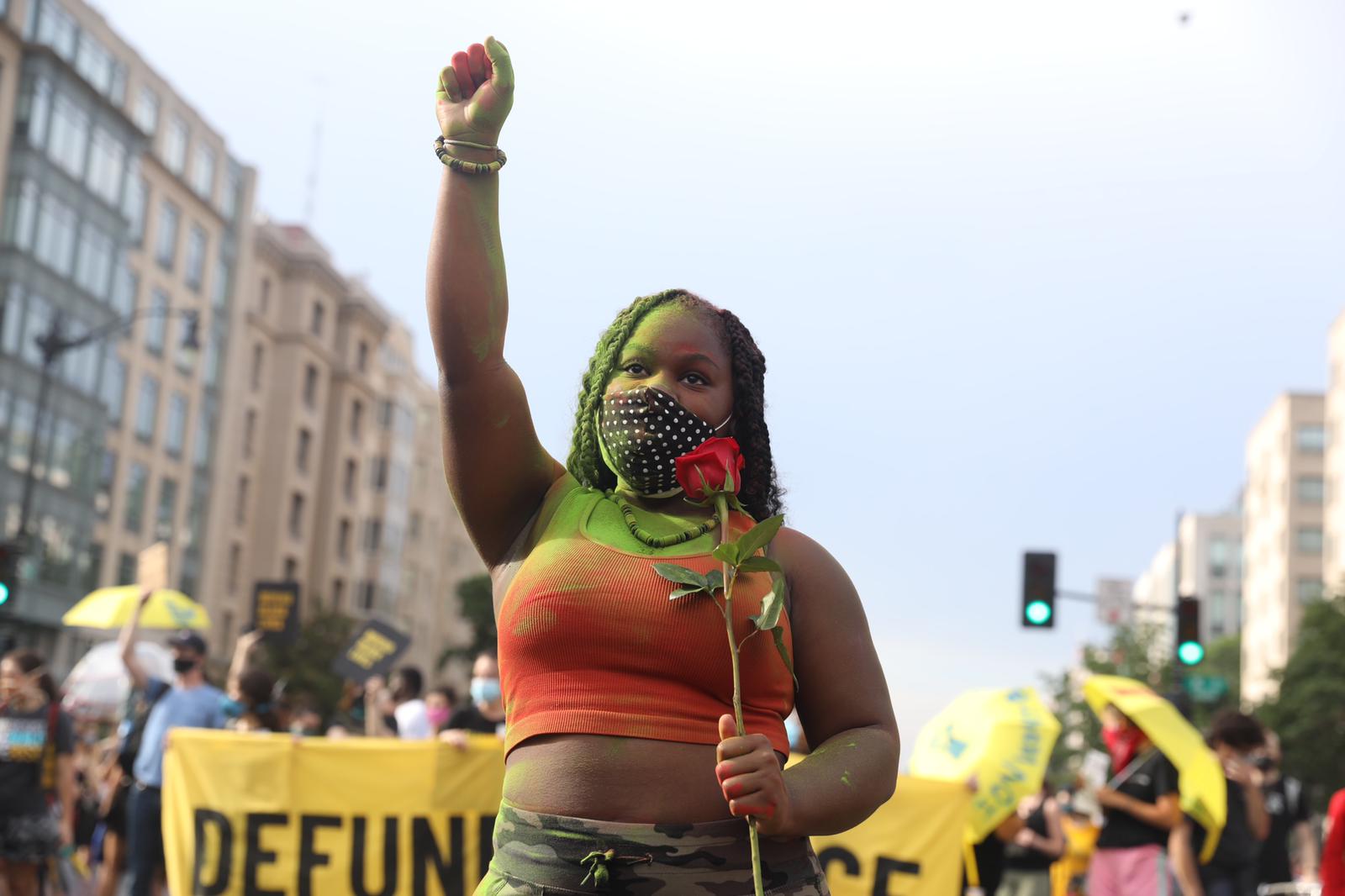
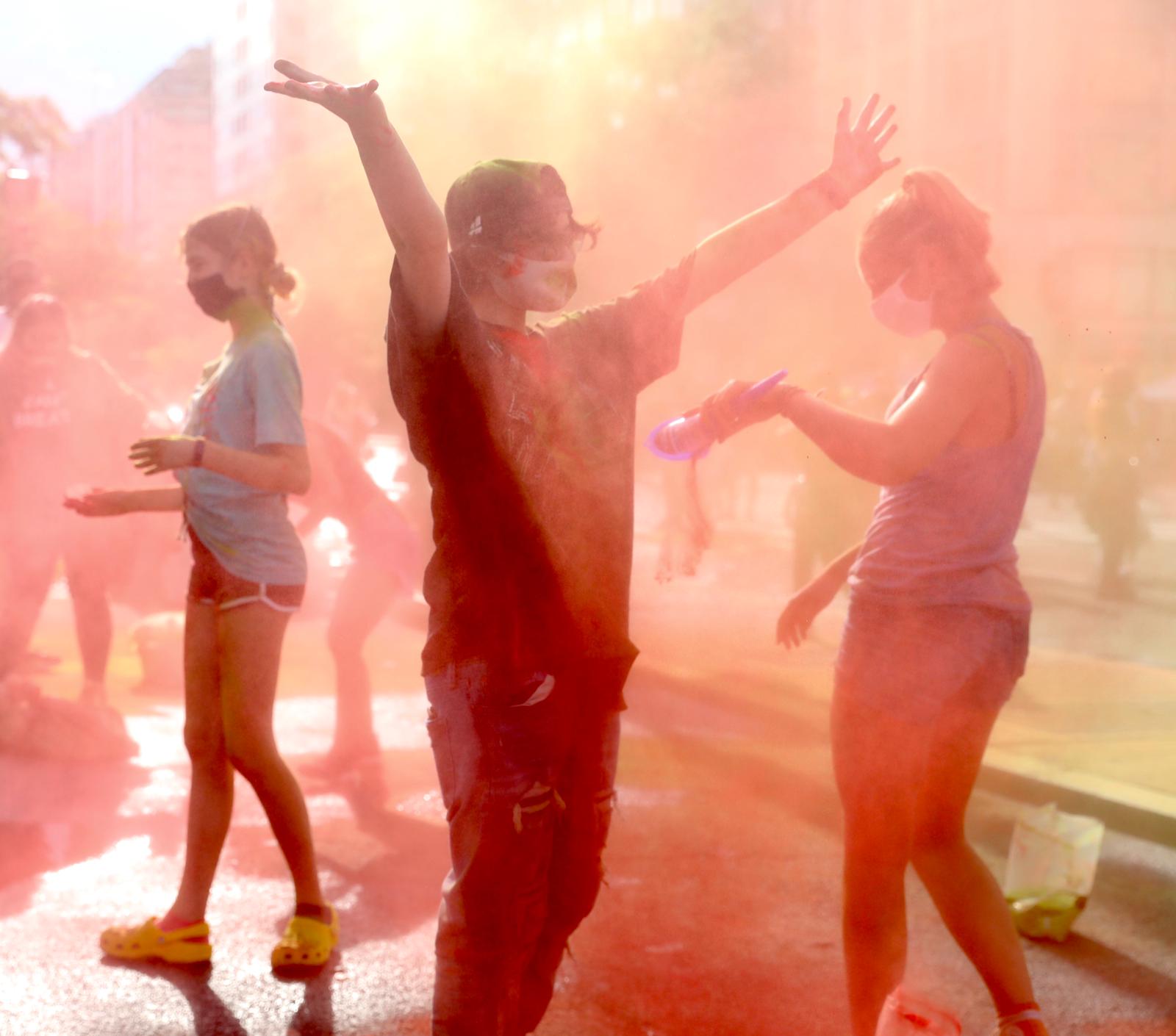
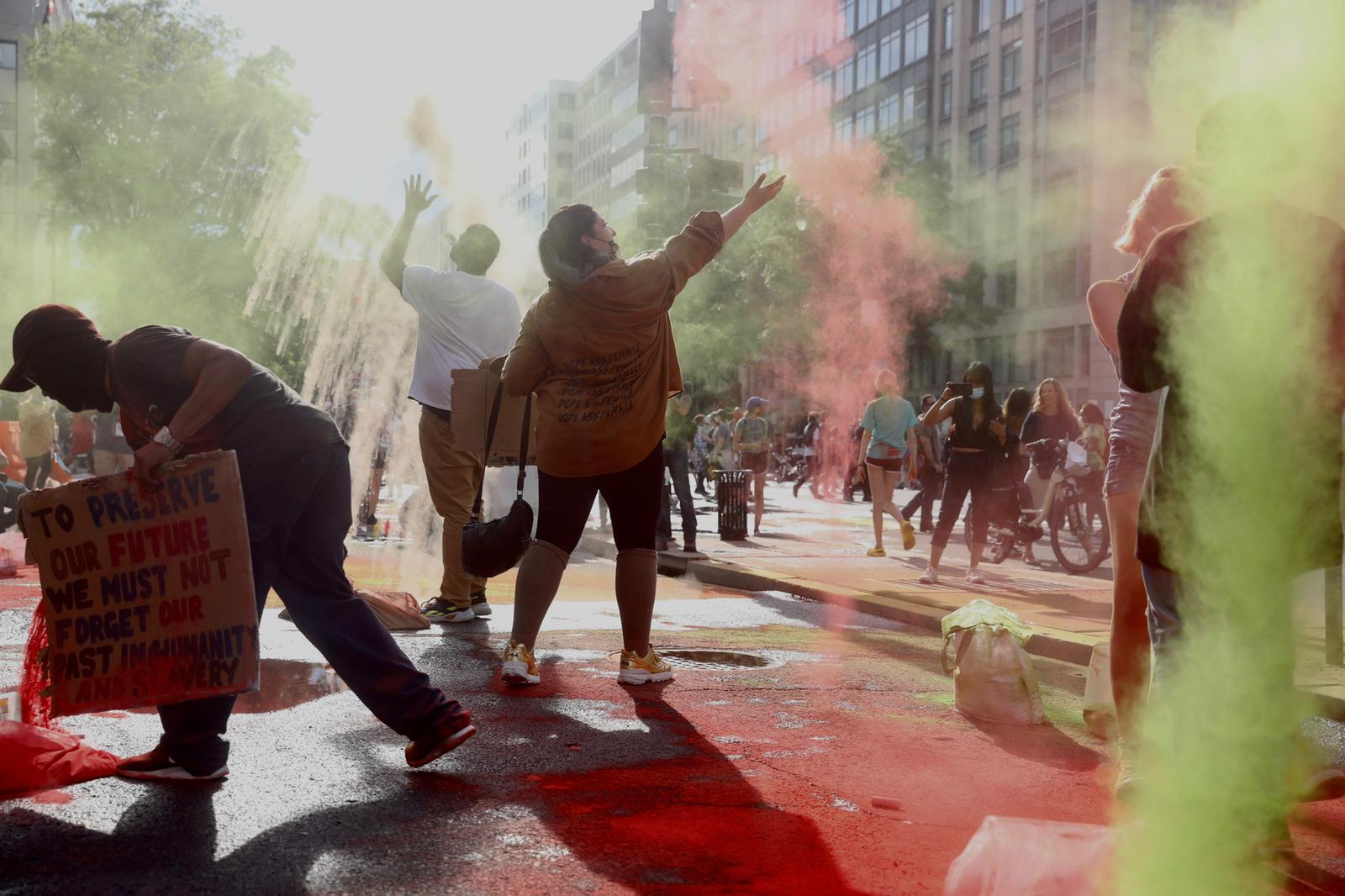
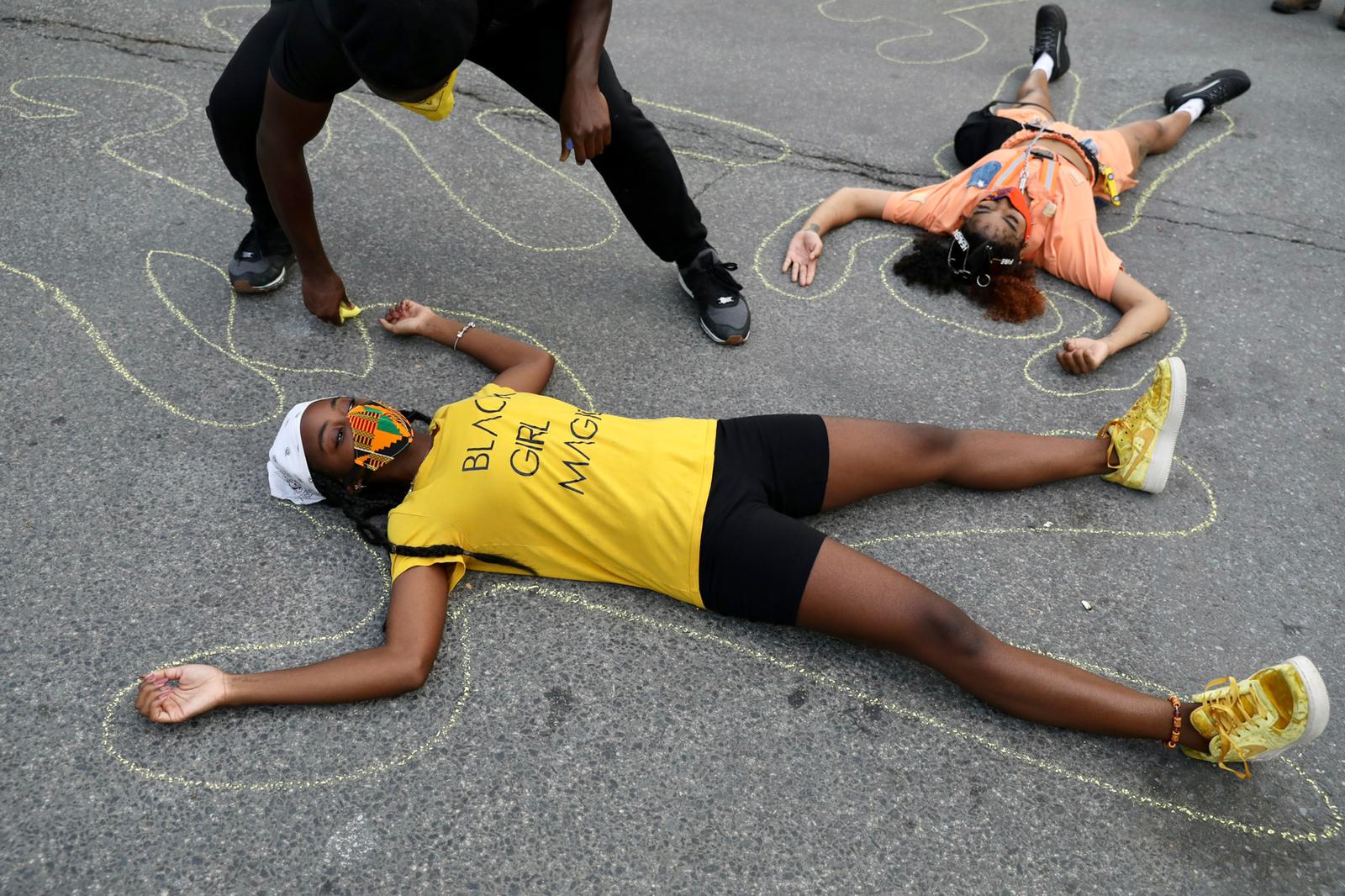
Elsewhere at Black Lives Matter Plaza, people created visual art to celebrate the day and tell their stories. Nearby, at 16th and K, people threw clouds of red and green powdered paint into the air. On H Street, near Lafayette Square, an artist drew chalk outlines around people lying prone on the pavement. Further up the block, at one tent, some wrote down thoughts about their experiences of race on cards.
“White supremacy is your privilege not to know us,” one card read. “To know us is a Bonus. For Us to know You is Survival.”
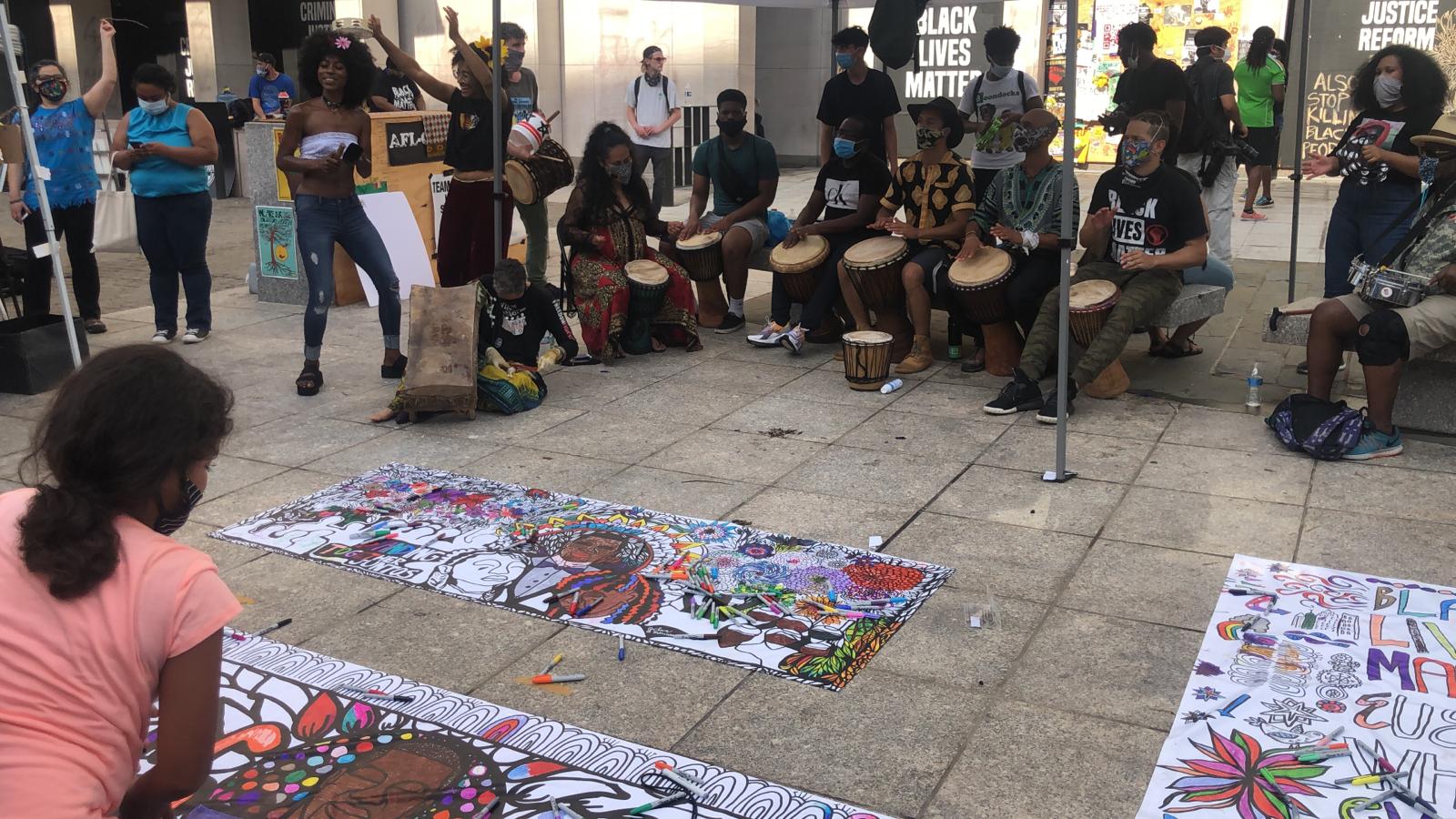
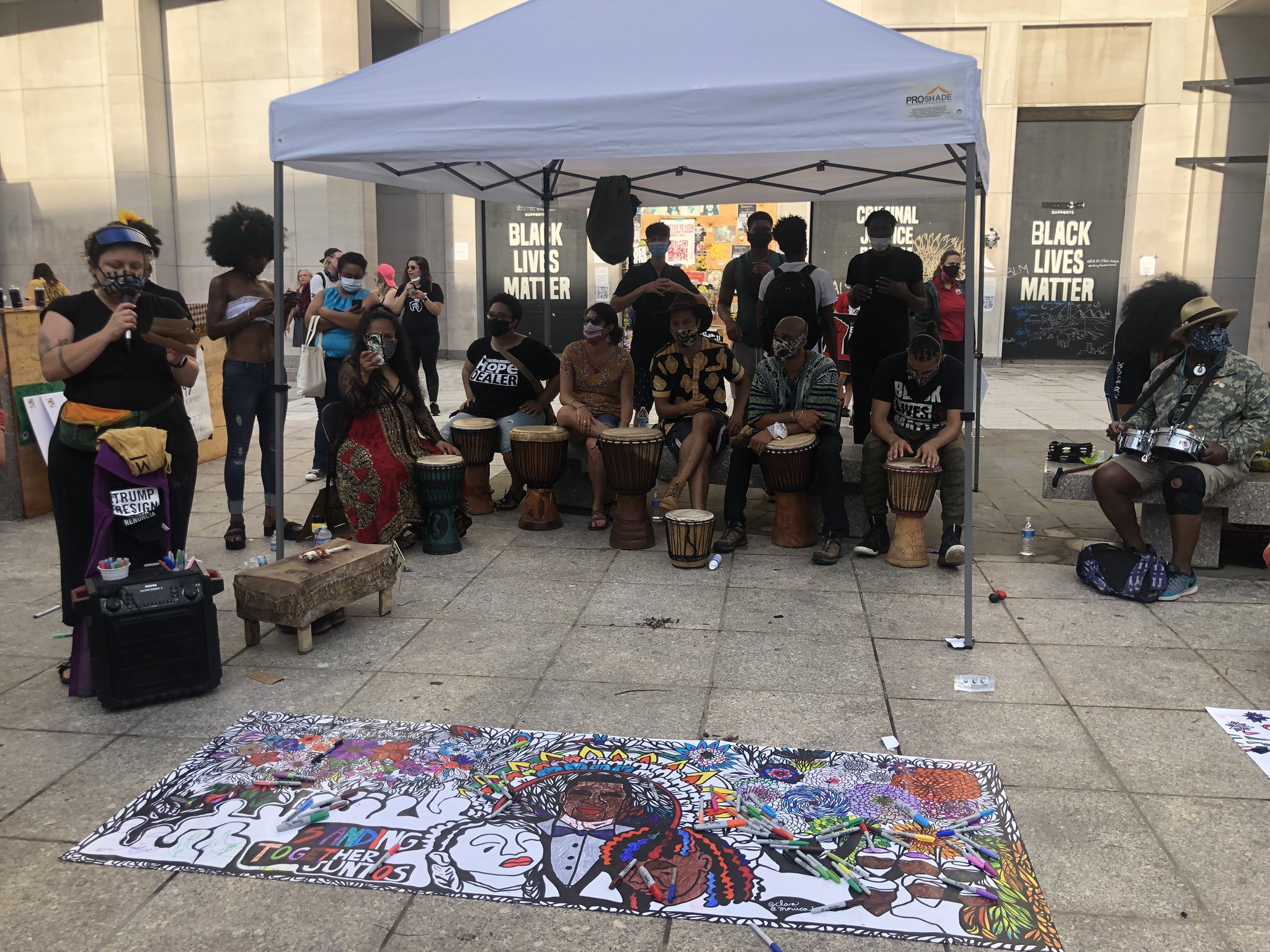
Under a tent, a drum line played while people colored and drew on big sheets of paper. Nadine Chadrien looked on while her daughter Lila colored.
“Slavery didn’t go away, it just changed forms,” Lila said. “Police brutality is a form a slavery.”
At 8 p.m., Black Lives Matter D.C. organized a march on the White House. Demonstrators chanted “Whose streets? Our streets!” and “If we don’t get it, shut it down!” and vowed to keep protesting until they won meaningful policy change.
More than three weeks ago, protests against police brutality began along the south side of Lafayette Square, facing the White House, but were pushed back — at times by tear gas, rubber bullets and flash-bang grenades — to the north side of the square and then 16th Street. The temporary fences blocking off Lafayette Park came down last week, and there is now additional black fencing surrounding the White House.
At around 11:30 p.m., a group of protesters marched past the Metropolitan Police Department Headquarters and on to the corner of 3rd and D St NW, where they tore down the statue of Confederate general, Albert Pike, and set a fire on it.
The statue is the only one of a Confederate general in D.C. Mayor Muriel Bowser, more than half the D.C. Council, and the D.C. attorney general have previously called for the statue to be removed from the federal land it sits on.
Police did not intervene as the crowd pulled down the statue. That provoked an angry tweet from President Trump.
Across the city, it was a day of considering — and reconsidering — history. Chris Guandique, who attended the protest at the Lincoln Memorial, hadn’t known what Juneteenth was two weeks ago. But the holiday’s social justice significance resonated with him.
“Seeing that [Juneteenth] did represent the last remaining slaves being freed, I feel like that represents a majority of America a lot more than just July 4th.”