 Julie Strupp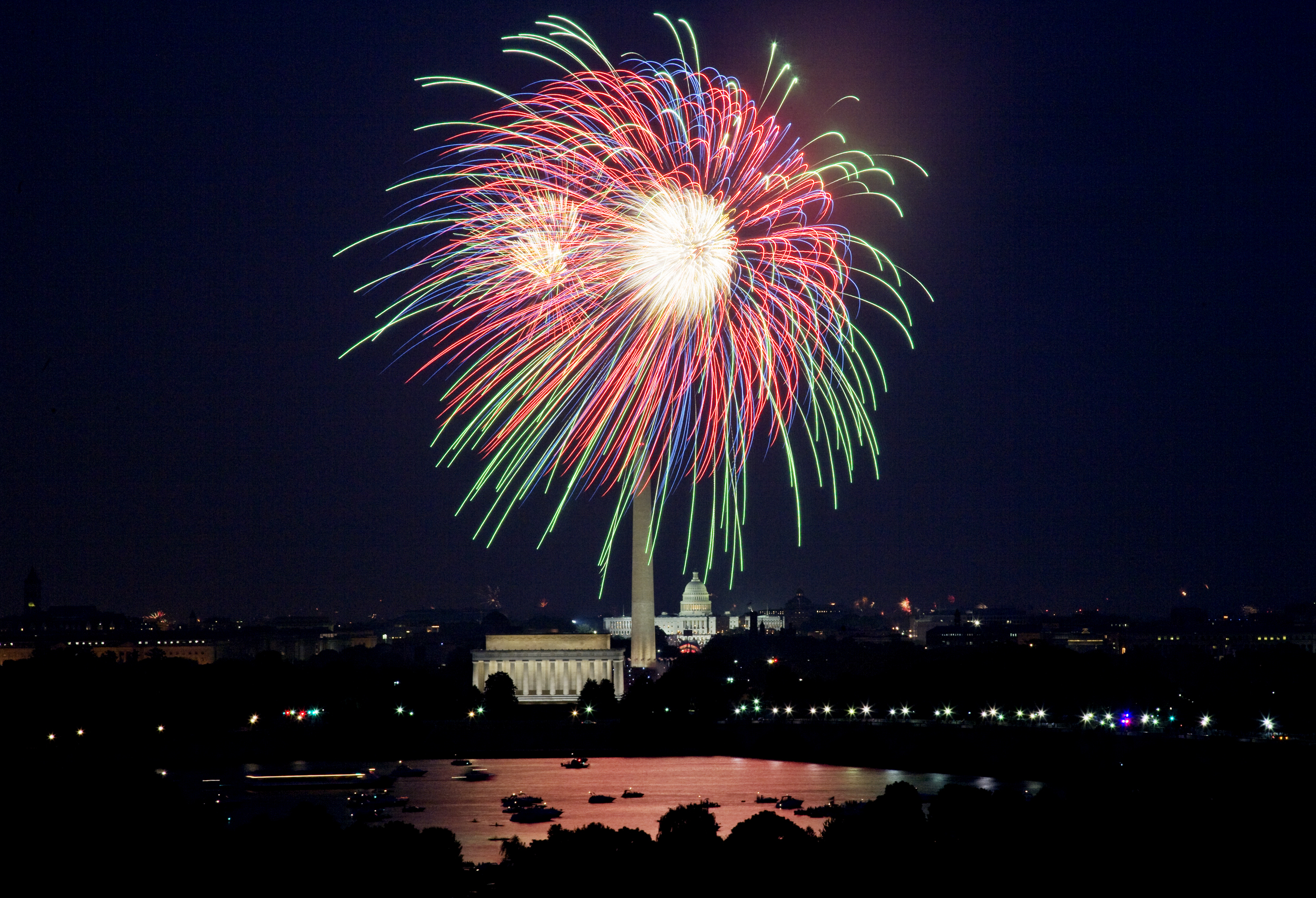
This story was updated on June 26 at 11:44 a.m.
Feel free to enjoy the fireworks on the Fourth of July, but plan on watching from home in small groups only, Mayor Muriel Bowser urged residents today. She expressed concern about the coronavirus circulating in the general population, and the possibility of another wave of transmission if residents do not remain diligent about social distancing.
“The virus has not disappeared, it is still in our community, and we have largely flattened the curve…[but] we have not eradicated the virus. We’re still reporting new cases each day,” Bowser said, reiterating that the District is still in a public health emergency. Even outside, she said, “large gatherings are still a high-risk activity.”
Despite the ongoing pandemic and D.C.’s guidelines prohibiting gatherings of more than 50 people except in special cases, President Donald Trump has gone ahead with plans for a second “Salute to America” Independence Day event on the National Mall.
Bowser said the National Park Service will assist with the White House fireworks show as it typically does, but expressed hope that “the crowds that come in non-pandemic years won’t materialize this year.” The city entered Phase Two of reopening on Monday.
Today, D.C. reported another 31 cases of the virus and two more deaths. There are 10,159 total known cases in the District, with 543 coronavirus deaths in all. D.C. is now seeing between 30 and 40 new cases each day, and overall, cases are plateauing.
The new cases are not connected to each other, which indicates moderate community transmission, according to D.C. Department of Health Director Dr. LaQuandra Nesbitt. That means there could be another wave of transmission of the virus if people aren’t careful about mitigating risk.
The criteria for entering Phase Three of reopening is now available on D.C.’s coronavirus website. They’re largely similar to those for entering the second phase: The city must have sufficient ability to track new cases, hospital bed capacity, among other steps.
Officials declined to offer a potential timeline for entering Phase Three.
“We need to see more of our cases being sporadic or connected to each other,” Nesbitt said. “It’s difficult to predict when that would occur from a time frame perspective.”
While parts of the U.S. have seen a large uptick in cases in the past weeks, Nesbitt pointed out many of the hardest-hit areas had higher cases of community transmission when they reopened than D.C., and allowed bars and clubs to reopen.
Nonetheless, Nesbitt said D.C. residents — especially for those in high-risk groups like people over 65 years old, those who have chronic health conditions, and those who are in close contact with vulnerable people — should continue to be careful. Bowser urged people to get tested if they think they might have been exposed.
“We don’t want to see any rebound in cases,” Bowser said. “Wear a mask, keep a 6-foot distance from others, and continue to choose your activities wisely. … Just because something is open doesn’t mean that I have to go. Just because there are going to be fireworks downtown, doesn’t mean I have to go.”
On Friday, Metro released its plan for handling Fourth of July crowds, which it expects to be “much lighter” than in years past. It will add extra train service starting at 4 p.m. to allow riders to social distance on their way to the display. Stations near the Mall will remain open for “entry only” for 30 minutes after the fireworks are finished, and after 9 p.m. most stations will be “exit only.”
“Customers are reminded that Metro cannot guarantee that social distancing will be possible at all times. Trains and stations may become crowded, and those planning to attend should consider all of their transportation options prior to traveling,” the agency said in its press release.
In her press conference Thursday, Bowser also urged residents to avoid public transportation on Independence Day.
This story was updated with information about Metro’s Fourth of July plans.