 Rachel Sadon
 Colleen Grablick
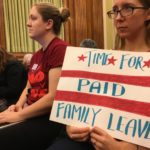
Paid family and medical leave has crossed its final hurdle in the District.
The city’s chief financial officer has certified that the program, which would give employees of D.C. businesses up to eight weeks of paid parental leave, has enough funding to move forward on July 1.
“This is monumental,” At-large Councilmember David Grosso, one of the law’s architects, said in an emailed statement. “No longer will working families in D.C. be forced to make the difficult choice between earning a paycheck or caring for a new family member or ailing loved one.”
In addition to the eight weeks of paid leave for a parent of a new child, the program provides six weeks of paid leave for individuals caring for a sick family member and two weeks for personal medical issues. The benefits, including wage replacement of up to $1,000 a week, are paid for by a .62% annual payroll tax.
CFO Jeffrey DeWitt announced Friday that the city has collected enough in tax revenue—$303 million—over the past year to proceed with the program as expected on July 1. Despite concerns about the state of the economy during the coronavirus crisis, the downturn projections aren’t likely to make the fund insolvent, he said.
“While Fund revenues will be reduced, the impact is less than the unemployment statistics may imply because the employment reduction is mainly in the hotel, restaurant, and other retail sectors with a high concentration of low-wage workers,” he wrote in a certification letter to Mayor Muriel Bowser and D.C. Council Chairman Phil Mendelson. “We applied a range of potential additional claims arising from COVID-19 illnesses and determined that the Fund remains solvent even under extremely costly scenarios that we consider unlikely to occur.”
Applications from the program will be available starting on July 1, according to the D.C. Department of Employment Services, and eligibility will be determined by each applicant’s unique set of circumstances.
But the law had a long road to get here—legislated, literally and figuratively, for years.
In 2015, Grosso and At-large Councilmember Elissa Silverman introduced an ambitious bill to offer the most generous leave benefits in the country.
It went through 15 months of exhaustive debate and revision before the D.C. Council passed a pared back version on a 9-4 vote. All four of the councilmembers who voted against the bill were close allies of Mayor Muriel Bowser, who steadfastly objected to the law (three of the councilmembers—Yvette Alexander, LaRuby May, and Jack Evans—are no longer in office, and the fourth, Brandon Todd, was just voted out.)
The mayor argued that the program was too costly, created additional bureaucracy, and benefitted too many people who don’t live in the District. But she faced a veto-proof majority on the Council and let it pass without her signature.
But it didn’t end there.
Five alternative bills were put on the table in fall 2017, none of which altered the number of paid weeks outlined in the original (the issue instead rested on how the money for the paid leave was administered, and where it came from). But all of these were later abandoned by Mendelson in February of 2018 — leaving the .62 percent tax in place, and setting an anticipated roll-out date of July 2020.
After all that, the debate reared its head again in the 2018 At-large race. Dionne Reeder, a small business owner backed by Bowser, attempted to unseat Silverman, specifically by attacking the paid family leave program. Reeder resoundingly lost.
The city began collecting the payroll tax in July of last year.
And still, after years of debate, the current program has its critics. Some advocates raised concerns earlier this year about who would benefit from the new program — and who would not.
The benefits will be eligible to most employees who work in the District, even if they live in Maryland and Virginia, and self-employed D.C. residents can choose to opt in. (But it doesn’t apply to the city’s largest employer: the federal government.)
The final language of the law stipulates that anyone seeking paid time off needs to be employed at the time they apply for benefits — prompting arguments that the law alienates employees who have voluntarily left their jobs, been fired, or are otherwise in between jobs at the time they have a child or medical issue in the family.
Silverman wrote a letter last September opposing the requirement that individuals must be employed at the time they seek benefits. Instead, she proposed a “portable” model for benefits, meaning that regardless of where an individual was employed (or not employed) they would be entitled to receiving the paid leave.
While that change was never made to the final draft of the law, Silverman says the launch of the program still marks an exciting day for D.C. workers, especially as they face the financial impacts of the pandemic.
“This is going to be a very big asset to our city, and certainly the pandemic has shown how important it is to have worker benefits in place,” says Silverman. “Paid family leave will allow people to avoid a financial catastrophe when they’re dealing with what possibly may be a life changing event — whether it’s a joyous life-changing event like welcoming a new child, or a sad event, saying goodbye to a family member.”
Silverman says she remains hopeful that the benefits can be expanded to more workers in the future, and that the program can be revisited after its initial launch.
“That might be somewhere where we could possibly make a change in the future,” says Silverman of her “portable” benefits plan. “I do hope that we’ll be able to expand it, and COVID-19 is a perfect example why. We have a lot of employers who paid into the system for workers who are no longer working for them, and those payments have already been made.”
This story has been updated with statements from DOES and Councilmember Elissa Silverman.