 Mikaela Lefrak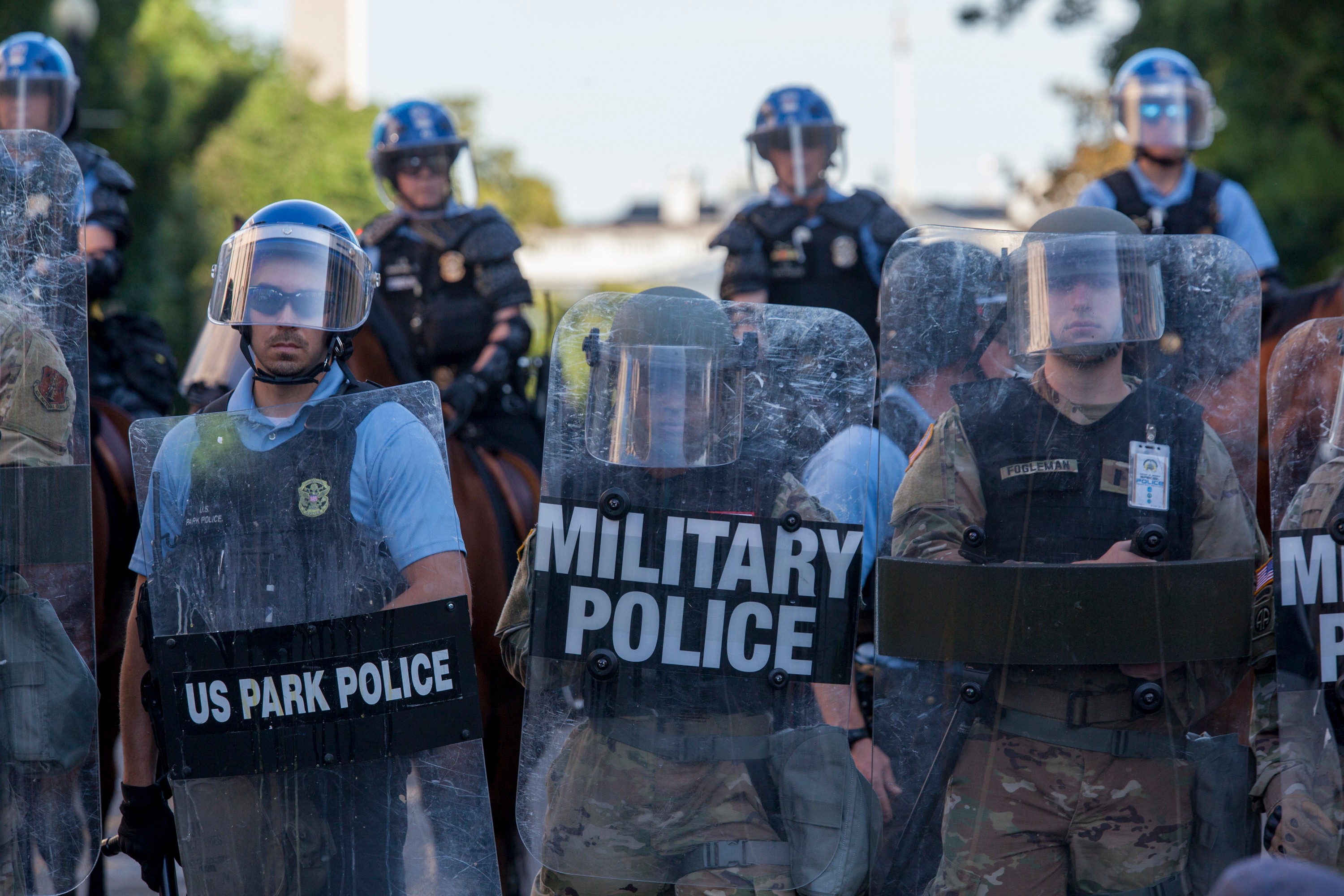
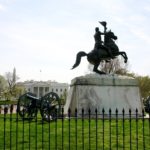
Weeks after protesters were removed forcefully from Lafayette Square, witnesses testified before members of Congress to denounce the “aggressive tactics” used against demonstrators by U.S. Park Police and other federal agents.
The House Natural Resources Committee held a hearing Monday to determine whether members should consider reforming Park Police guidelines around use of force, according to a spokesperson for the committee’s Democrats. The Park Police has jurisdiction over D.C.’s federal parks, including Lafayette Square.
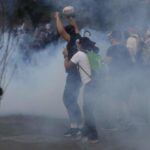
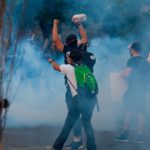
The hearing follows after U.S. Park Police and other federal agents used smoke canisters, pepper balls and batons to remove protesters from the area around the White House on June 1, half an hour before the city’s 7 p.m. curfew that day. President Donald Trump then walked across the park to pose for a photo opportunity while holding a Bible in front of St. John’s, a historic church that had been damaged during the previous day’s protests.
Civil rights activists, Democratic politicians and journalists have since questioned the aggressive tactics used by the U.S. Park Police to disperse the protesters.
“Instead of honoring this collective outcry for justice, this Administration answered demands to end police brutality with more police brutality,” Raúl M. Grijalva (D-Ariz.), the chairman of the House Natural Resources Committee, said in his opening statement at Monday’s hearing.
The Democrats called three witnesses: a Black Lives Matter protester, an Australian journalist and an Episcopal bishop.
Mariann Budde, the Bishop of the Episcopal Diocese of Washington, testified about the experiences of her parishioners at St. John’s Church who were volunteering that day in support of the protesters.
“Nowhere does the Bible condone the use of violence against the innocent, especially those who are standing up for justice,” she said.
Kishon McDonald, a Navy veteran and Black Lives Matter protester, is part of a lawsuit filed by protesters and civil liberties groups against the Trump administration for violating demonstrators’ First Amendment rights in the June 1 incident. Black Lives Matter D.C. and a number of local residents, including a nine year old, who were protesting the killing of George Floyd say they were given no warning before federal law enforcement used tear gas, pepper spray capsules, rubber bullets, and flash bombs to clear the public space.
McDonald testified that he didn’t hear any warning from the Park Police before they began to advance.
“It is unacceptable to treat protesters that way,” said McDonald, who also filmed his interactions with Park Police that day.
Amelia Brace, the U.S. correspondent for Australia’s Seven News, spoke about how a Park Police officer repeatedly struck her cameraman with his riot shield, even as she shouted that they were journalists. Like McDonald, Brace said she heard no warning sounds.
The Republican witness, George Washington University law professor Jonathan Turley, agreed that the attack on Brace and her cameraman “appeared unjustified and unlawful.” However, he said a court would likely disagree with assertions that the protests were entirely peaceful. He called for a further investigation into the Park Police’s “aggressive tactics” and the type of PA system reportedly used to convey the three warnings telling protesters to disperse.
Confusion has swirled around what happened at the June 1 protest, partly because of contradictory statements made by Park Police officials. Sgt. Eduardo Delgado, a Park Police Spokesperson, told CNN that he had made a mistake in denying the use of tear gas at Lafayette Square.
Soon after, Park Police Acting Chief Gregory T. Monahan issued a statement denying tear gas had been used. Monahan was invited to Monday’s hearing but said he was not available to attend.
Members of the House committee went back and forth with the witnesses for more than two and a half hours. Democrats’ often used their questions to hone in on McDonald’s and Brace’s experiences at the protest, and to draw attention to Trump’s threats to use force and “vicious dogs” on protesters. House Republicans tended to focus on the violence, arson and vandalism committed by a group of protesters in the days and hours leading up to the Lafayette Square incident.
House Democrats have pressed the Trump administration for answers about its response to protesters during the June 1 protest, writing in a June 3 letter to U.S. Attorney General William Barr that protesters “…Were exercising their rights under the First Amendment. They were assembled peacefully and posed no obvious threat.”
Since then, Interior Department Inspector General Mark Greenblatt has penned a letter to congressional leaders saying his office would “make an initial determination of which agency had command and control of the law enforcement operation and conduct a review of Park Police actions accordingly.”