Matt Blitz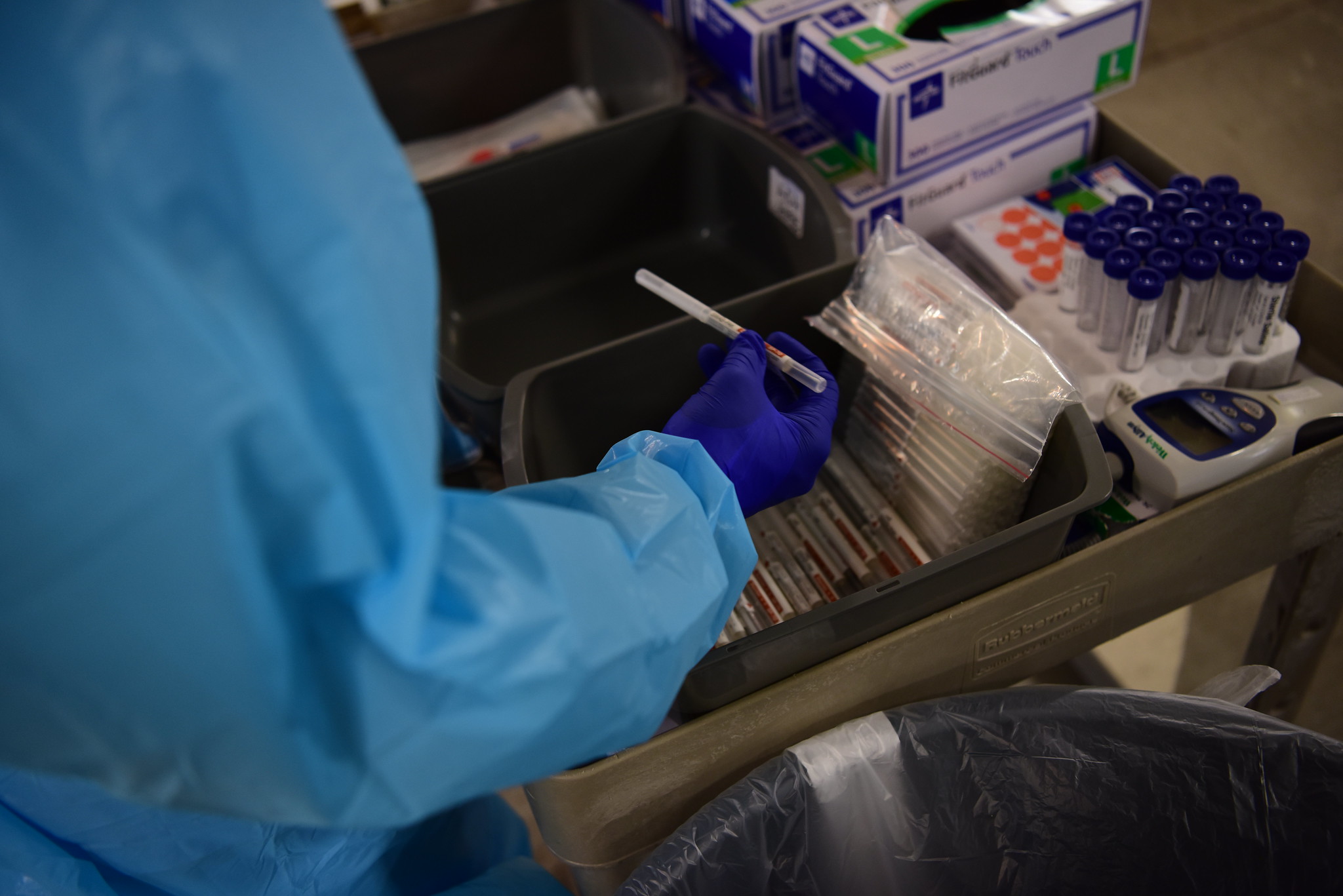
With coronavirus cases spiking across the U.S., several elected Montgomery County officials are worried that the county will be unable to meet testing needs should the surge happen regionally.
“Where we are headed, we are going to need to conduct 50 or 100 times more tests than we are [currently] doing per day,” says Montgomery County Councilmember Hans Riemer. “The capacity has been there for months, but what’s lacking is an implementation of a testing strategy.”
Councilmember Gabe Albornoz agrees, saying the volume of tests available to the county is “light years ahead from where we used to be,” but there’s a gap between capacity and what’s actually being used.
“It’s not just the tests themselves, but the manner in which we administer them,” says Albornoz. “It’s the system building that needs to take place to be able to provide those tests, particularly in the zip codes that have been disproportionately impacted [by COVID-19].”
According to state data and as of July 2, more than 95,000 people have been tested in Montgomery County, which is the most of any county in Maryland. However, that’s about 9% of the county’s population, which is slightly below other populous jurisdictions in the state percentage-wise — like Prince George’s County (10%) and Baltimore City (11%).
In general, the country is testing far more people than even a month ago, adding about 620,000 new tests on July 1, compared to 413,000 on June 1. But there’s a fear those numbers will slow down with the country now stretching it’s testing capacity supply chain due in large part to the surge happening in states like Texas and North Carolina.
Testing capacity is defined not simply as the test kits and supplies needed, but the infrastructure and system building that comes with being able to provide an individual a test and results in a timely manner.
This is where both Riemer and Alboronz feel the county is falling short currently.
On May 21, Montgomery County announced a contract with the Rockville-based lab AdvaGenix to provide 20,000 saliva-based testing collection kits per week by June 8. It’s not the nasal-based swab test that remains common. According to a Montgomery County Health and Human Services spokesperson, the county currently uses saliva-based tests at all public testing sites.
Dr. William Kearns, AdvaGenix’s president and scientific officer, confirms to DCist that they are able to abide by the contract with the county to provide and process a “minimum of 20,000 tests per week” and says they will be able to exceed 30,000 tests per week, starting next week.
However, only about 10,000 people per week are being tested in Montgomery County, Dr. Travis Gayles, the county’s chief of public health services, tells DCist. And that number isn’t just the tests being administered by the county, but also by hospitals and private care providers within its borders, according to an HHS spokesperson.
That’s far below the number of tests that AdvaGenix says they can provide and process.
So, the question is why the availability of tests is considerably outpacing the ability to collect and get results. “That’s the million-dollar question,” says Reimer.
He believes a big reason is a lack of urgency in providing enough ways for people to get tested. Right now, according to Montgomery County’s website, there are three public testing sites in the county open on alternating days from 10 a.m. to 2 p.m. While testing is free and no doctor’s order is needed, appointments are necessary.
“If we wanted to have an aggressive strategy, we would have [them open] twelve hours a day, sites in 25 or 30 locations in the county,” Reimer says.
The fear remains about a regional case surge or a second COVID-19 wave come the fall. Currently, the county has a three-day average of 75 confirmed cases a day, which is a slight uptick from previous days but overall down from mid-June.
If the surge does happen, Riemer hopes that Montgomery County will be able to manage the testing component of it.
He specifically cites the testing being done at D.C. firehouses since the beginning of June as one good example of how rapidly to expand site infrastructure. “Montgomery County has everything within its boundaries to lead the country in testing and to demonstrate that effective testing can support economic recovery,” says Riemer. “We need to implement a testing strategy that will conduct enough tests so that we can successfully reopen and not have to go backward.”
Albornoz also believes this, but says it’s even more true for lower-income communities. He says that there are often a lot of underlying conditions that result in a positive test — like employment status, housing situation, socio-economic challenges, and “cultural competence” issues related to how the county is providing information. (Specifically, he cites the lack of county-employed bilingual speakers who answer calls to schedule appointments.)
He also says there’s often little trust in the government in these communities due to national rhetoric, public policy, and past mistakes; such as, when an unknown number of test results went missing mostly from the county’s most underserved communities.
“It’s been a perfect negative storm. Testing capacity has been compromised. The ability to administer those tests has been compromised. And working through all of that has been a struggle and very frustrating,” says Albornoz.
Gayles says it’s a lot more complicated to get testing sites up than perhaps some realize. “Certainly, we would have loved to ramp up faster, but it has taken time to get the logistics worked out,” he says.
He specifically mentions pricing and insurance questions that needed to be worked out, launching a new registration system, a method of quickly providing results, and making sure an order provider is attached to each test (something that proved to be an issue previously). “We’re trying to move as quickly as we can, but we also want to make sure that we are putting something out there that works for people,” says Gayles.
He says that they are adding “pop-up sites” throughout the county, in a similar vein as the one held in Takoma Park last week, something Gayles has touted and ensured would be up soon since the beginning of June. These sites will allow hundreds, if not thousands, of people to get tested in short order, he says.
Reimer and Albornoz both say that the issues with closing the gap between available tests and the systems to get people tested don’t fall squarely on the county’s shoulders. “There is a lot the county can and should do to manage and facilitate, but we undoubtedly need the state to be a strong partner,” says Albornoz.
Gayles admits as much, adding that the “federal government has not been the best partner” either.
In April, the county received $183 million in federal aid to help with economic recovery. Gayles says this could be used to help set up more testing since it’s “an important component of recovery,” however he couldn’t say how much of that aid has been spent already or earmarked specifically for testing infrastructure.
Kearns of AdvaGenix says they are in the process of upping their capacity even more and says that by the end of 2020, they will be able to supply and process upwards of 90,000 tests per week. That would mean that about 9% of the county’s population could be tested per week if the other systems are in place to provide the testing.
“I think we have the means,” says Riemer. “The question now is whether we have the will and the direction to pull it off. Those are still very much open questions. But I’m hopeful.”