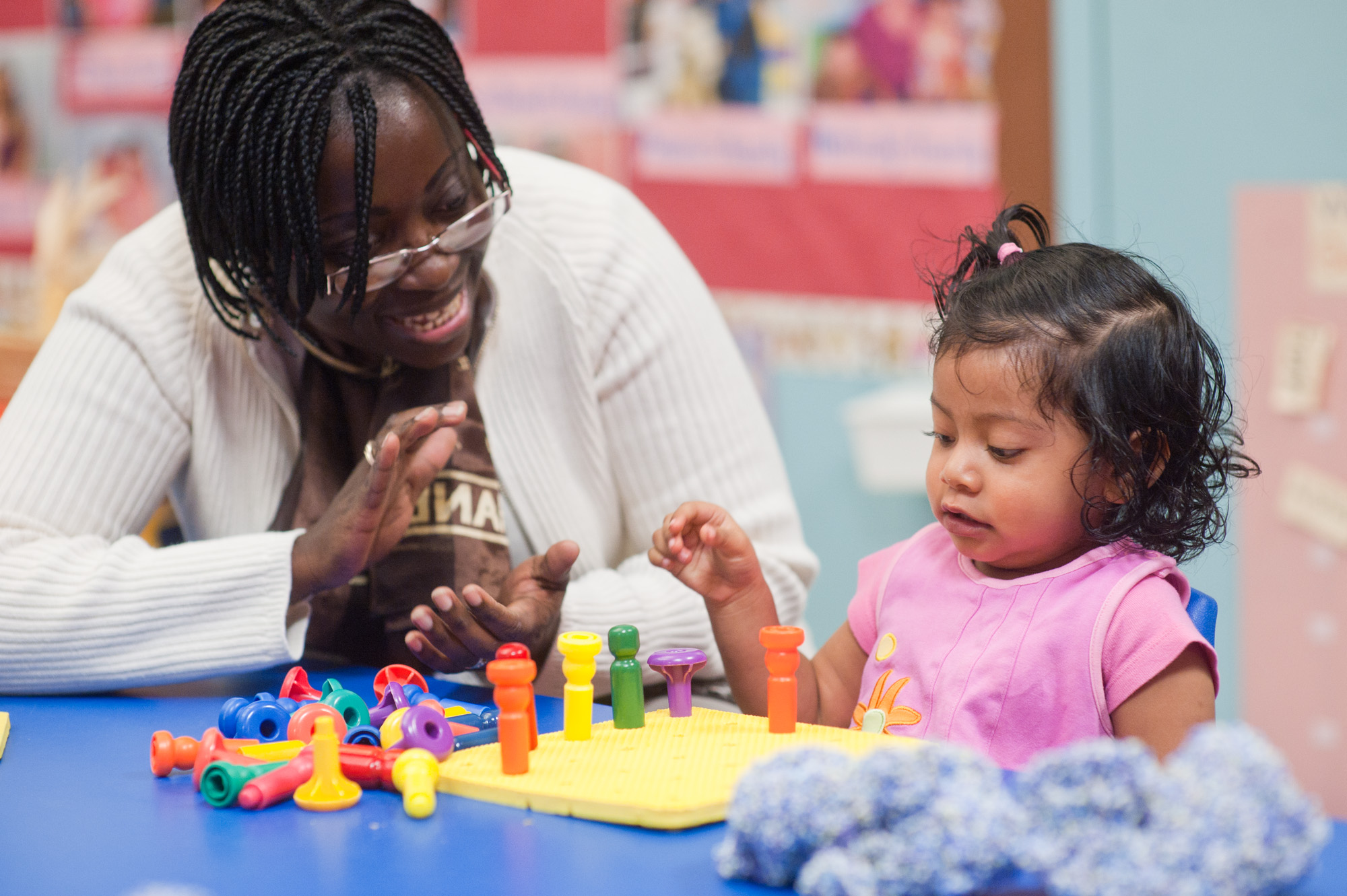
Sylvia Crews has worked in child care for more than 20 years. In the past five, she looked after nine children under the age of three at her home based-child care service, LTH Infants and Toddlers Center. But in mid-March, she decided to close her center.
Crews helps support her parents and is raising children herself, so expenses add up. She paid her two employees as long as she could, but in June she had to lay them off.
“It’s been kind of rough on me,” she said.
Crews isn’t alone. Many District child care centers and homes have closed during the pandemic, some temporarily and some permanently, even with help from the D.C. government. An NBC4 Washington investigation shows nearly 40% of all child care centers in D.C., Maryland, and Virginia have temporarily or permanently shuttered since the beginning of 2020.
Think tank Center for American Progress released a dire analysis that estimates up to 20% of child care slots could be permanently lost in D.C. as a result of the pandemic without an infusion of money. The numbers are even more dire for neighboring states: 53% of slots in Maryland and 45% in Virginia could be lost.
Now five foundations — Bainum Family Foundation, A. James & Alice B. Clark Foundation, Esther A. and Joseph Klingenstein Fund, The J. Willard and Alice S. Marriott Foundation and the Richard E. & Nancy P. Marriott Foundation — have banded together to create a $1 million pot of money to help 115 small early childhood providers in the District.
But even those organizing the effort say the money is just a fraction of what’s needed. Christie McKay, director of education for Mary’s Center and executive director of Briya Public Charter School, organizations that helped organize the relief, said providers will receive between $4,000 and $8,000 dollars each over a four-month period. She said that amount just isn’t a lot of money.
“When you think about the costs of teacher salaries, when you think about rent in the District of Columbia, it’s a drop in the bucket [compared] to what the actual costs are,” McKay said.
In addition, she said providers have to reduce the number of children in each room, which increases staffing needs. “So it’s just hard to make the numbers work.”
Sylvia Crews applied for a “DC Child Care Reopening Fund” grant as soon as she heard about it.
“It will help towards my payroll. Also my mortgage, my utilities. It will just help, period,” Crews said.
In addition, the money will help cover new additional costs, such as “the PPEs, the Clorox, the disinfectants, the thermometers, the face masks, the shields.”
Crews is also going to need to make other changes. She can’t use the big table she has anymore and must buy individual desks so kids can sit further apart. And every child needs to have their own paint boxes, Play-Doh and toys.
“For everything now, it’s an individual thing where before it was shared. They can’t share it no more,” she said.
Angelique Speight-Marshall is the owner of Mrs P’s Child and Family Services. She has struggled to stay open, but she has a personal reason for doing so.
“I have a daughter who is 28 with special needs, and I understand the importance of people being able to go to work because I was one of those parents.”
But the majority of the children she cares for are new. Several of her regular parents had to withdraw their children.
“A number of them have lost their jobs and been displaced or unemployed or underemployed,” Speight-Marshall said.
Now she looks after seven infants and toddlers, all of whom are the children of essential workers — home health aides, truck drivers and grocery store employees. One child, a nurse’s daughter, went through two other child care centers that closed before coming here.
Speight-Marshall has also applied for a grant. She said there are a lot of additional costs and work. She spends many more hours doing laundry and disinfecting toys multiple times a day, not to mention ordering protective equipment. She received some masks from the D.C. government, but they went through them fast.
“It’s daily-use masks, we have to throw them out every day. I had to call Amazon and ordered me a bunch more, so I would order 50 to 100 at a time,” she said.
Speight-Marshall also having to contend with new health and safety guidelines for toddlers, which seems an oxymoron.
“They’re used to hugging and kissing and holding each other to walk down the street. But now, you don’t even want them to touch. And it’s hard when you have little children because they don’t understand.”
She separates them by giving them different activities. At the moment, “two of the kids were outside, another baby was inside hollering, one was asleep and one was coloring.”
They also play outside a lot. She’s given them individual walkie-talkies so they can talk to each other from a distance.
Speight-Marshall said any financial help will help a lot.
“Child care pushes the economy,” she said. “If you’re happy with the child care you have, you’re going to go to work and be effective. You’re going to make money for that organization, for your family. And millions, millions of people have children.”
This story originally appeared on WAMU.