Debbie Truong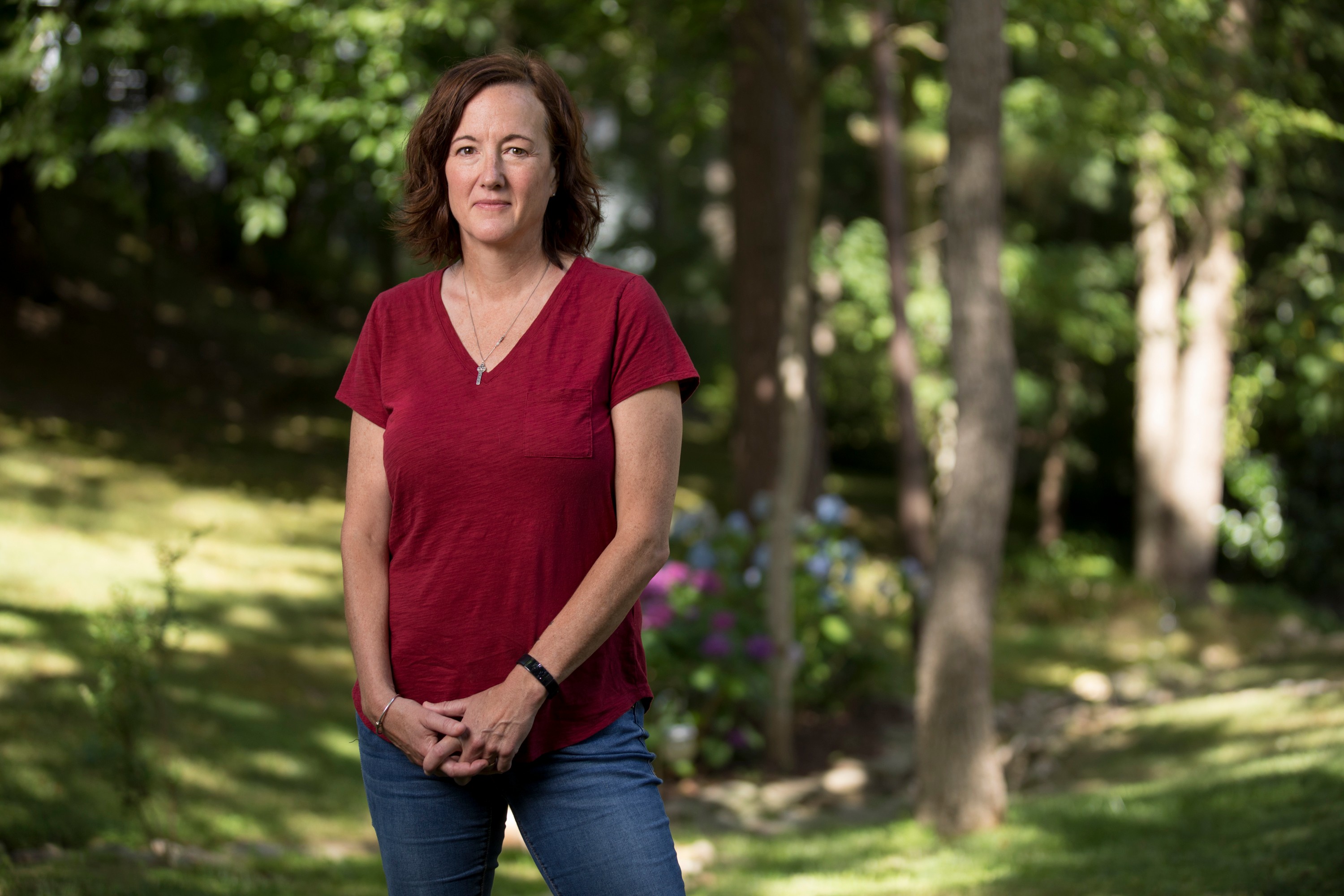
Catherine Smart was ready to return to her classroom at Charles J. Colgan High School in Manassas, Virginia.
She is the only German language teacher at the school in Prince William County, and spent most of the spring trying to recreate lessons online for the school’s close-knit community of German speakers. But she missed interacting with her students in-person and was eager to teach in her classroom again.
Then her entire family was stricken with the coronavirus.
“Being a teacher is the thing that has fulfilled my soul,” she said. “But now the idea of setting foot in a school building terrifies me.”
As school systems across the Washington region shape plans for fall instruction, teachers have increasingly said they feel unsafe returning to school and worry about risking their health and the health of their families. They fear safety precautions do not account for the realities of teaching, arguing it is impractical to keep students six feet apart or have them wear face masks during the entire school day.
The Maryland State Education Association, the state’s largest teachers union, and the Maryland PTA sent a letter to Gov. Larry Hogan (R) this week calling on state leaders to offer only virtual instruction at the start of the 2020-2021 school year. Arlington Public Schools’ superintendent plans to propose online-only instruction when classes begin in the fall, retreating from earlier plans to offer a mix of in-person and virtual instruction.
Still, several school systems are forging ahead with plans for in-person classes.
Mayor Muriel Bowser is expected to announce plans for fall instruction in D.C. Public Schools on Thursday that Chancellor Lewis D. Ferebee told teachers will include online and remote learning. In Northern Virginia, the school systems in Fairfax and Loudoun counties have given families the option of sending students to school one or two days a week. The rest of the time would be spent distance learning.
The school board in Prince William is weighing several options for the upcoming school year, including plans that could partially reopen schools. A vote is expected on Wednesday night.
Smart is torn by the possibility of returning. She does not know if she is immune to the novel coronavirus. Her family was able to self-quarantine when they became ill in June, and she dreads the possibility of inflicting the sickness on students.
“Thankfully, we weren’t out in the community spreading it,” she said. “But we very well could have been.”
‘This Brought Us To Our Knees’
After Smart’s 19-year-old son returned home from a trip in June, he felt lethargic and feverish. He tested positive for COVID-19 after taking a test at a pharmacy and began isolating in the family’s basement.
Within days, Smart said her other son, who is 17, began violently vomiting. The boy visited an emergency room three times, where he was hooked to bags of IV fluid. At home, Smart said she consoled her son from the opposite side of a bathroom door, as he clutched the toilet.
“He couldn’t catch his breath because the physical act of this vomiting was so consuming,” she said.
Smart and her husband also eventually tested positive for the coronavirus. Smart was bedridden for days, dizzy and unable to open her eyes without strain. Her clothes became drenched in sweat, and her limbs felt leaden.
“I would lay in bed wondering, ‘If I die, how is my husband going to pay off the house?” she said. “I’m an Army veteran. I know how to suck it up and drive on and be tough. But this brought us to our knees as a family.”
The pain subsided by the Fourth of July, Smart said, and her family has recovered. But she said her 17-year-old son, who is still dealing with gastrointestinal issues from the sickness, does not want to return to Woodbridge High School in the fall. She said the boy does not want to risk the possibility of enduring the illness again, and is willing to forgo attending in-person classes during his senior year.
The Prince William County school system and others across the Washington region will allow families to keep their children home and have provided options for remote learning only. Teachers who are considered at high-risk of contracting COVID-19, including those 65 and older, may teach at home. It’s unclear if teachers who simply feel unsafe returning to classrooms will have the option of only teaching virtually.
Smart said she prefers keeping classes for high school students online and wants the school system to spend the next couple of months refining its virtual instruction.
“I don’t know if I could walk into a school in the fall,” she said. “I still don’t know, knowing what my family’s been through, that I could overcome that need to protect my family.”
To Open Or Not?
In surveys, families and teachers in Prince William were divided over returning to school or continuing with distance learning only.
About 29 percent of parents in the Northern Virginia school system said they were “very comfortable” with sending their children to school once or twice a week, another 28 percent said they were “somewhat comfortable.”
More than 29 percent of teachers told the school system they were “very comfortable” with allowing students to return in smaller groups on staggered schedules, another 34 percent of teachers told the school system they were “somewhat comfortable” with the possibility, according to survey results.
The National Education Association and the American Federation of Teachers, the two largest teacher’s unions in the country, issued a statement with the American Academy of Pediatrics and the School Superintendents Association, acknowledging that students rely on school for services that cannot be replicated online.
“Returning to school is important for the healthy development and well-being of children, but we must pursue re-opening in a way that is safe for all students, teachers and staff,” the statement said. “We should leave it to health experts to tell us when the time is best to open up school buildings, and listen to educators and administrators to shape how we do it.”
In Maryland, which is in Phase Two of reopening, schools may bring students back to school in small groups. Still, school leaders in the state’s two largest school systems, Montgomery County Public Schools and Prince George’s County Public Schools, plan to start the school year virtually.
In the District, which is also in Phase Two, schools may allow no more than 12 people inside a classroom. Students must stay in the same group of students throughout the day and maintain six feet of distance.
State recommendations in Virginia, which is in Phase Three, say schools can reopen with physical distancing measures.
Prince William County School Board chairman Babur B. Lateef says it will cost the 92,000-student school system about $42.5 million to purchase protective equipment, cleaning supplies and digital devices for the fall. The district plans on delaying $20 million in building renovations to help pay for the additional costs, and received $9 million in federal relief money.
Lateef recognizes teachers’ concerns about returning to school. But he says students also face learning losses and deteriorating mental health when campuses stay closed.
“It doesn’t serve us well to pit teacher versus student or teachers’ health versus students’ education,” Lateef said. “There is a risk of not bringing kids back, as well. And at what point does that risk outweigh the coronavirus?”
A Hard Decision
Ginny Hutcheson studied the list of safety precautions Arlington Public Schools would put in place, if schools reopen. All students and staff members would wear face masks, unless they received a medical exemption. Students would be split in two groups and attend school on different days. Schools would require physical distancing.
“I teach third grade and I have to remind my kids to keep their shirt on appropriately,” Hutcheson said. “A mask? There’s just no way.”
Hutcheson, who teaches at K.W. Barrett Elementary School, added her students would not be able to interact normally, play and work in groups if schools reopened with the restrictions. She is among a group of Arlington educators who are calling on the school system to continue with distance learning until no new coronavirus cases are reported in the county for 14 consecutive days.
The Arlington school system, which educates more than 28,000 students, initially offered families two options for the fall: an online-only plan, or a plan that would allow students to return to school two days a week and spend the rest of the time learning from home.
Arlington Superintendent Francisco Durán reversed course this week, and proposed a plan that would have all students starting the school year virtually. In a message to the community, Durán said he revised the district’s plans after reviewing concerns from educators and parents.
He noted that coronavirus cases continue to rise across the country.
“The health and safety of our staff and students has been our top priority, and beginning the year with a virtual model allows us to continue to monitor the situation until we are confident it is safe to return,” he said.
In Prince William, Melissa Alexander worries about bringing the virus home to her 14-year-old daughter Julia, who survived brain cancer, and her 97-year-old great aunt.
During a rally for Prince William teachers, Alexander said teachers are accustomed to making sacrifices. She spends her own money to supply books and hand sanitizer for students.
“We bend, we bow down and we accept for the greater good,” she said. “But here’s the deal, y’all. This time you’re playing with my life and with the life of my sweet, medically fragile child.”
In an interview, Alexander said she took two years off from work to care for her daughter and her family had only recently started saving money again. They cannot afford to forgo her paycheck but she said she will not return to in-person teaching in the fall — even if it means she could be furloughed.
“It’s what’s safest for our family,” said Alexander, who teaches about 150 students each year. “We will figure it out. We’ve had to figure it out before, and we will now.”