Colleen Grablick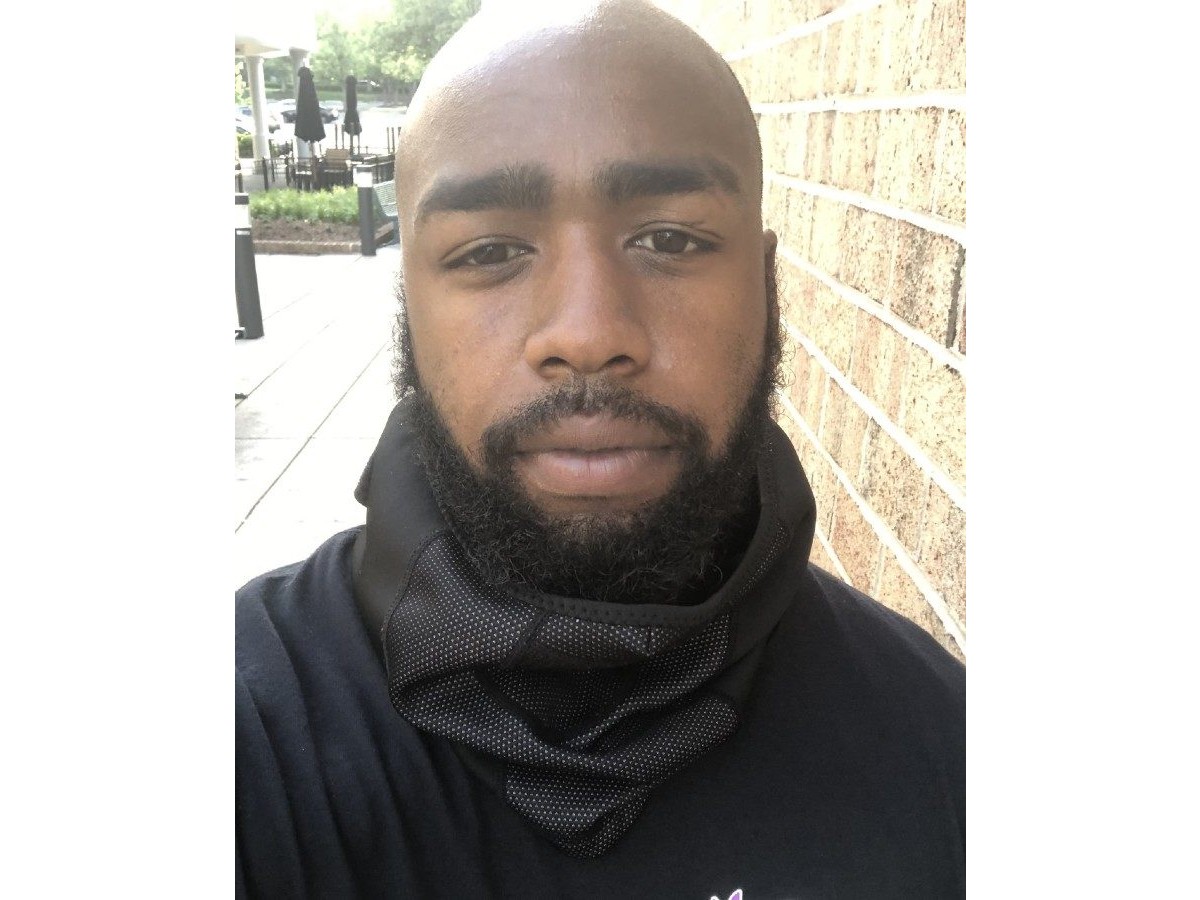
Nearly every job in the District has been upended by the coronavirus pandemic. Some people are working from their homes instead of going into an office; others have taken pay cuts or lost their jobs entirely. But there are plenty of people who are still doing their work in person, even as the world has changed dramatically. This series features the voices of the “still at workers,” telling us what their lives are like right now and what they wish other people knew about being an essential worker during a pandemic.
Donte Martin, 28, has been working in retail since he was in his early 20s. For the past eight months, he has served as a front-end manager at a Giant in Silver Spring.
Martin has seen the effect of the pandemic on shoppers in his workplace, turning the store from a place that once held a “home-like atmosphere” into a bed of tensions and anxieties — for shoppers and workers alike.
In mid-March, as the pandemic began gripping the region, Martin was featured in a Washington Post column about his struggles as a front-line worker. Since that story was published, the store has taken increased precautions, but the air of anxiety — and the challenge of dealing with panicked or noncompliant shoppers — remains.
This interview has been edited for length and clarity.
How has the pandemic changed your job?
Before, it was a more friendly, homelike atmosphere, but now we have to sanitize more and monitor people. Now, there’s more caution. There’s new rules we’ve had to implement. At first there was a limit to 100 people we would let in [the store at a time]. Then when Maryland reopened, it doubled to 200.
What kind of safety measures or PPE are you using to do your job? How are you staying safe?
I personally wear a mask and I wear gloves. Myself and other co-workers first bought masks and gloves with our own money. Some people wear face shields, other people wear things to cover their head.
[Earlier in the pandemic] I was trying to wear a hoodie to cover my head with my mask, but I was told by a [customer service] manager I looked like a terrorist or a criminal with that on, so I couldn’t wear it. I was honestly hurt. Being a Black man, no matter what I do that’s how they will look at me.
[When asked about the incident, Giant’s corporate office told DCist via email, “Giant Food takes matters like this very seriously and we do not condone discrimination, racism or other forms of hatred. We have looked into this matter closely and taken the appropriate actions.”]
What have your interactions with people been like?
I deal with a lot of different types of people shopping. Sometimes I have customers that really want to get in and out of the store. They came in there for the things they need, maybe if they haven’t been to the store in a few weeks. They want to get in and get out, and they want to follow all of the rules. But some people don’t take the rules as serious, so they don’t really care about keeping their six feet, while other people do care.
Sometimes customers might not understand why we’re doing something, like cleaning a register in between each customer. For example, I have a cashier who is in her fifties, and she was cleaning a register in between customers, and then she asked a customer to stand behind the plexiglass. The customer got upset, and threw a bottle of hand sanitizer at her. This cashier is old enough to be somebody’s mother — she is somebody’s mother — and that’s the type of stuff we deal with.
I have to always have awareness at work, because you never know what’s going through someone’s brain or the intention someone left the house with. Sometimes people have bad days, so somebody could just come over to start a confrontation, and people have been doing that. They’ll come to the store and antagonize a cashier, and it happens more frequently than people realize. Some people don’t have jobs, and a lot of people can’t afford to maintain the life they had, so I’m always aware of some people’s situations. Some people don’t have money, or they had a bad day, and they want to make a political point, or something. All of that stuff, myself and my [co-workers] are always aware of.
What would you like people to know about your job?
Just understand that we’re people, too. The same way that some people might come into the store and complain about the rules, sometimes we’re confused about the rules too. A lot of times we don’t make the rules, we just implement and follow them.
It’s a growing situation, and we don’t fully understand the situation. So all we need is time. I would like people to understand that we’re just as lost as them, and we’re just trying to do our best.
How could they make your life easier?
Just by following the best safety procedures — whatever the CDC is saying, whatever the government is saying. Just try to do better for the next person, we should all be OK. I want the customers to be good humans, and then we should all be OK.
Previous Still at Workers:
A Veterinarian Made A Pact To Preserve PPE For Human Health Workers
A Home Health Aide Is A Companion To Members Of D.C.’s Most Vulnerable Population
A Farmers Market Vendor Says Regulations On Markets Are ‘A Mistake’