 Jordan Pascale
A major traffic safety bill passed its first hurdle at the D.C. Council meeting on Tuesday. The bill has more than a dozen provisions, from accelerating infrastructure projects to educating drivers and creating stricter traffic laws to prevent fatalities on the roads.
The Vision Zero Omnibus bill was introduced last May after a rash of high profile traffic deaths and a series of rallies for change.
“This is a transformative groundbreaking bill that will save people’s lives,” said Councilmember Charles Allen before the bill passed 13-0. It still has to go through a second vote and get mayoral and congressional approval before it becomes law.
D.C. has a goal of eliminating traffic deaths by 2024. But so far it’s not on the path to reaching that goal. Eighteen people have been killed on the streets of D.C. this year, more than the 14 who were killed at this time last year. All this despite record lows in traffic volume because of the coronavirus pandemic.
The bill comes with a $171 million price tag over four years, according to the D.C. budget office. Transportation committee chair Mary Cheh said that “seems steep to me” and they’ll work with the budget office to parse the cost. Meanwhile, the council agreed to enact the cheap or free parts of the bill first. The rest will come as funding becomes available.
The bill did lose one controversial idea: empowering 80 citizens to document parking violations in bike lanes or crosswalks and send evidence to the police.
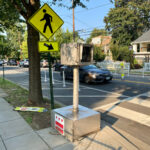
But the major parts of the bill will require significant dollars, to pay for building sidewalks on both sides of road and painting crosswalks where there are no markings. That would happen when there’s any major road construction or repair.
It also forces the District Department of Transportation to execute plans the city has created. If a protected bike lane is listed in the MoveDC plan and work is done on that road, the bike lane must be built at the same time. An amendment also advocates for bus and bike-only lanes.
It expands the use of cameras to enforce stop signs and red lights.
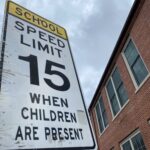
Less intensive measures include lowering the speed limit on local and collector streets to 20 mph, which Mayor Muriel Bowser already enacted in June.
The bill also makes it illegal to turn right at red lights at intersections within 400-feet of high traffic areas like schools, rec centers, libraries, Metro stations, and more. Cheh says it bans turning right on red at 84 percent of D.C. intersections.
It also changes the law around distracted driving to include prohibitions against driving with over-the-ear headphones or earbuds in both ears. It ensures a driver’s record will incur points for distracted driving violations.
Drivers who apply for a new or renewal driver’s license must take a written test.
The bill also bans oversized vehicles from parking along unprotected bike lanes.
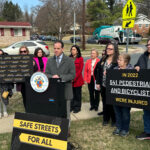
Organizations like Greater Greater Washington and the Washington Area Bicyclists Association supported the bill.
“Of course, the Vision Zero omnibus bill isn’t perfect, and it’s not a panacea—that’s true of all legislation,” Alex Baca of Greater Greater Washington wrote. “But, right now, there’s no comprehensive set of rules on the books that would actually begin to make real the mayor’s long-stated, though hardly operationalized, commitment to zero traffic deaths in the District of Columbia.”
She says it’s easier to amend a bill than start over.
WABA approved of the bill, but didn’t want the requirement for cyclists to have a rear light.
“Though rear lights can be helpful for improving bicyclists visibility at night, and, like bells and helmets, can be a helpful safety accessory, we believe this change is problematic…,” WABA wrote in a statement.
They say it creates another pretext to stop, detain, cite, or arrest people who bike, which can lead to increased harassment and criminalization of communities of color.
“It also blames the cyclists for the lack of sustainable infrastructure needed to keep them safe,” WABA wrote.
In response, the council amended the bill to say police cannot stop a cyclist for not having a light alone–there must be another offense.