Matt Blitz
Contact tracing has revealed that an “increasing number” of individuals have dined at D.C. restaurants while infectious with COVID-19 in recent weeks. In addition, tracing has shown that a number of individuals were infectious while recently being in the workplace, according to city officials.
At the Mayor’s press conference Wednesday, D.C. Health Director LaQuandra Nesbitt noted that 10% of positive individuals told contact tracers that they had traveled within two weeks of being diagnosed. These findings come just over a week after the Mayor’s office said anyone traveling to the District from any of 27 states deemed “high-risk,” must self-quarantine for 14 days.
This includes Delaware, which is quite popular with Washingtonians as a summer vacation spot due to its water-side towns like Rehoboth Beach and Bethany Beach.
Many of these findings are in line with what Maryland also revealed last week. A large portion of people who gave Maryland contact tracers information about their activity had attended family gatherings and worked outside the home.
“In large part, our trends are not dissimilar to what’s happening in Maryland and other jurisdictions,” Nesbitt said.
While performing contact tracing, the city says they look at two different categories; activities in the two weeks prior to diagnosis when the virus could be incubating and activities while actually infectious. Both have given officials concern in terms of the spread of the virus in the District.
As with many other places in the country, statistics in D.C. have shown that the number of positive cases for younger people is increasing. While the likelihood of death may be lower, “it doesn’t necessarily mean that severe illness or death doesn’t occur in younger populations,” Nesbitt said.
She also continued to caution that younger people who are infected, particularly those who live in intergenerational homes, can easily introduce infections and widespread transmission to people who may be more at-risk for severe illness or death. “It is not a benign issue for young people to be the primary spreaders… in communities,” Nesbitt said.
In late June, D.C. moved into Phase 2 of reopening, which allowed for limited-capacity indoor dining, slightly larger gatherings, and for non-essential retail businesses to reopen. However, since that time, cases have continued to rise and D.C.’s data shows an increasing trend of cases in the community dating back to the beginning of July.
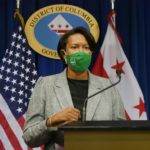
With the new data presented Wednesday, D.C. Mayor Muriel Bowser was asked if the city will reconsider allowing indoor dining.
“We are watching very closely several activities,” Bowser said. “[We are] making sure people are following the rules.”