 Dominique Maria Bonessi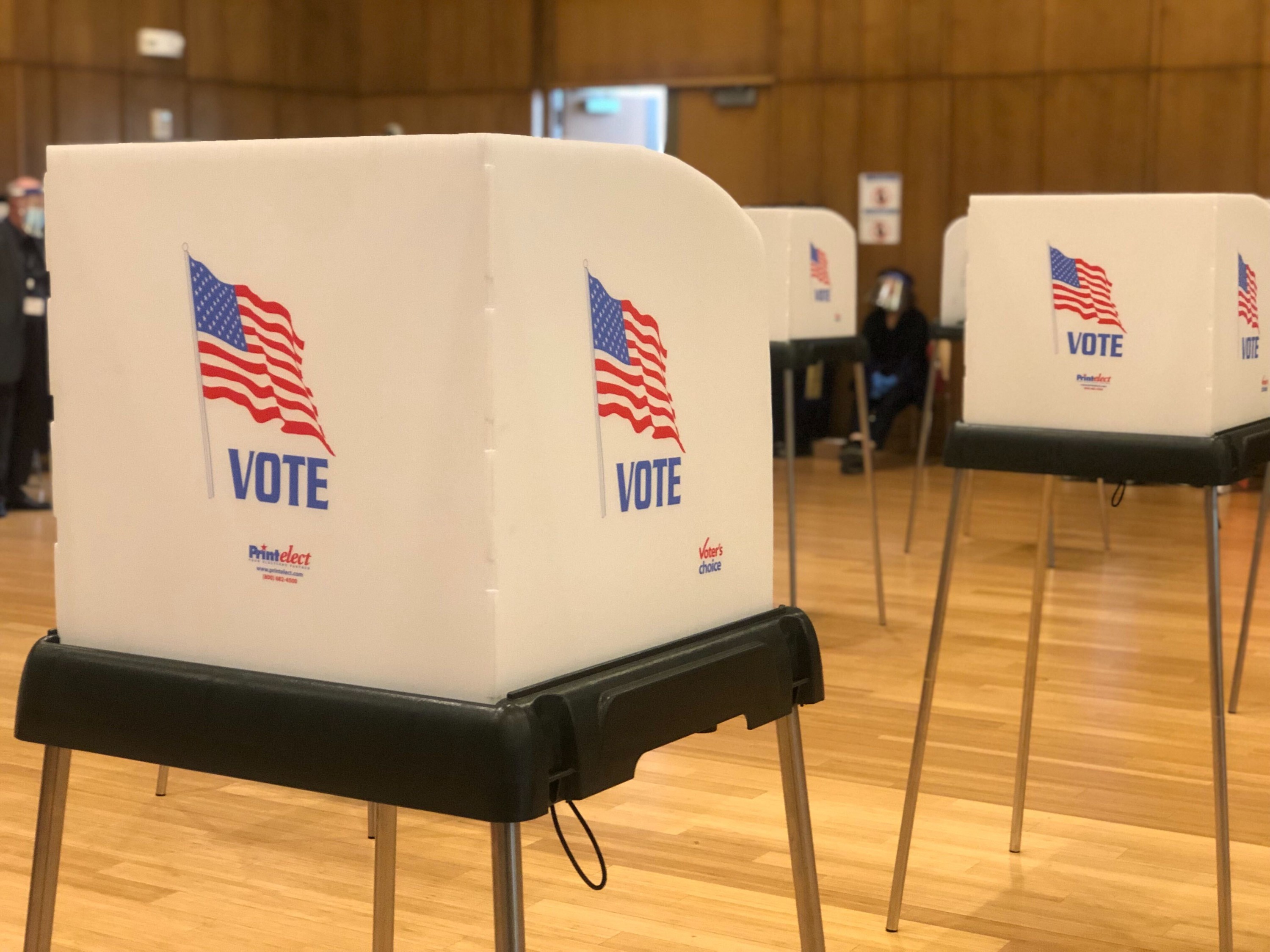
Updated 9:58 p.m. on Aug. 10
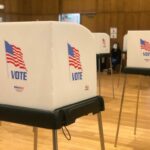
Maryland Gov. Larry Hogan has authorized the Board of Elections to carry out its new plan for the November election, which involves operating about 360 voting centers throughout the state on Election Day. Under the plan, the state will use its 232 public high schools as polling sites and keep its 79 early voting locations open on Election Day. Voters will be able to cast their ballot at any location in their county, rather than an assigned location.
Hogan had previously called for keeping all traditional polling stations open on Election Day — more than 1,800 locations.
Some elections officials, however, pushed back on this plan, arguing that it would be impossible to find enough poll workers in the middle of a pandemic.
In a letter, Hogan continued to voice his frustration with the Board of Elections for what he described as “months of delay and indecision,” regarding its plan for the election.
“As I have previously stated, I do not intend to interfere with the Board’s sole responsibility to conduct the election under the law,” Hogan wrote, announcing that he had issued a proclamation authorizing the board to move forward with its plans.
In July, the governor also directed the board to mail every registered voter an absentee ballot application. In his letter Monday, Hogan said his “only direction” to the board was to “expand and encourage” mail-in voting by promptly sending out the ballot applications.
Elections officials say they plan to send the mailings on Aug. 24, according to WTOP.
Despite green-lighting plans to limit the number of Election Day polling stations, Hogan said Monday that he remains “concerned” this move could lead to “long lines and unsafe conditions, with crowds of people being forced into too few polling places.”
“Expeditiously mailing the ballot applications, encouraging voting by mail, and protecting early voting options will be critically important steps needed to lessen the problems caused by your decision to close the vast majority of the polls,” Hogan wrote.
Original story:
Maryland’s Board Of Elections has granted preliminary approval to give voters more flexibility and reduce the number of polling places on Election Day, Nov. 3.
Under the plan, the five-member board would allow all 79 early voting locations to remain open on Election Day and use the state’s 282 public high schools as voting centers. This is a significant decrease from the more than 1,800 polling places the state normally operates. It would also give voters the option to go to any polling site in their county to cast their ballot. The board voted to send their proposal to Gov. Larry Hogan Friday evening during a virtual video meeting.
“This would be a floor, not a ceiling,” Michael Cogan, chair of the board, told members. “Obviously we encourage counties to open as many voting centers as they are able.”
The proposal runs contrary to what Hogan had called for in early July, which was an election with all 1,848 traditional neighborhood voting precincts open. Under state law, the new plan would need to be approved by Hogan.
“[Hogan] is either not going to do it or he’s going to do it,” said PJ Hogan, one of the board’s Democratic members who proposed the plan. “If he’s not going to do it, I don’t want to say we’re back to square one, but then we’ve got to come up with a different plan.”
The decision to change in-person voting procedures relates to the state’s severe shortage of poll workers due to the coronavirus pandemic. Over the past week the board, like others around the country, has been grappling with how to proceed with the November election under those conditions.
“Failure to give us some of the tools we need to be successful is going to put the outcome of the entire election in doubt,” David Garreis, president of the Maryland Association of Election Officials [MAEO], told board members earlier in the week.
Garreis and his MAEO colleagues presented a plan to the board that would have allowed 162 voting centers to open, but board members thought that was too few voting sites. Another proposal would have allowed counties to consolidate voting precincts, but Garreis pushed back saying it would cause long lines at voting sites and confuse voters.
In a letter to the board prior to the meeting, Hogan wrote that existing laws gave the board the authority to make decisions about consolidating voting places, but added that “proposals to close roughly 90% of the polling places — particularly in minority communities — would result in voter suppression and risk violating the Voting Rights Act.”
Hogan concluded the letter by saying that the board’s “continued delays and deflections are absolutely unacceptable. These are your decisions to make, and this is your responsibility to uphold. We cannot risk the repeat of failures of the June primary.”
A plan has to be approved by the end of August to give time for the board to order the ballots for each precinct.
The plan also includes opening early voting sites from Oct. 29 to Nov. 2, allowing voters to deliver their mail-in ballots to one of the 120 ballot drop boxes, having voters cast their ballots via mail, and begin counting votes days before Election Day to be able to release results that night. All those details will need to be fine-tuned in the next three months.
Democratic lawmakers on Thursday continue to press Hogan and the board for further changes to the election. A letter from Prince George’s County Delegates Julian Ivey and Ron Watson, Senator Joanne Benson (D-Prince George’s), Montgomery County Delegate Kirill Reznik, and four other lawmakers from the Baltimore area demanded that Hogan and the board send mail-in ballots to every voter rather than ballot applications.
This story was updated to reflect new information from the letter from Democratic lawmakers.