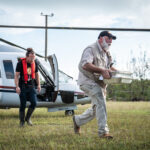
After a pair of devastating explosions rocked Beirut last Tuesday, killing at least 200 people and leaving thousands injured, the D.C.-based World Central Kitchen sprang into action.
The nonprofit organization, which was founded in 2010 by celebrity chef and humanitarian José Andrés, quickly mounted a response to the catastrophe. It mobilized a team in Lebanon and sent its director of field operations, Sam Bloch, to the capital city.
ON THE WAY to Beirut 🛫 WCK’s @SamBloch1 reporting in as we activate in Lebanon to support those impacted by yesterday’s tragedy. We have a team mobilized on the ground and will begin serving meals shortly with local partners & chefs. #ChefsForBeirut pic.twitter.com/7adwXztImo
— World Central Kitchen (@WCKitchen) August 5, 2020
“Much of the city is covered in broken glass & thousands of volunteers are in the streets helping to clean,” World Central Kitchen tweeted two days after the explosions. The nonprofit partnered with famed Beirut chef Kamal Mouzawak — who, like Andrés, is also known for his charitable work — to deliver 800 Lebanese dishes and sandwiches to local hospitals, elderly residents, and first responders within its first 24 hours on the ground.
WCK is on the ground in Beirut after the devastating explosion. Much of the city is covered in broken glass & thousands of volunteers are in the streets helping to clean. We’ll be working alongside @kamalmouzawak to prepare nourishing meals in the morning & expanding from there. pic.twitter.com/C7H5eCqyCL
— World Central Kitchen (@WCKitchen) August 6, 2020
UPDATE FROM BEIRUT with @SamBloch1 & @kamalmouzawak where the team has prepared the first 800 fresh meals for those in need. These meals are heading out the door to a local hospital, seniors sheltering in place, and first responders. We will share more soon! #ChefsForBeirut pic.twitter.com/AL6oYLjlIZ
— World Central Kitchen (@WCKitchen) August 7, 2020
In addition to Mouzawak’s Tawlet restaurant, a few other Beirut establishments joined in World Central Kitchen’s food-relief efforts. Since last week, they have collectively provided thousands of meals at numerous locations across the coastal city, according to the nonprofit.
“By working with restaurants in the community, we can support the local economy, which is especially critical now as small businesses have struggled so much during the pandemic and the financial crisis,” World Central Kitchen said in an Aug. 7 release. “The Lebanese lira has lost over 80% of its value and many stores cannot even afford to keep food on the shelves.”
While this is far from the first time Andrés organization has provided humanitarian aid in the aftermath of disaster — in recent memory, it helped feed passengers on a cruise ship beset by COVID-19 as well as survivors of various hurricanes — it’s now responding to compounding crises in Lebanon in the context of alleged endemic corruption. This week, as Lebanese citizens protested in the streets of Beirut and clashed with police, the ruling government stepped down. Authorities are still investigating the circumstances of the blasts, which were reportedly fueled by 2,750 tons of ammonium nitrate held at the city’s port.
A glimpse into WCK's relief efforts in Beirut, Lebanon. 🇱🇧 Working side-by-side with the local team, hundreds of meals were delivered for people impacted by the explosion this week. We're just getting started & will be back tomorrow with meals for more than 2,000. #ChefsForBeirut pic.twitter.com/6fqSLhLt9G
— World Central Kitchen (@WCKitchen) August 7, 2020
FROM BEIRUT 🇱🇧 WCK’s Relief Team started the day with a delivery of 350 sandwiches 🥪 to a community organization in Borj Hammoud, who then distributed them to families in need. We’re ramping up & adding more restaurants to help prepare meals as the city recovers after the blast. pic.twitter.com/WCGXkaejUQ
— World Central Kitchen (@WCKitchen) August 8, 2020
UPDATE #3 with @SamBloch1 in the streets of #Beirut as our team delivers hot meals into the community. Thousands of volunteers have shown up to clean, so in addition to providing food for people impacted by the blast, we’re feeding those coming together to help. #ChefsForBeirut pic.twitter.com/eA3k0Ph7gK
— World Central Kitchen (@WCKitchen) August 9, 2020
Andrés, who also heads the major ThinkFoodGroup restaurant group, arrived in Beirut himself earlier this week. (He said he went through two COVID-19 tests on his way.) In a video posted on his Twitter account Monday, he reflected on the difficult situation facing the city.
“You have to create the systems to feed people every single day … and probably this is gonna be for weeks until everybody goes back to whatever ‘normal’ means,” he said.
Hello from #Beirut! Late here….but checking in from @WCKitchen headquarters with the team. Tomorrow 6,600 meals to 30 locations…Here’s the start to the map! We are activating more restaurants & kitchens this week…More news soon! #ChefsForBeirut pic.twitter.com/9Y7W7gg9vT
— Chef José Andrés 🕊️🥘🍳 (@chefjoseandres) August 10, 2020
Let’s wish well the people of #Beirut — Let’s wish well the people of the world. One plate of food at a time, we can always give hope. Good night and see you tomorrow… 😘#ChefsForBeirut pic.twitter.com/LVYcIqqZvc
— Chef José Andrés 🕊️🥘🍳 (@chefjoseandres) August 11, 2020
The international community has pledged to provide accelerated aid to Lebanon. The Lebanese community in the D.C. area is playing its part too: Local organizations and restaurants are putting on fundraisers and collecting donations for the overall relief effort.