 Daniella Cheslow
Updated 11:44 p.m.
Virginia lawmakers gathered in Richmond Tuesday for the start of a special legislative session that began as a budget meeting but has ballooned amid the pandemic and ongoing racial justice protests to include health, the economy, and police reform.
Gov. Ralph Northam (D) began the day with a virtual address, urging lawmakers to move quickly to adjust to a projected $2.7 billion shortfall in the two-year state budget.
“No one could have seen that a pandemic could have pushed the world to a recession. So there is no roadmap to get out of it,” he said.
Despite the economic losses caused by the pandemic, Northam urged legislators to allocate money toward voter access, including by paying postage for absentee ballots. He also pressed lawmakers to move quickly to reform policing and criminal justice.
Democrats who control the House of Delegates and state Senate brought a similar agenda to the legislature.
The 100 members of the House of Delegates sat at tables spread out at the Siegel Center, ordinarily used as an arena for the Virginia Commonwealth University basketball teams.
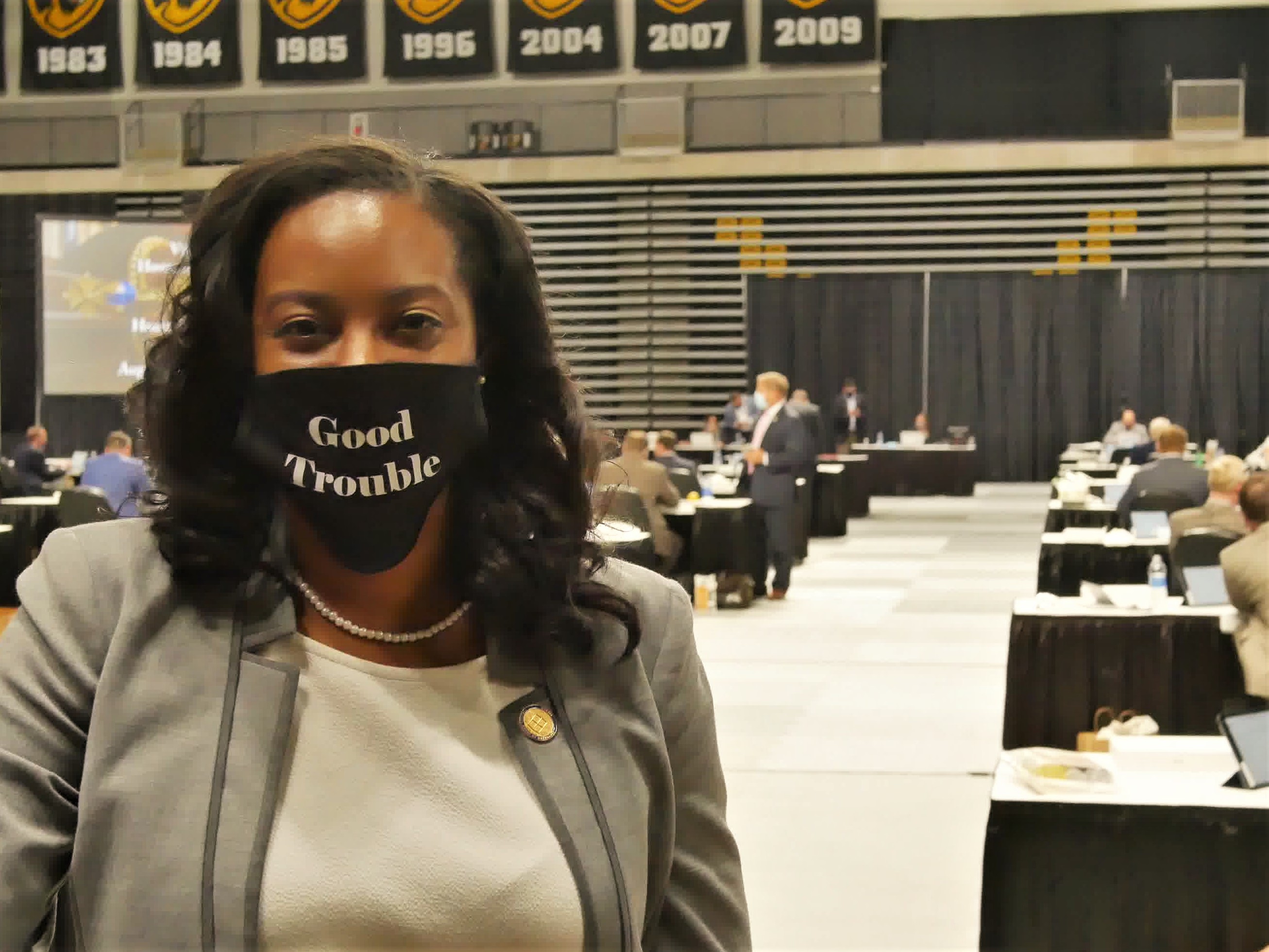
House Speaker Eileen Filler-Corn (D-Fairfax) stood behind a VCU podium, the ceremonial House Mace on a table in front of her.
“Virginians are hurting,” she said. “We are all here today to support our economy, to support our schools, to support Virginians in every corner of the Commonwealth during these unprecedented times.”
She also pledged to take “long-overdue action” on criminal justice and police reform.
A sharp party divide rose nearly immediately, as House Majority Leader Charniele Herring (D-Alexandria) proposed a resolution to limit each lawmaker to three bills and to limit the scope of bills to only the pandemic; the budget; and police and criminal justice reform. The divide reflected Democrats’ recent takeover of the House, after Republicans were in power for years.
“Will Republican bills be heard in committee?” asked House Minority Leader Todd Gilbert (R-Shenandoah).
“It is up to the Speaker when bills are heard and not heard,” Herring replied. Then, she added, “I have had plenty of times in special session when I’ve filed a bill and it is not heard.”
Next, Filler-Corn moved to hold the remainder of the special session remotely. Republicans blocked her attempt to start virtual session immediately, and House lawmakers will likely only be able to begin considering bills next week.
Filler-Corn said she wanted to meet remotely for health reasons, as members were each returning to their homes and communities.
“We’re talking about a pandemic. And we see what happens when you’re not careful,” she told reporters.
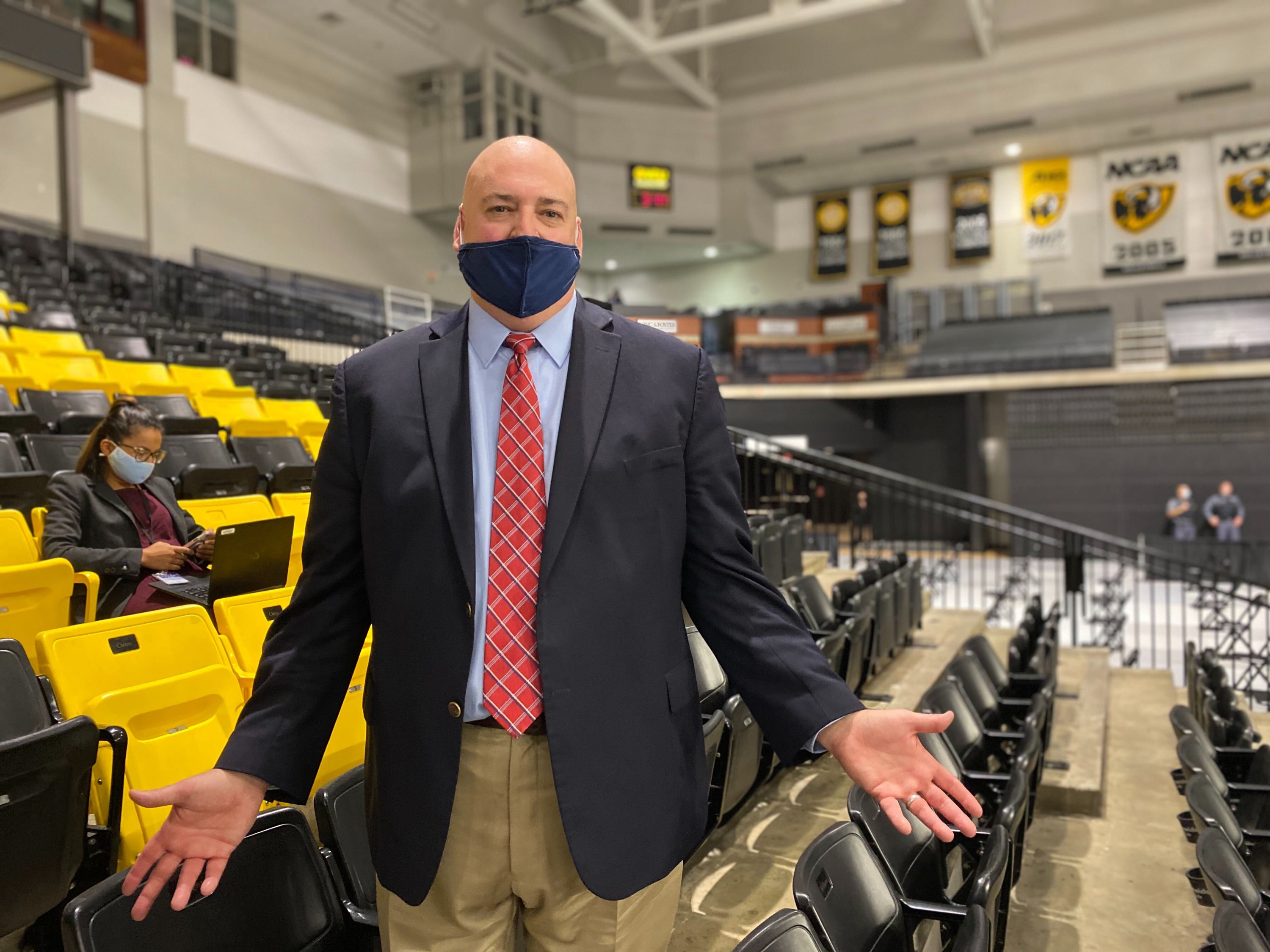
Gilbert said he worried Democrats could more easily ignore Republican motions in a virtual session, and he also noted that rural residents could struggle to access the session online.
“I think [Democrats] would like to ram their agenda through as quickly as possible with as little scrutiny as possible by the public,” he said.
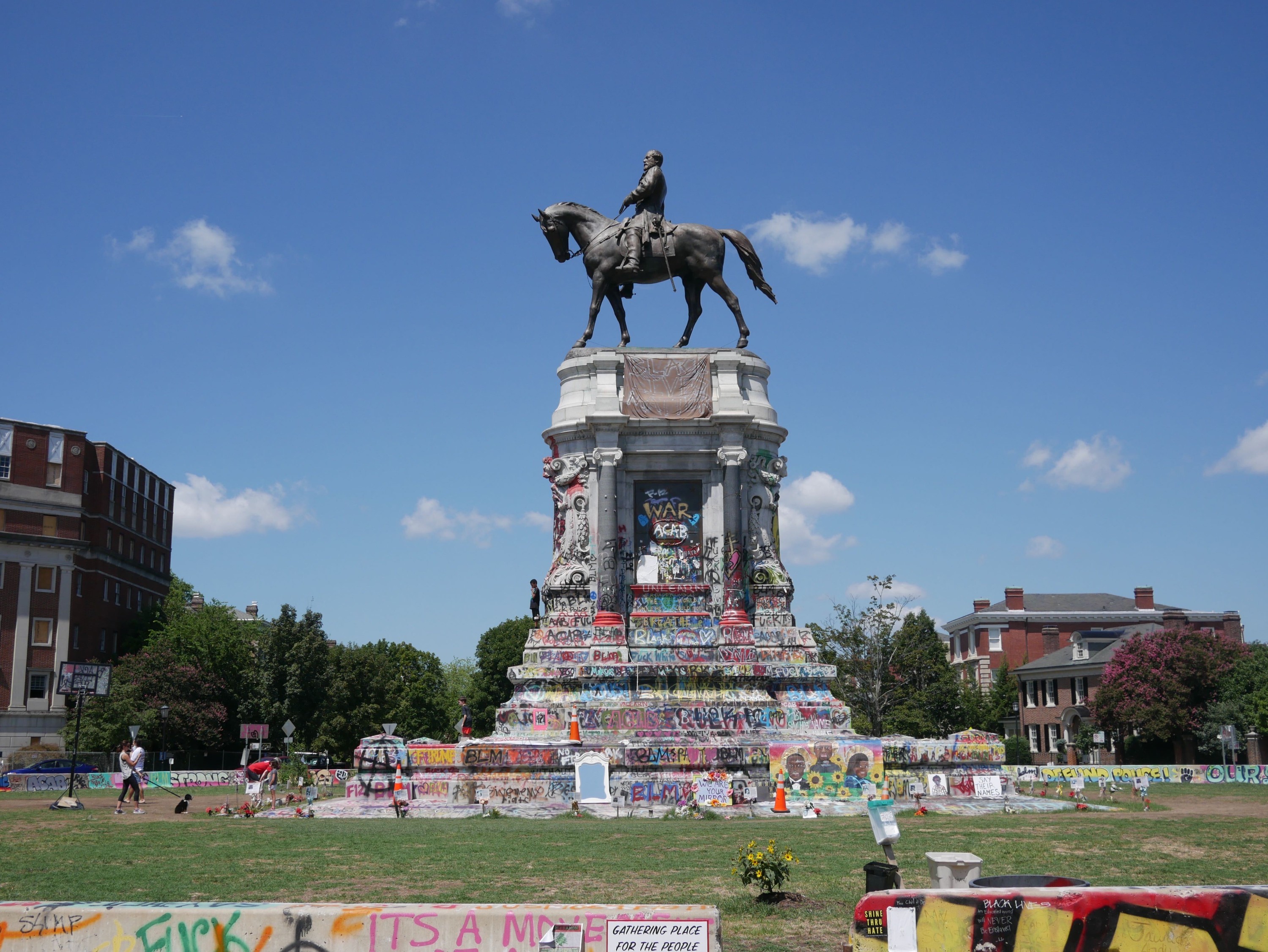
Lawmakers met steps from Monument Avenue in Richmond, which until weeks ago was studded with five Confederate monuments. Since the killing of George Floyd, protesters and the city of Richmond have removed four, and only Confederate General Robert E. Lee remains, towering above a pedestal that is covered in graffiti and draped in a “Black Lives Matter” banner.
Del. Jennifer Carroll Foy (D-Prince William), a member of the Virginia Legislative Black Caucus and a candidate in the Democratic primary for governor, said seeing the transformed avenue was a signal for her.
“I feel as if it’s a new day,” she said. “Bringing down these monuments is a good first step, but now we need to get to the business of bringing forth substantive change to address a lot of the historical, systemic inequities in our economy, environment, education, and healthcare system.”
A few blocks away, 40 state senators met at the Science Museum of Virginia. Two sat in plexiglass boxes: Sen. George Barker (D-Fairfax), who had open heart surgery last year, and Sen. Amanda Chase (R-Chesterfield), who refuses to wear a mask and is running for the Republican nomination for governor.
The state Senate did not vote to limit the scope of its bills nor to meet remotely. This means lawmakers there will likely begin considering bills days ahead of their counterparts in the House.
Virginia Democrats have unveiled a raft of proposals to reform policing, including a ban on no-knock warrants and chokeholds and a ban on police departments obtaining surplus military equipment.
Democrats are also looking at changes to the criminal justice system, including making it easier to expunge criminal records and defelonizing assaults on police officers.
Republicans — who are in the minority in both houses — have signaled they won’t support some of the Democrats’ measures, but Gilbert has signaled his party could get behind measures weakening police unions.
This story has been updated with new information from the state lawmakers’ special session.