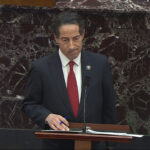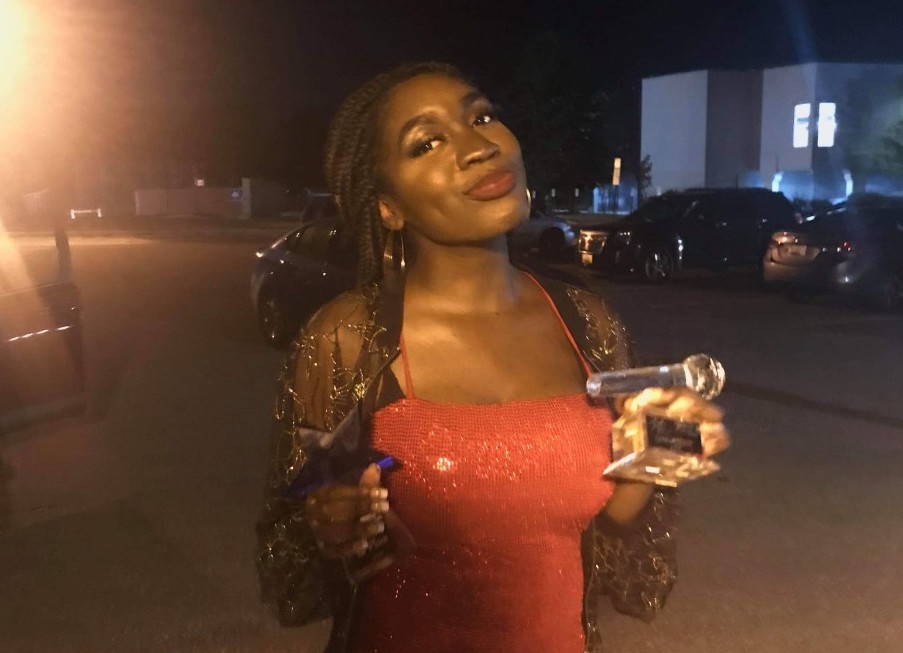
Calls to replace Maryland’s pro-Confederacy state song have ramped up in recent months, and last week, Democratic Rep. Jamie Raskin debuted his bid for the new tune.
Raskin premiered the song, a folksy love song to the state, during a Zoom call with Maryland Democrats last week as part of the Democratic National Convention — but it was vocalist London Mevaa, a rising high school senior, who brought the song to life.
How did Mevaa, a teenager from Prince George’s County, end up being the voice of Raskin’s proposal for Maryland’s next state song?
Mevaa, who is 17, had met Steve Jones, Raskin’s co-writer on the song, during an opera the two worked on a couple of years ago. When Jones and Raskin were looking for a singer, a mutual friend recommended her.
She received the song last Monday, and they recorded it in a Silver Spring studio the following day. “I was a little nervous,” she says. “I always get nervous, though, but once I sang it the first time I was like, ‘OK, we’re good.’ ”
After the group tweaked the rhythm to flow better with the lyrics, they recorded it a second time, and premiered the video the following day.
Raskin says he was “blown away” by her performance. “It was astonishing to watch the song come to life in her interpretation,” he tells DCist. “It was very powerful. And she’s a native-born Marylander and loves the state, and she was really the perfect person to do it.”
Mevaa says she has been singing “pretty much my whole life.” She grew up performing in choir and musicals. Her mother is Sharón Clark, a local jazz singer, and has brought Mevaa onstage during shows to sing a song or two.
When Mevaa got to high school, she auditioned for and was accepted to the vocal music program at Northwestern High School. “I’ve always just really had a thing for music and the way that it makes me feel and it sounds,” she says.
Mevaa says she did not know much about the current state song, also called “Maryland, My Maryland,” before last week but had been told about its lyrical content. Maryland legislators have been working to change the song, which has lyrics that many consider racist, for years to no avail. Set to the tune most people know as “O Christmas Tree,” the song is based on an 1861 poem written by James Ryder Randall, the first year of the Civil War. The lyrics refer to Abraham Lincoln as a “despot” and call Union troops “scum.”
As a border state between the North and South during the Civil War, Maryland was both a slaveholding state and technically part of the Union — though some Marylanders ultimately served in the Confederate States Army.
Efforts to change the song gained renewed momentum earlier this year in the wake of the killing of George Floyd. In June, Maryland House Speaker Adrienne Jones, a Democrat from Baltimore County and the first Black woman to hold the title, called for the state to replace the song, calling it “extremely offensive” in an interview with the Baltimore Sun.
The proposed new version, “Maryland, My Maryland (The Free State Song),” marked the first time Raskin had penned a tune since writing a song for a high school crush in the 1970s, the Washington Post reported.
In the video, Jones accompanied Mevaa on the piano, and several of the Zoom call’s participants became emotional while listening to her soulful voice: “Maryland, my Maryland, I’m coming back again, from the western mountains to the Ocean City shore, Rockville to Baltimore.”
At one point, Abena Affum-McAllister, a delegate to the Democratic National Convention, had to turn her screen off, per the Post.
Mevaa was excited to be a part of a potential new state song at this particular moment in history. “Especially with what’s going on, it’s just good to see and hear an African American singing a new version [to replace] a song that was once racist,” she says. “I think it’s just a good thing to see.”
State lawmakers will decide whether to repeal and replace the song during the next legislative session in January. Raskin says he isn’t sure what his song’s chances are, but he encourages every Marylander to write their own state song “because it does put you in close touch with your feelings about the state.”
Mevaa says she is making plans to apply to college and wants to pursue music professionally. Though the song’s future is unknown, she says she was honored to be asked: “If it does become the Maryland state song, I will be a part of history, and that’s pretty cool to me.”