 Mikaela Lefrak
Visitors to the National Mall tonight will see many prominent museums and landmarks transformed by purple and gold light.
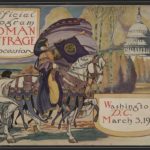
This week marks the 100th anniversary of a major suffrage victory: the certification of the 19th Amendment, which granted some women the right to vote. Purple and gold are the two colors most closely associated with the suffrage movement.
In the early 1900s, suffragists decided to strengthen their brand by adopting official colors. They took the colors of the British suffrage movement — purple, green and white — and adapted them to purple, gold and white. A 1913 newsletter from the National Woman’s Party (as quoted by the National Park Service) described purple as standing for “loyalty, constancy to purpose, unswerving steadfastness to a cause.” Gold was “the color of light and life, is as the torch that guides our purpose, pure and unswerving.” And white, the color many suffragists wore at protests, stood for “purity” and “the quality of our purpose.”
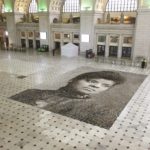
The lighting project is part of the “Forward Into Light” campaign, organized by the Women’s Suffrage Centennial Commission. The commission is also responsible for the 1000-square-foot portrait of suffragist and civil rights advocate Ida B. Wells on display in Union Station this week.
The White House, Kennedy Center, Smithsonian museums and other participating D.C. buildings will be joined by around a hundred other landmarks across the country, including Niagara Falls and the Empire State Building.
A handful of buildings in Maryland and Virginia will also participate, including the governor’s mansion in Annapolis.
Many key moments in the suffrage movement took place in the District. Suffragists picketing outside the White House in 1917 were arrested and imprisoned in Lorton, Virginia. Some of them went on to launch a nationwide awareness building campaign that began at Union Station. And many Black District residents like Anna J. Cooper and Mary E. Church Terrell fought for women’s suffrage while simultaneously pushing for civil rights.
Here’s the full list of participating D.C. institutions:
- Anacostia Community Museum
- Belmont-Paul Women’s Equality National Monument
- Corcoran School of Arts and Design
- DAR Headquarters
- Department of Interior
- Hirshhorn Museum
- Jefferson Building
- Kennedy Center and REACH
- Library of Congress
- National Archives
- National Museum of African American History and Culture
- National Air and Space Museum
- National Museum of the American Indian
- National Portrait Gallery/Smithsonian American Art Museum
- Phillips Collection
- Renwick Gallery
- Smithsonian Castle
- Smithsonian Arts and Industries Building
- White House