 Aja Beckham
In Ward 8, a new mural installation celebrates the 100th anniversary of some women gaining the right to vote after women suffragists organized for decades.
“The Office of D.C. Mayor Muriel Bowser decided to place the murals in Ward 8 on Martin Luther King [Ave.] and for women muralists to work collaboratively, demonstrating the synergy of the women’s suffragist movement,” says Lauren Dugas Glover of the DC Commission on the Arts and Humanities. (The Commission and Department of Public Works funded the project.)
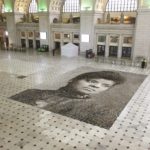
The installation is made of three murals, standing side-by-side, created by three women of color. The artists all used purple and gold hues, as those were some of the colors associated with the suffragist movement. Purple stood for loyalty, and gold represented life, light, and a torch that guided the movement and its purpose, according to the National Park Service. It’s one of several art pieces commemorating the centennial of the 19th amendment going up across the country, including a mosaic of Ida B. Wells at Union Station.
In 1920, the 19th amendment gave white women the right to vote, yet women of color continued to experience barriers including poll taxes, literacy tests, grandfather clauses, and lynching, among other tactics. Though women of color helped organize the movement, some women didn’t get the right to vote until the 1965 Voting Rights Act.
While women have gained the right to vote, communities of color continue to experience voter suppression such as long lines and wait times at polling sites, according to the Washington Post.
In the mural’s new home in Ward 8, voters experienced similar challenges during the June primary, as some voters waited in line until midnight to cast their ballot. Two Ward 8 residents sued the elections board for voter suppression, alleging that they didn’t receive their voter guide in the mail and polling sites were limited in less populous and gentrified neighborhoods. Ward 8 residents say they continue to experience concerns with spotty mail service and are expected to turn out in large numbers this November.
“The mural represents what it means to be a full citizen of this country and that right to vote,” says Dugas Glover. “We hope people exercise that.”
The site is located in the parking lot of Amerihealth DC-Wellness Center on Martin Luther King Jr. Ave. Due to COVID-19 restrictions, there won’t be an official ceremony for residents, but DCCAH plans to add signage to the site that includes information about the mural and the artists.

Muralist Mia DuVall designed a section of the mural that depicts four women leaders of the past, present, and future. Two of the women, Mary McLeod Bethune and Fannie Barrier Williams, wear dresses with high collars to reflect “their softness, though they had to be tough,” she says.
“Bethune made sure Black women were able to get to polls, though she faced intimidation from the Klan,” says DuVall, a Ward 8 resident. “Fannie Williams believed if Black women could vote, they could end lynching.”
There are also two young women in the mural who channel women leaders of the past and present. One woman wears pants and Chuck Taylors “like Kamala Harris,” DuVall says, and the other channels her history by wearing a shirt that says, “Ain’t I A Woman,” a reference to the famous speech by Sojourner Truth.
While creating the mural, DuVall says she reflected on how women were and still are overlooked for positions of power and influence because of their gender. Her hope is that 100 years from now women receive equal rights, opportunity, and respect, she says.
And she has the same hope for her Ward 8 community.
“When residents see this mural, I want them to know someone is listening, and they are heard. I want them to know the conversation about gentrification is also about what causes gentrification, people being overlooked and not considered,” she says referring to the displacement east of the river.
Duvall says she was also inspired by the candidacy of Sen. Kamala Harris, the first Black woman vice presidential nominee on a major party ticket. “Kamala is a physical embodiment of change,” says DuVall. “Her nomination is the embodiment of women’s suffrage, [and] the culminating event 100 years later.”
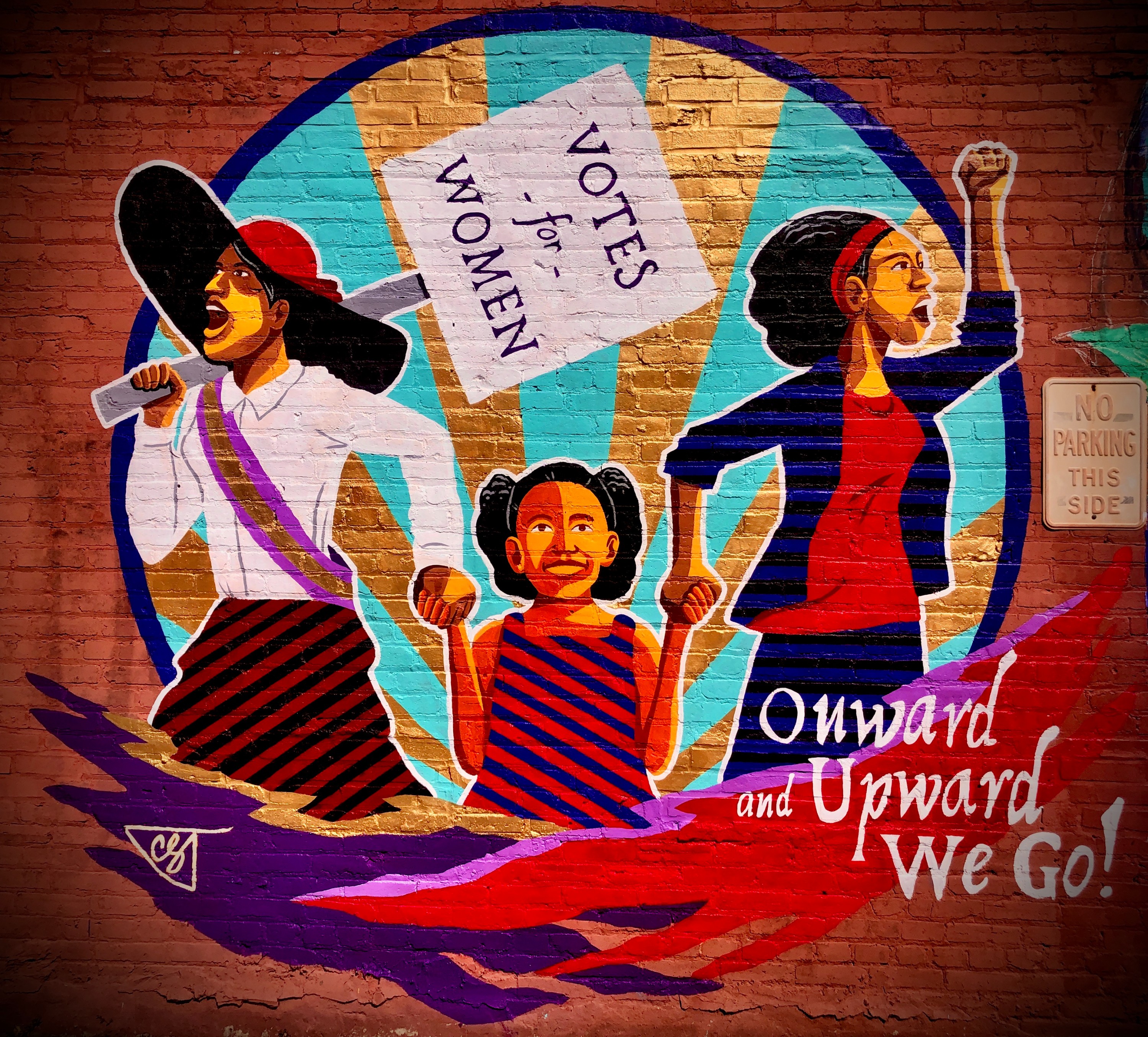
Muralist Candice Taylor’s part of the installation depicts three intergenerational women holding hands, one lifting her fists, and another raising a picket sign that says, “votes for women,” a phrase used during the suffrage movement.
“There are these big bold faces of Black women on the wall,” says Taylor, a Ward 7 resident. “I want people to take away the energy of this piece, and celebrate our resilience and strength.”
Taylor dressed the three figures in big skirts and dresses, similar to the style of suffragists at protests. Women wore full-length white dresses to show they were “pure” and “proper,” in contrast to caricatures that depicted them as masculine women dressed in pants, according to the National Park Service.
The suffragists’ resistance changed voting rights, Taylor says, but “the work isn’t done until women are able to have any job, salary, status, control of their bodies, own things, and so much more.”
Her hope is to charge onlookers with the same energy that the women in the mural show.
“I want people to walk away with a sense of dignity and pride, feeling a little bit stronger than they did before, a little bit more courageous, their head held a little bit higher, and their back straighter, and just hopeful,” she says.
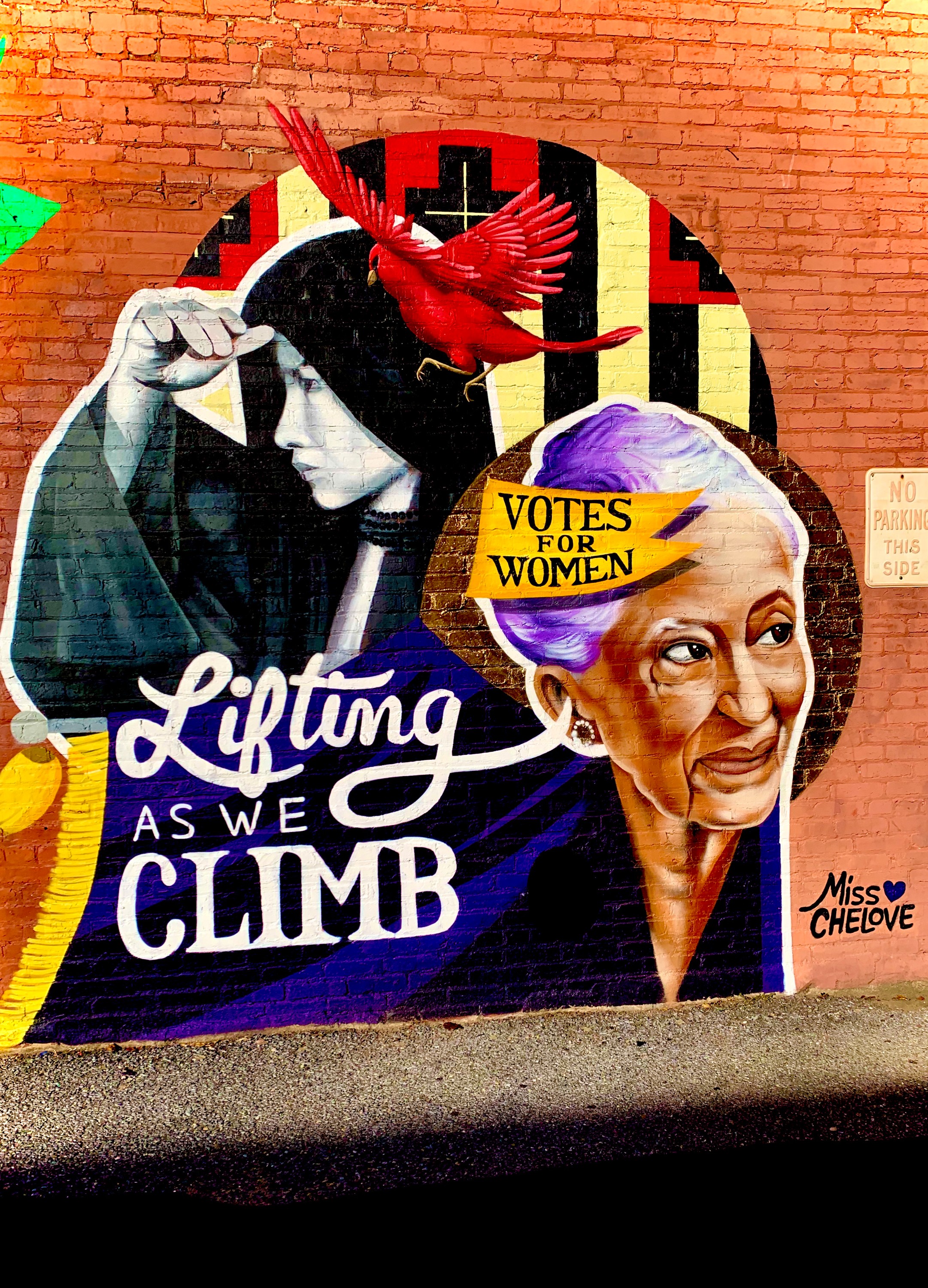
Cita ‘MISS CHELOVE’ Sadeli says while creating her mural she thought about inequities that close family friends have told her they experienced, including not being able to get a library card without their husband’s signature or own property. “We’ve come a long way in just a few decades, but we have to keep voting to change policy,” she says.
In her mural, the Maryland resident depicts activists Zitkala-Sa “Red Bird” and suffragist Mary Church Terrell to honor the contributions of Native and African American populations.
“Everything here, from the culture to the land to the native inhabitants is connected to Native and African Americans,” Sadeli says. “We should acknowledge them.”
Sadeli implies that similar to Native American culture being forgotten, other groups’ cultures and history is being erased from the D.C. area. “It’s the least we can do to keep [BIPOC] legacies going because it isn’t just Anacostia, the city is changing,” she says.