Margaret Barthel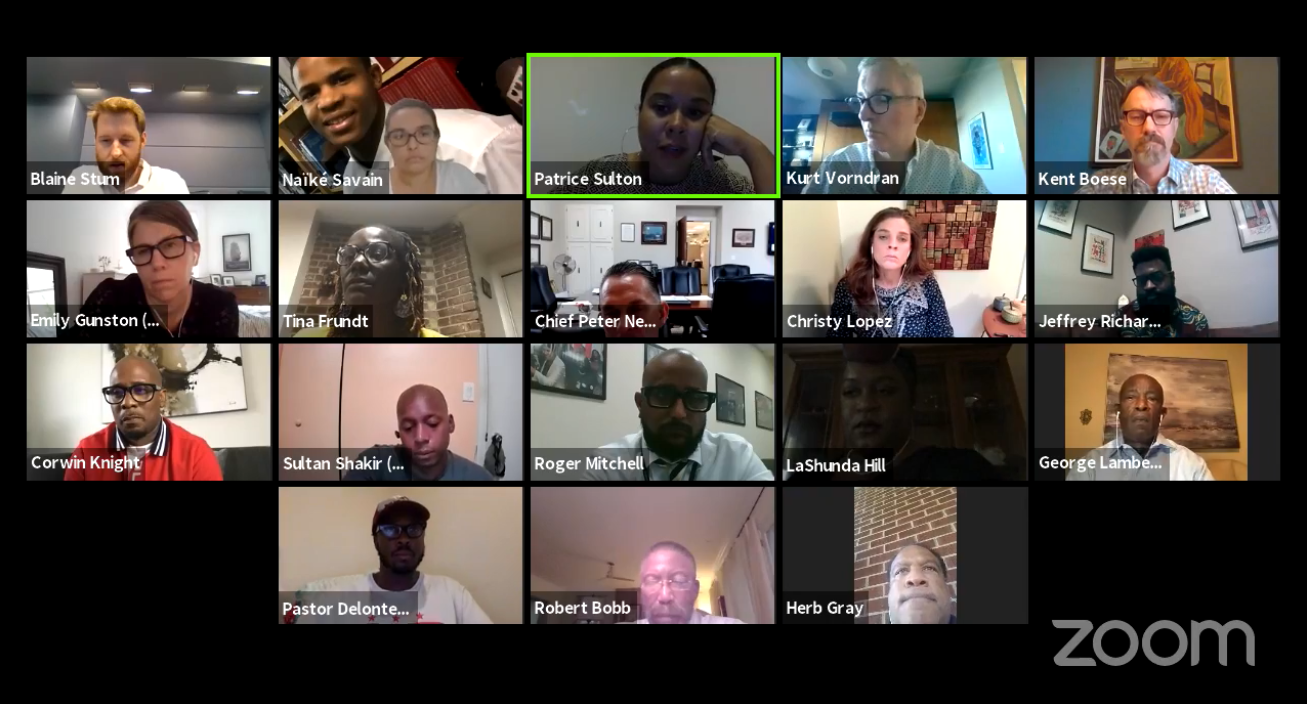
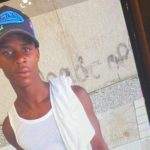
In their second meeting on Friday evening, members of the newly created D.C. Police Reform Commission interrogated police chief Peter Newsham and Interim Deputy Mayor for Public Safety Roger Mitchell over the circumstances surrounding the fatal police shooting of 18-year-old Deon Kay on Wednesday, and how the investigation into police use of force will proceed.
The 20-person commission, which was formed over the summer as part of emergency police reform legislation, is calling for an independent investigation into the police killing, separate from the criminal inquiry and from the police department’s internal administrative use-of-force review.
“We believe that an independent investigation will increase community confidence that this shooting is being addressed in as transparent and objective a manner as possible,” the commission said in a statement.
The commission’s emergency meeting with Newsham and Mitchell happened as the District community grapples with the trauma, grief, and outrage of Kay’s killing, following months of sustained protests calling for an end to police violence and racial injustice.
Community members gathered outside the 7th District police precinct on Wednesday immediately after the shooting to express their grief and demand accountability. Officials released body camera footage of the fatal shooting of Kay by MPD Officer Alexander Alvarez on Thursday. (A quick release of bodycam footage and involved officers’ names are also outlined in the council’s police reform bill.) Many protests and vigils are planned for this weekend.
It’s the first time the commission — which held its first public meeting last month — has been involved in the aftermath of a police shooting, and the first time the body met together with Newsham.
Discussion was frequently contentious. Commissioners questioned Newsham about the facts surrounding the shooting — including the 98-foot distance between where Kay was shot and where the officers found a gun and whether or not there was a 911 call that prompted the officers to go to the scene in the first place — and were starkly critical of MPD’s public response in the wake of the shooting.
Several commissioners pushed back on Newsham’s characterization of Kay as an “adult validated gang member” as part of an attempt to “vilify” and “adultify” Kay in the public narrative.
Samantha Davis, the executive of Black Swan Academy, a nonprofit focused on youth organizing, was one of the commissioners who raised the concern. Davis also said she’d seen evidence that MPD had put out information about Kay’s prior record as a juvenile, and asked why his juvenile records wouldn’t be legally confidential.
“I don’t recall talking specifically about Deon Kay’s juvenile record,” Newsham said. “The fact that he was ‘an adult validated gang member’ I did say.”
“He’s only been an adult for three weeks,” Davis replied.
“All Black lives matter, whether adults or children, including people who are known to the police, and none of those things justify a loss of life,” said Naïké Savain of the Children’s Law Center, whose Zoom background was a photo of Kay. “Your attempts to vilify and adultify Deon Kay makes all Black children less safe.”
Other commissioners disputed Newsham’s labeling of Kay as a “gang member.” Tina Frundt, the founder and executive director of anti-trafficking organization Courtney’s House, pointed out that there’s a distinction between highly-organized gangs and smaller, less organized “crews.”
Newsham dismissed the issue as a question of semantics, and said the group Kay was part of referred to itself as a gang.
In the Zoom chat, other commissioners supported Frundt and pushed back.
“MPD is a gang. GRU is a gang,” wrote Patrice Sulton, an attorney for the D.C. Criminal Code Reform Commission and lecturer at the George Washington University, referring to MPD’s Gun Recovery Unit.
“To be clear. Whether Deon was in a gang or a crew [or] just a Black boy … it does not justify MPD murdering him,” added Davis.
In addition to an independent investigation into the shooting, the commission requested multiple things from Newsham and deputy mayor Mitchell.
For one, the commission wants to see police body camera footage from the other officers at the scene of the shooting, in hopes of better understanding the seconds where Kay appeared to throw his gun away and Alvarez fired his. MPD reported it recovered a gun 98 feet away from the scene — a perplexingly long distance for a gun thrown in the heat of the moment to travel.
Mitchell said any public release of body camera footage from other officers present at the shooting would be up to D.C. Mayor Muriel Bowser, “if the investigation requires it.”
But Mitchell wasn’t sure if the District could or would allow the commission to view footage that wasn’t released publicly, even if members signed a non-disclosure agreement in advance. The question is a legal one, as well as one of precedent, since the commission is still brand new.
Commissioners also requested to see the records of Officer Alvarez — another question Newsham and Mitchell said would have to be examined by legal counsel. Newsham said he was aware that Alvarez had had one prior complaint filed against him, but that it had been dismissed by the Office of Police Complaints.
Commissioners said they expect answers to their requests for body camera footage and officer records by their next meeting, in a few weeks’ time.
Several members told Newsham they expected to continue the dialogue.
“I think you’ve gotten a good feel for the types of questions you’re going to get,” commission co-chair Christy Lopez said to Newsham, in closing. “This commission is going to be interested in what the rules and laws are, but our whole mission is what should they be.”