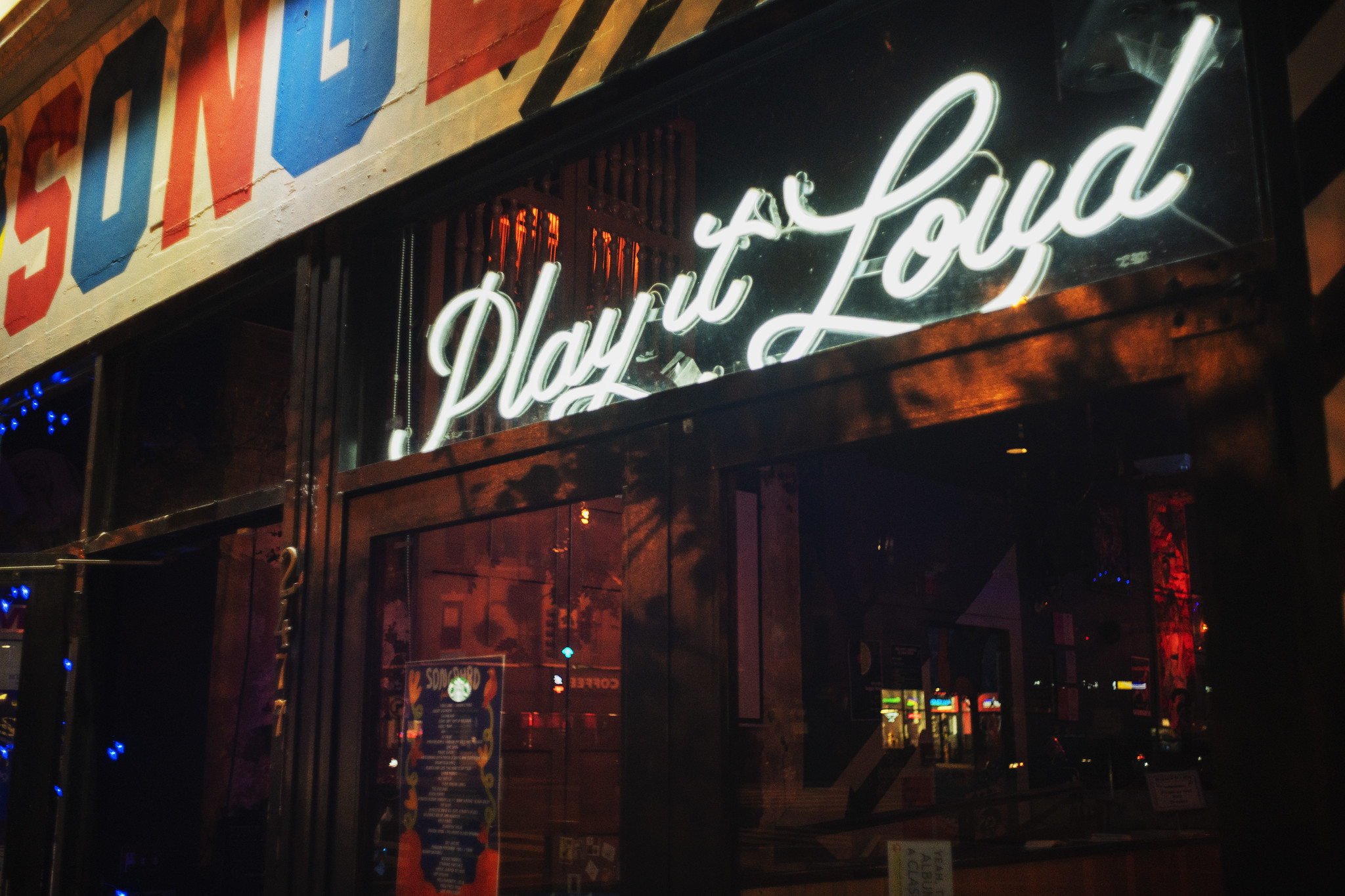
Like many local business owners, Joe Lapan of Songbyrd Music House has adjusted his operations in recent months. While the Adams Morgan venue has been unable to host its usual indoor shows, he’s continued generating some funds through its record shop, food and drink sales, and other means, but he says revenue is currently at around 10% of what it was this time last year.
“The core of our business is people coming for shows and music events,” says Lapan. He notes that ticket sales previously made up a minority of Songbyrd’s income, given the small size of the venue and the fact that much of those sales went to the artist, but the impact on his business has been significant.
He says the way they are operating now is fiscally unsustainable. Now, a group of local musicians, venue owners, and others in the music community have launched an effort to help keep local venues afloat, culminating in proposed legislation called the Music Venue Relief Act.
Led by Chris Naoum of Listen Local First D.C. and Aaron Myers, a jazz musician and board chairman of the Capitol Hill Jazz Foundation, the campaign was born out of a series of conversations with members of the D.C. music community about the financial impact of the health crisis.
Music venues will be among the last businesses to reopen in D.C. under the phased reopening guidelines, and a number of businesses, including Eighteenth Street Lounge and Twins Jazz, have already shuttered permanently.
Without assistance, Naoum says, “we’re gonna see a mass extinction of music venues in D.C.”
The act, which Myers drafted with input from Lapan and others, calls for monthly financial assistance from October through May of next year. The timeline was determined by the start of a new fiscal year in October and the hope that, by May, much of the District will be in the final stages of reopening.
The proposed act divides recipients into music venues and music presenters, the latter being a business where food and beverage sales “account for over 50% of its gross annual receipts in accordance with a Restaurant License,” and that hosts paid live music for a total of at least 48 hours per month. For example, music-specific businesses like Black Cat or 9:30 Club are music venues, Naoum says, while businesses that offer music in addition to food and drink, such as H Street’s Pie Shop, count as music presenters.
The amount of money each venue would receive is determined by its square footage. Music venues would be eligible for a maximum of $15,000 monthly, while music presenters could receive up to $7,500.
Naoum notes that the survival — or demise — of these venues could have a massive ripple effect throughout D.C., affecting the livelihoods of “sound engineers, lighting crew, musicians, producers.”
The group initially sent the legislation to city officials in late July. Naoum says they received positive feedback, but that no D.C. councilmembers had bandwidth to officially get involved before the council’s recess. During that time, Naoum says he and Myers regrouped, and then launched the current campaign last week.
They officially sent a letter, along with a draft of the legislation, to Mayor Muriel Bowser’s office and the council on Tuesday, and have collected more than 800 signatures in support of the proposal.
He says Ward 1 Councilmember Brianne Nadeau expressed support for the proposal back in July, but could not co-sponsor it at the time. Nadeau’s office did not respond to DCist’s request for comment.
During a press briefing on Wednesday, Mayor Bowser said the District had already provided more local relief than any jurisdiction in the region via microgrants, and plans to do more, but noted that the city needs more federal assistance.
“I don’t want to sound like a broken record, but part of our ability to provide more relief to our small businesses is to have the federal government do its part with the latest federal relief package that is sitting at the Congress,” she said. “The House passed it. We need the Senate to pass it, and we need the President to sign it.”
When asked for comment on the legislation, a representative for Bowser’s office told DCist that she would “look into the letter.”
Myers notes that while other forms of financial assistance are available to venues, this legislation would help cover their fixed costs in particular, like mortgage payments, utilities, and others. He says those costs can run between $8,000 to $20,000 a month, depending on the size of the venue, “even while they’re dark.”
“So, they have no revenue stream yet they are still having to pay this with the hope that once the vaccine things are figured out, they will be able to open,” he says.
Even for venues like Songbyrd that did receive other forms of relief, including a small business microgrant of around $10,000, and a Paycheck Protection Program Loan of roughly $150,000, the money has only gone so far. Lapan, who did not share exact figures, previously had around 40 people being paid by Songbyrd, including gig and hourly workers. He’s now down to about 8.
“If nothing [else] comes through before the end of the year, there’s gonna be trouble,” he says. “We’re gonna run into a hard wall.”
National efforts to secure relief funding are also underway, including the Save Our Stages Act, which would provide federal financial assistance to independent venue operators, promoters, producers, and talent representatives.
The legislation has garnered bipartisan support in Congress since it was introduced in July, but Naoum says it’s important to have a local version, too, citing the way D.C. was shortchanged in the Congressional coronavirus relief bill earlier this year as one reason why.
He says he is concerned about “waiting for legislation to pass that allocates funding and then the city potentially being left out of that funding if the government wants to do their own thing,” he says. He also notes the uncertainty surrounding that legislation’s future or the timeline, adding, “I worry about putting all our eggs into the federal basket.”
In a Zoom call about the with staff from some D.C. councilmembers’ offices on Thursday, Naoum said that in his maximum estimate, if every venue eligible received $15,000 a month, it would amount to a total of $4.2 million over seven months.
Naoum, Myers, and others supporting the effort are urging D.C. officials to pass the act as emergency legislation, to ensure the quickest possible impact for struggling venues, but the timeline remains unclear.
They plan to continue building community support, launching phone banking efforts, asking locals to call their councilmembers, For his part, Lapan says venues are “an important hub of the D.C. music scene,” but ensuring that they make it through the pandemic is even bigger than that.
“Helping these places survive, I think, is going to be a good investment generally in the city’s recovery,” he says.