 Daniella Cheslow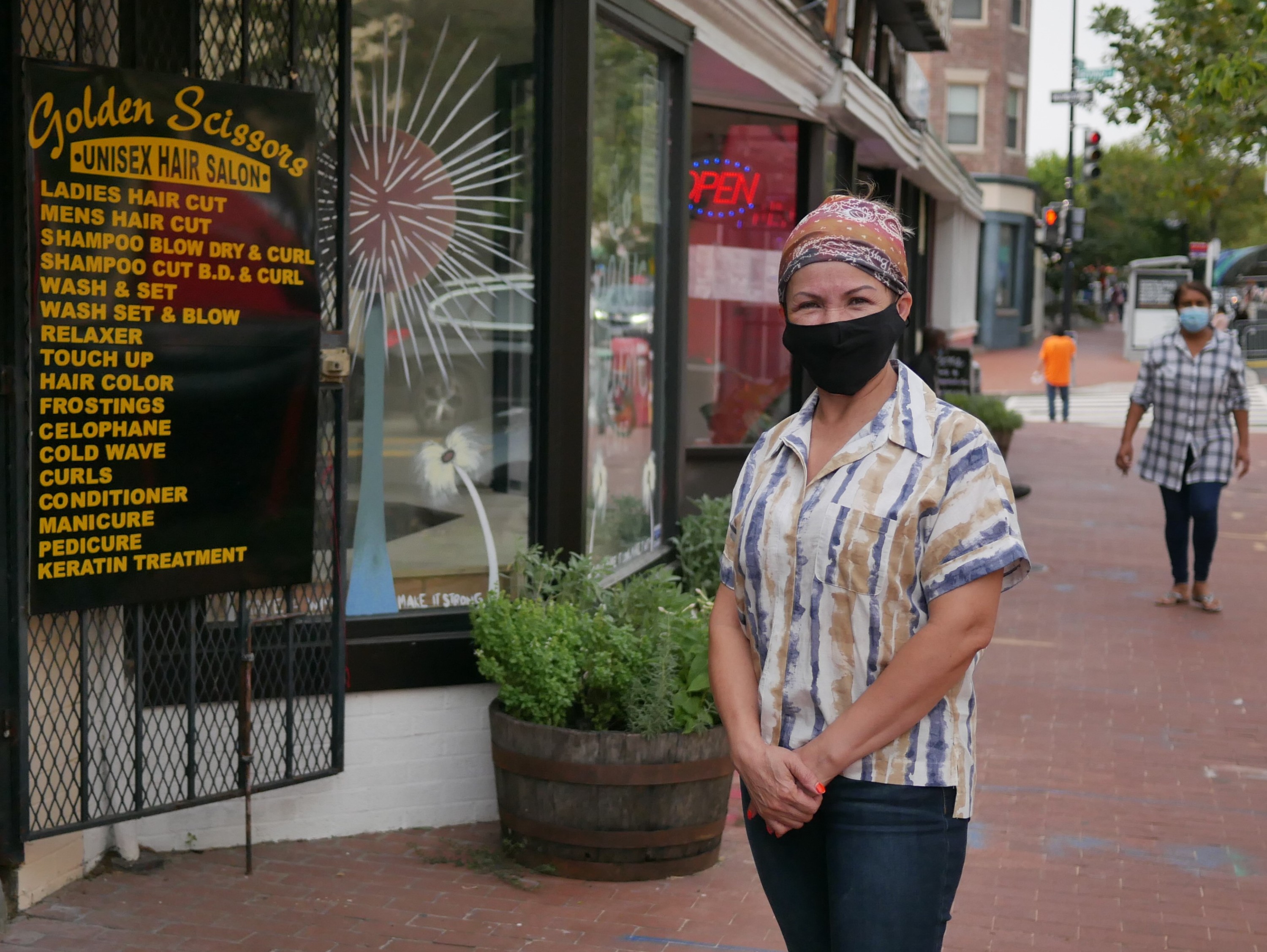
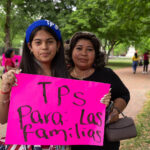
Salvadorans in the D.C. region expressed alarm and frustration Tuesday after a federal appeals court ruled the Trump Administration could end their protected immigration status in the U.S.
“This country has given me a lot of opportunities,” said Fredy Torres, 39, who moved to the U.S. in 1999 and lives in Herndon, Va. with his 3-year-old daughter and and supports his mother in El Salvador. Speaking through a translator, Torres told DCist/WAMU that he wanted Congress to find a solution and not leave him “in the shadows.”
“I’m a person of faith, I want to have faith,” Torres said. “So I want them to think not as politicians, but as human beings because I, for more than 20 years, have been working hard in this country, and I’ve never had problems with the police.”
Torres is among some 211,000 Salvadorans who live in the D.C. region, making up the second-largest concentration in the United States after Los Angeles. D.C. holds a sister city agreement with San Salvador, and Mayor Muriel Bowser condemned the court decision.
“Our nation needs long-term TPS solutions that offer pathways to citizenship, not constant and repeated threats to tear apart families and deport valued members of our communities, many who have lived here for decades,” she told WAMU/DCist in a statement.
At issue is Temporary Protected Status, a protection the U.S. grants to people from countries facing civil unrest, violence and natural disaster. Salvadorans represent the largest group of foreign nationals holding the status, numbering nearly a quarter million. They gained TPS protection some two decades ago due to damage caused by Hurricane Mitch and because of major earthquakes. Nationals from nine other countries are also covered by TPS: Honduras, Haiti, Nepal Syria, Nicaragua, Yemen, Sudan, Somalia and South Sudan. Nearly 60,000 people with TPS status live in the D.C. region.
The Trump Administration has tried repeatedly to end TPS protections. Over 2017 and 2018, the Department of Homeland Security announced it would end protections for Nicaragua, El Salvador, Honduras, Haiti, Nepal and Sudan, saying those countries had recovered from the initial disasters that triggered the special status. A federal court in California blocked DHS from ending the status for people from Sudan, Nicaragua, Haiti and El Salvador, saying they had developed deep ties to the U.S. and conditions were unsafe in their home countries.
However, on Monday a panel in the 9th U.S. Circuit Court of Appeals reversed the ruling in a 2-1 vote, opening the door to deport people from El Salvador, Nicaragua and Sudan; Haitians are protected under a different New York ruling.
The umbrella group TPS Alliance planned to host a press conference Tuesday on Capitol Hill with immigrant advocacy groups including CASA, African Communities Together, Adhikaar, Haitian Bridge Alliance and UndocuBlack.
“We want to be hopeful,” said Eduardo Zelaya, an El Salvador-born organizer for CASA Virginia. However, he said of the court ruling, “this is really serious and it feels different.”
Protections for TPS holders do not end immediately. The ACLU plans to ask the full 9th Circuit to reconsider the case and, if that fails, appeal to the Supreme Court, the Associated Press reports.
Immigration expert Tom Jawetz at the Center for American Progress said his group found some 131,000 TPS holders worked in frontline jobs during the pandemic, including more than 13,000 people in Virginia and Maryland. He said the decision was “devastating” for TPS holders, although he said the effects would take months to materialize.
“Nothing’s going to happen to take away work authorization or protection from deportation for many of these folks before we have an election and before we have an outcome,” said Jawetz.
The decision to end TPS hits hard in D.C., where the Salvadoran population is so vibrant that the owner of Lauriol Plaza was invited to run for vice president in his home country. In 2018 Mayor Bowser visited El Salvador to demonstrate support for her city’s large immigrant population.
One of those on the trip was Rosibel Flores Arbaiza, a Salvadoran immigrant who owns the Golden Scissors hair salon in Mount Pleasant. Arbaiza said Bowser visited her home town of Intipucá, some two and a half hours from the capital, an “unbelievable” experience. Arbaiza holds U.S. citizenship, but she said the plight of her fellow Salvadorans pained her.
“I’ve been hearing this TPS for a long, long, long, long time. It’s coming and then it’s ending, and then it’s coming again and it’s ending,” she said. “I think we deserve to be legal in this country, everybody.”
Arbaiza, 61, estimated that a third of her clients could be affected by the end of TPS, and she imagined her neighborhood could be emptied out if people with protected status were forced to leave.
“It’s going to be like it looks right now: lonely,” said Arbaiza, as she gazed out on sidewalks left empty during the pandemic shutdown. “Ghost. Because Mount Pleasant, here, this is our home.”