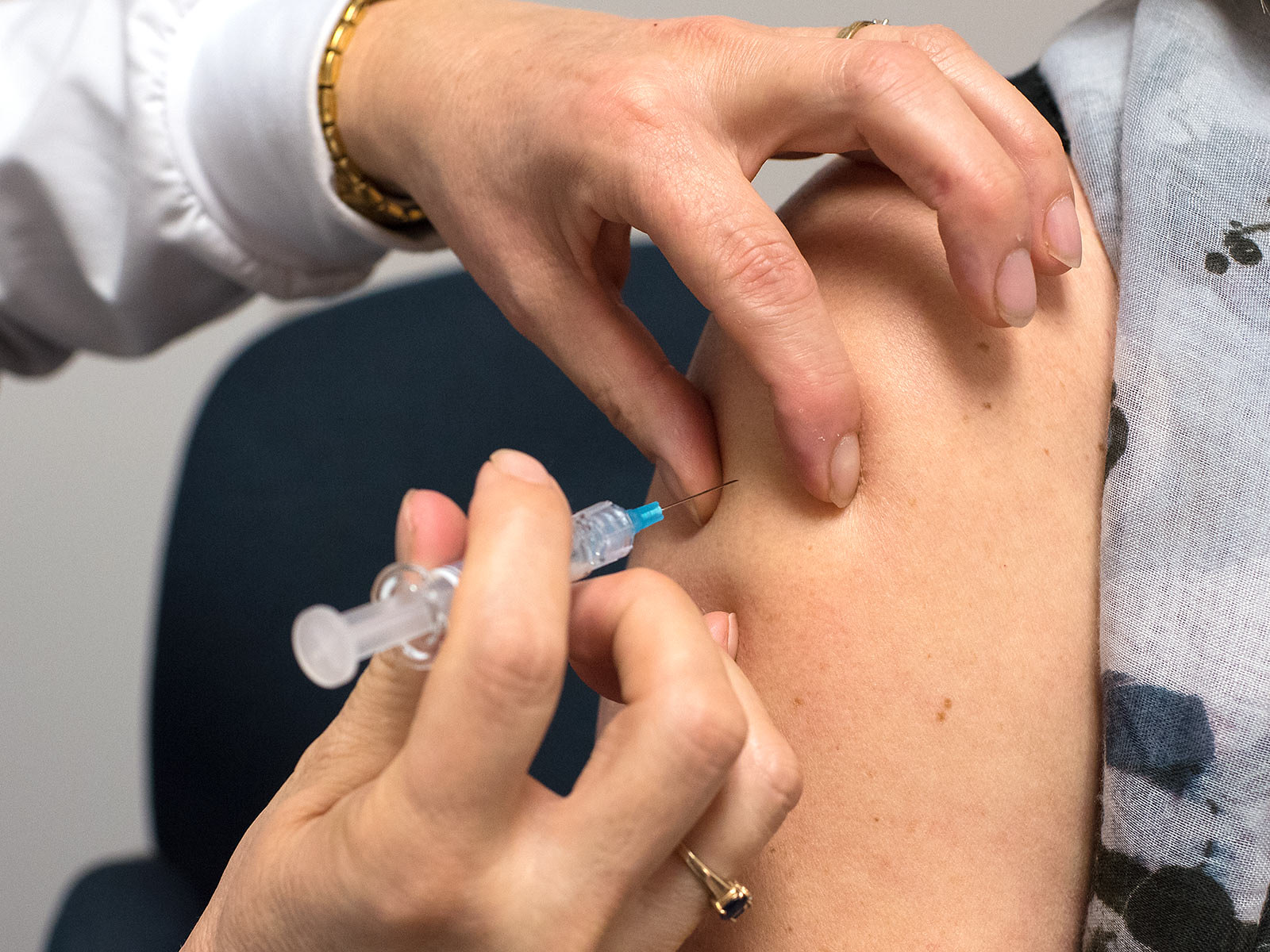
While experts race to develop an effective COVID-19 vaccine, D.C. has seen a drop in routine childhood vaccinations in the wake of the pandemic.
According to data from D.C. Health, a significant drop in vaccinations in the spring, when the health crisis first hit the District, has resulted in an overall decrease in immunization coverage. Between March and May, the city saw a 70% decline in vaccinations among children 3 years old and younger, and a 42% decline in vaccinations in all children, as compared with 2019.
Additionally, between April and August this year, there’s been a 3 to 4% drop in overall immunization coverage — or the proportion who have received recommended vaccines — among school children in D.C.
While those numbers began to tick upward over the summer, a D.C. Health spokesperson told DCist in an email Tuesday, “our vaccine administrations are still overall lower when compared to 2018 and 2019.”
D.C. Health cites a drop in routine vaccinations, or seven-vaccine series, among children under 3 years old as an example. The city recorded 14,346 such vaccines administered between January and August of 2018, and 13,446 administrations during the same period in 2019. D.C. saw only 9,685 administered between January and August of 2020.
During a press briefing in late August, Mayor Muriel Bowser said, “Despite the fact that kids aren’t reporting to a school building, we still need families to stay on track with their vaccinations.”
D.C. Health director Dr. LaQuandra Nesbitt said D.C. has “experienced an unprecedented decrease in childhood immunization rates,” particularly among the school-age population, due to the impact COVID-19 has had on the healthcare system.
Maryland and Virginia have both seen similar drops in vaccination rates.
In response to the decline, the District launched its Stay On Track! campaign this year, urging families not to fall behind on vaccinations and emphasizing the importance of other regular check-ups and tests. D.C.’s school-based health centers, which traditionally served enrolled students — and, if necessary, their own children — are now open to all children in the District who need vaccinations.
When schools return for in-person instruction, the centers will return to focusing on their student populations. The city also sent letters to families notifying them of overdue vaccines and providing information on where to get them, coordinating with local pediatric health centers to increase access to providers.
Avoiding hospitals and doctor’s offices, though, comes with other risks.
Dr. Chloe Turner, a pediatrician with Children’s National Hospital, says some parents of patients have declined to bring their children in for well-child visits for fear of being exposed to COVID-19.
Turner says a significant decline in vaccinations is alarming because it can indicate that children and their families “face increased risks for outbreaks of vaccine-preventable diseases, many of which are actually much more potentially deadly to children than COVID-19 from the available evidence that we have now.”
She says that as the city continues to reopen, social distancing measures are relaxed, and when schools return for in-person instruction, children who are not up to date on their vaccines will be more vulnerable to diseases like measles, whooping cough, and the flu.
Her office saw a “sharp decline” in visits back in March, though she did not have exact numbers available. While those numbers have picked up over the past couple of months, some families are still canceling or postponing.
Turner says her office is also doing more telemedicine appointments than it ever has, but adds, “We can’t do vaccines over telemedicine, or labs, or really careful physical exams that are so important.”
She says her practice sometimes conducts appointments partially online, with kids coming in person for just the vaccine portion so they spend less time in the office.
Still, Turner emphasizes that her office is taking increased health and safety precautions, implementing social distancing measures, mask requirements, and other steps. She says, “Parents should not be afraid to bring their children to the pediatrician.”