Updated at 1:32 p.m.
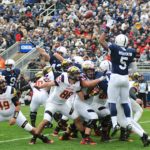
The University of Maryland intends to play football this year after all.
The Big Ten athletic conference announced Tuesday that it plans to begin the season in late October, reversing course after deciding last month to cancel all competition for the year because of the coronavirus pandemic.
The season is slated to start the weekend of Oct. 23 and 24, with a conference championship on Dec. 19.
The Big Ten says it will adopt “stringent medical protocols” for the season. This includes daily testing for all student athletes, coaches, trainers and anyone else on the field for practices and games.
Athletes who test positive for the virus cannot return to competition until at least 21 days after their diagnosis. COVID-positive athletes must also undergo cardiac testing and receive a clearance before returning to play.
The conference will monitor virus positivity rates and has set specific benchmarks that could trigger a suspension of practice or competition.
Whether or not to resume college athletics has been one of many fraught debates during the coronavirus pandemic. On Aug. 5, the Big Ten announced it would limit its fall season to only conference play. A week later, it made the call to postpone all competition until 2021. The universities faced financial pressure to compete, as well as calls from some parents and even President Trump.
Maryland’s head coach, Michael Locksley celebrated Tuesday’s decision to hold a season. “I’m so happy for our players,” he tweeted shortly after the announcement. In a press release, he said, “Our student-athletes have stayed focused and prepared and are eager to return to competition.”
The school says that, under guidance from the Prince George’s County health department, they will begin the season with no fans present.
UMD athletic director Damon Evans said he was “thrilled” for football to return. He said the health of athletes, coaches and staff was a priority and that new medical protocols from the Big 10 “put us all in a stronger position to resume competition.”
Maryland Gov. Larry Hogan also weighed in, tweeting that he “couldn’t be more pleased with this decision.”
Playing football in a pandemic, however, has been rocky for some of the teams that have resumed competition. Leagues that are playing their seasons include the SEC, the Atlantic Coast Conference and the Big 12.
Louisiana State University football coach Ed Orgeron says most of his team, which plays in the SEC, has contracted the virus.
“Not all of our players, but most of our players have caught it,” he said Tuesday, adding: “I think that hopefully they won’t catch it again, and hopefully they’re not out for games.”
Virginia Tech, a member of the ACC, had to postpone a game against North Carolina State by two weeks because of a coronavirus cluster in the N.C. State athletics department. This weekend, the conference also said it was postponing a game between Virginia Tech and the University of Virginia because of positive cases at VT.
The University of Maryland has had its own issues with virus outbreaks among student athletes, who have been allowed to train and hold practices.
Thirteen teams, including the football team, recently resumed practice after the school temporarily halted all athletic activities when 46 athletes tested positive for the virus. University president Darryll Pines said the outbreak was linked to off-campus social gatherings, UMD student newspaper The Diamondback reports.
It was the second time UMD paused athletic training because of COVID-19 cases. In July, after nine athletes and staff tested positive, the university paused the football team’s summer workouts.
Last week, UMD reported 88 new cases of COVID-19 from tests the university administered, plus another 37 cases self-reported to the university by individuals who were “on or close to campus” in the past 14 days.
The Patriot League, which includes several D.C.-area universities has canceled fall sports.
The Big Ten conference said announcements about other fall sports, plus winter and spring athletics, will be coming soon.
This story was updated with additional details from the University of Maryland and to correct the spelling of Michael Locksley’s name.