Debbie Truong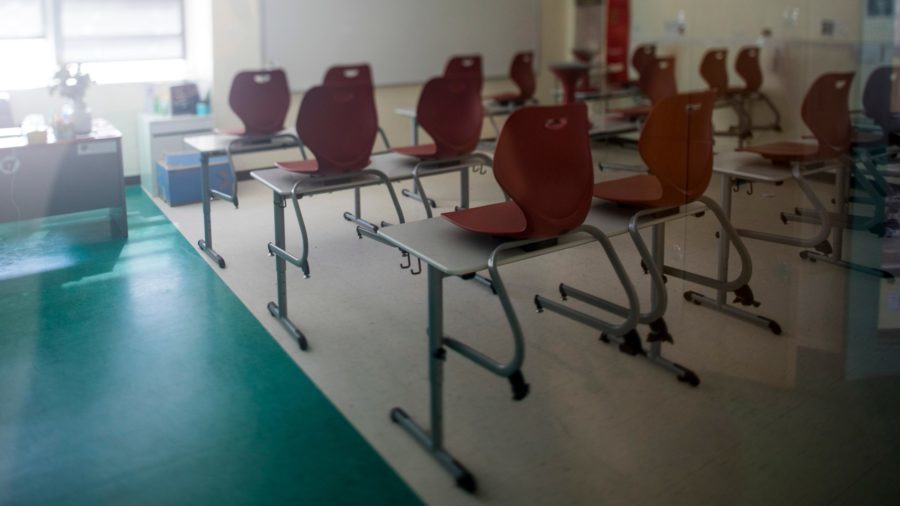
About 4,500 fewer students are enrolled in D.C. schools this academic year compared to the same time last year, officials said, as schools across the city try new ways to reach families during the pandemic.
Three weeks into the school year, about 86,000 students are enrolled in the city’s public schools, both traditional and charter, Mayor Muriel Bowser said at a press conference Thursday. About 99,000 students were expected to register for school this academic year.
“Just like regular school, virtual school is mandatory school,” Bowser said. “We need our children to be registered and we need them to be logging in.”
It is not uncommon for students to register in classes after the school year starts, but enrollment is still lagging. The city has made some headway in reaching students, registering more than 7,250 students in a six-day period beginning September 10.
In D.C. Public Schools, nearly all grade levels have experienced drops in enrollment compared to last school year, with the largest decline occurring in preschool classes for three-year-olds, according to data from the city.
Schools have called, sent personalized letters and hosted virtual open houses to remind families to register, education officials said. The school system sends weekly texts and emails to families with children who must still enroll. Postcards with enrollment information were also mailed to every student who attended a D.C. public school last academic year.
Attendance has also dropped. On Monday, 85 percent of students in D.C. public schools attended class, compared to 92 percent of students on the same day last year.
Bowser also said she hopes the school system will be prepared to offer a mix of in-person and online learning when the second quarter starts Nov. 9. The school system is reviewing about a dozen proposals from principals who want to start teaching students in-person, she said.
All students in D.C. Public Schools are learning virtually through the end of the first grading quarter. But the city is in Phase 2 of reopening, which allows schools to offer classes in-person with safety measures, including daily temperature checks and physical distancing that would limit classrooms to 12 people at a time.
The Washington Teachers’ Union, which represents more than 5,000 educators, said nearly 150 teachers indicated in a survey they were interested in tutoring students in small groups.
But the alliance of educators, which protested plans for in-person learning over the summer, still has reservations about returning to school buildings. At least two teachers believe they contracted the coronavirus after visiting campuses to pick up supplies, according to the union.
Elizabeth Davis, president of the Washington Teachers’ Union, said she is not convinced the school system can provide adequate personal protective equipment to teachers and update school buildings by November.
Davis said some campuses suffered from poor ventilation and windows that would not open before the pandemic. Education leaders have promised to upgrade ventilation systems in schools before students return, which is recommended by the Centers for Disease Control and Prevention.
“It’s too soon,” Davis said, acknowledging some teachers are willing to teach in-person. “It’s one thing for us to say the curve is flattened. The cases are going to spike if we have students return to school with windows that don’t open.”
Some charter schools, which are publicly funded but privately run, have already started offering limited in-person instruction.