 Jenny Gathright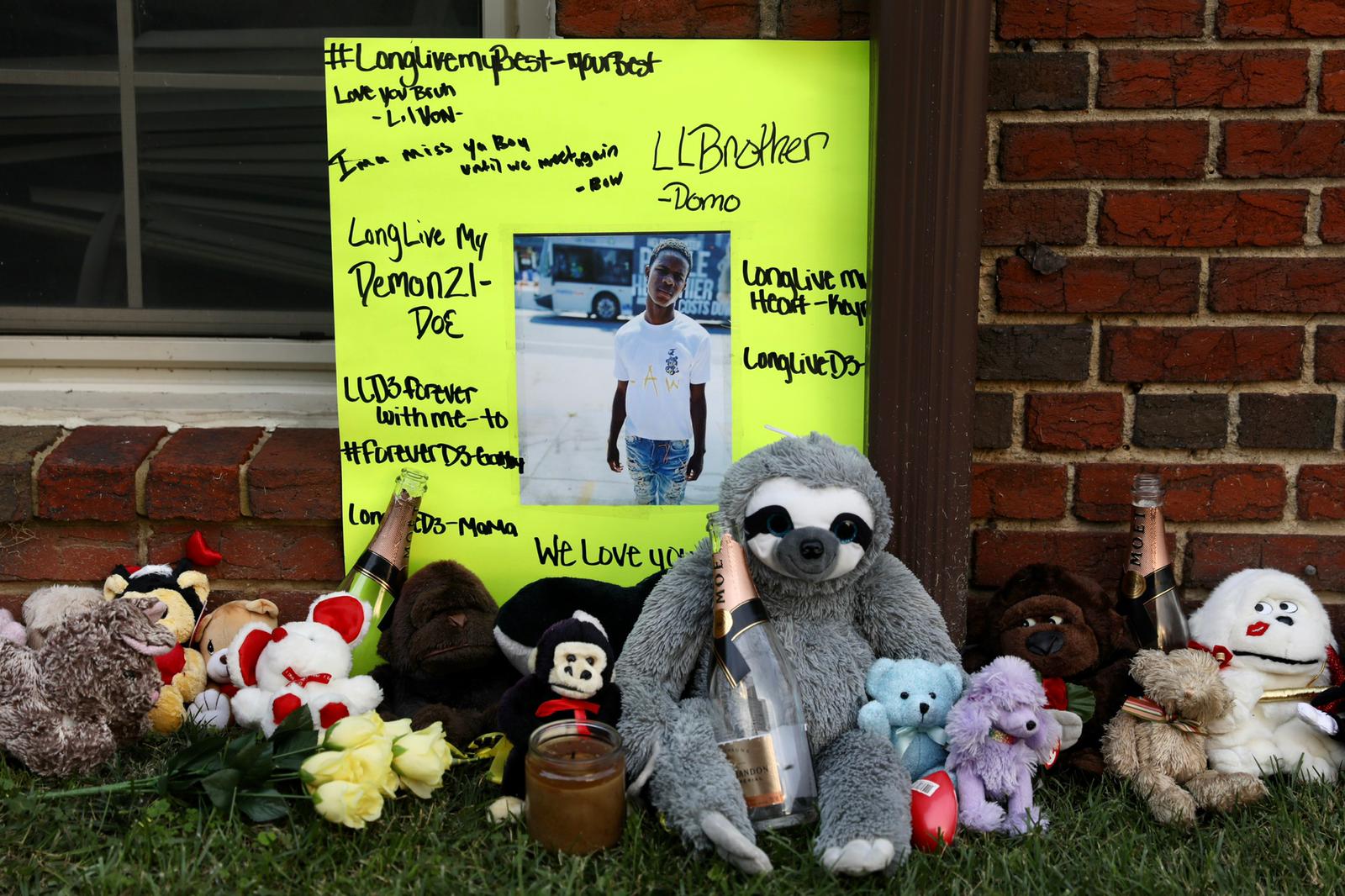
Ethiopia Berta can remember the experience of walking through Deon Kay’s Congress Heights neighborhood with him when he was a kid. She says Kay must have been just a 5th grader at the time—but he knew everyone.
“He was the man,” says Berta, who taught Kay’s younger brother J’Har at Democracy Prep, a charter school in Congress Heights that closed in 2019. “He knew the guy on the corner. He knew the corner store man—the guy who ran the store. He knew the guys asking for change.”
Berta hadn’t planned to meet 10 new people on her way to have a permission slip signed, but with Kay, it was inevitable.
“I was like, ‘Oh, this kid—he has je ne sais quoi for sure, because he just pulled up and everybody is just, ‘Hey Deon! Hey Deon!’ It was love. A lot of love,” Berta says.
People remember Kay’s knack for cultivating relationships. Not only casual relationships with his neighbors, but also deep relationships with key mentors, and perhaps most importantly, with his family. Earlier this month, after Kay was killed by a D.C. police officer, the people who loved him were shattered by his loss. For the educators who worked with Kay, his death hit hard—not only because Kay was an unforgettable student, but also because for them, the police officer who killed Kay undermined the system of mentorship and support they had worked hard to provide for him.
“If my kids are still dying in the streets at the hands of the police, am I truly breaking cycles of poverty with education?” says Berta. “It makes us educators think, ‘What are we doing? Are we doing enough? Systemic inequity—is it something we can combat as teachers?’ That’s what his death did to us.”
Kay was fatally shot by D.C. police officer Alexander Alvarez on Sept. 2, less than a month after his 18th birthday.
The day after he was killed, D.C. police released body camera video of the shooting. The footage shows Alvarez rushing out of his cop car to chase another suspect, turning around, and encountering Kay, who held a gun in his right hand. Alvarez shot Kay once in the chest, the video shows.
Officials say that Kay threw the gun he was holding nearly 100 feet.
The 18-year-old was taken to a local hospital, where he was pronounced dead. Police have opened an investigation into the shooting, and so has the D.C. Auditor.
Kay’s death came after protesters in D.C. had spent the last several months speaking out against police brutality, sparked by the police killing of George Floyd in Minneapolis in May. For years, local activists and community members have also voiced anger about police killings of Black people in D.C., including Marqueese Alston, D’Quan Young, and Jeffrey Price.
A series of protests, marches, vigils, and memorials for Kay followed, featuring the teenager’s family and friends. Kay’s teachers and coaches say they felt a particular need to get involved. They loved him for the young man he was, and mourned the person he would never get a chance to become.
“This was bad because this was a kid that could have turned it around,” says Grandville Martin, Kay’s mentor. “This was bad because this was a kid that had influence on his younger siblings. This was a kid that—if he turned his life around, I bet you some of his friends would have turned their lives around. If they would have seen Deon do it, they would have did it. But the problem is, they didn’t give him a chance to get there.”
Martin was Kay’s middle school science teacher and football coach at Democracy Prep. He met Kay as a 5th grader, and describes him as a “natural leader.” In science class, Kay was the key to keeping the rest of the students engaged, Martin says.
“If Deon liked the lesson, everybody liked the lesson,” he says.
“He was like that prototypical 90210, captain of the football team-esque kind of guy,” says Brandon Frye, Kay’s seventh-grade math teacher. “All the guys wanted to be like him, all the young ladies, they loved him.”
Academically, Frye says, “I wouldn’t say math was his best subject, but when you’d work with him, especially one-one-one, he was always able to get the task completed, even if he needed a little pushing along.”
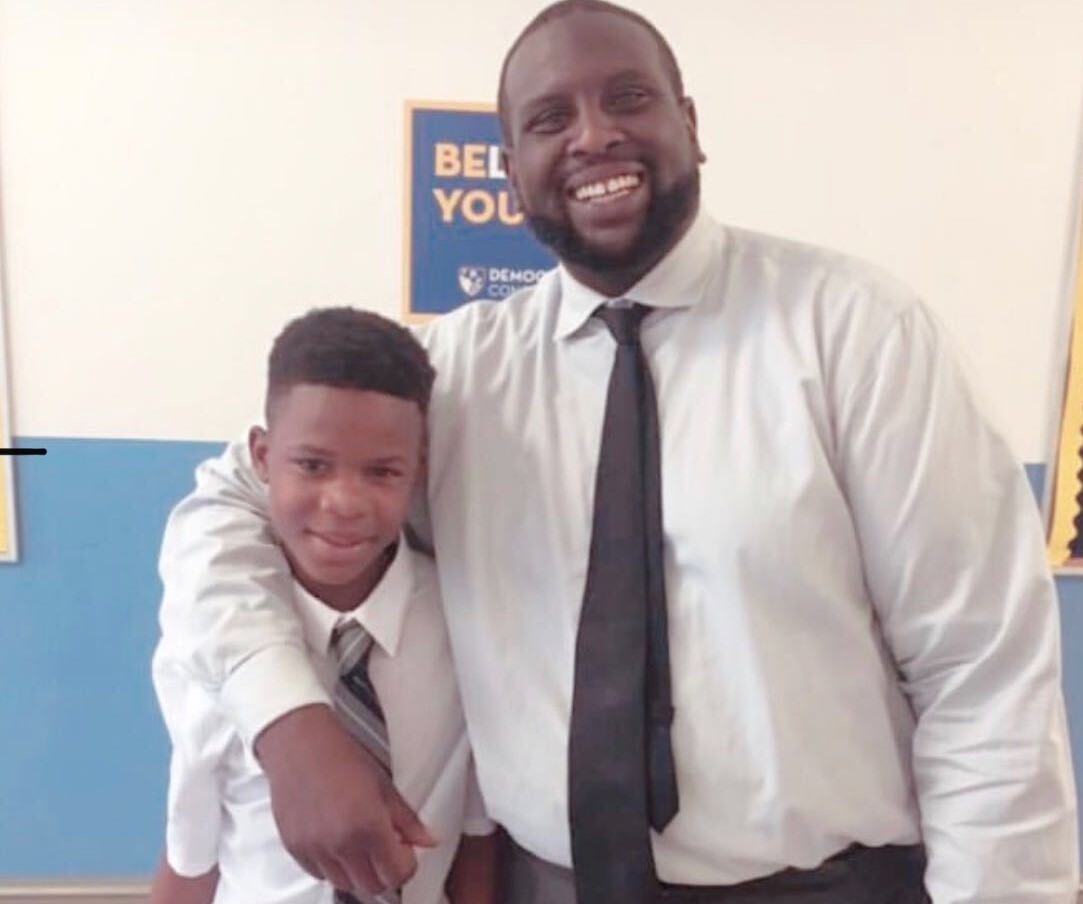
Frye says he believes Kay was the victim of systemic failures, including at Democracy Prep. While the teachers went “above and beyond” to help, Frye says the administration tried to expel Kay multiple times “without getting to the root of the issue,” including once for what Frye describes as “roughhousing” that nearly resulted in a fight with another student.
“We’re talking about a school that wanted to put him out, not because of something he was doing, but because of what other kids were doing to him,” says Martin. “If kids wanted to fight Deon, he didn’t run. He fought.”
Democracy Prep did not respond to DCist’s request for comment on the incidents Frye described. A spokesperson for the D.C. Public Charter School Board could confirm that Kay had attended the school, but said they could not confirm the years he attended or Frye’s claims.
Following his death, a public image of Kay began to emerge that his family and friends say did not portray the boy they knew. “We instantly saw that we had to shift the narrative that was being projected on his memory and who he was, because that’s not the child that we remember,” Berta says. “A lot of people who never interacted or crossed paths with the Kay family have tried to make determinations about this child.”
In a press conference after the shooting, D.C. police chief Peter Newsham referred to Kay as an “adult validated gang member”, which his family and friends have disputed. (“His petty street stuff that he might have gotten into wasn’t bigger than any other kid,” says Martin.)
Police said officers were at the scene in the first place because they had seen an Instagram live video of four people in a car with guns. That video began circulating online after the shooting, and appeared to show Kay among the young men, holding a gun as he looked into the camera.
To Martin, the video is an unfortunate result of Kay’s environment—not a referendum on his character. “It’s not a discounting or saying, ‘Hey, you know, these things didn’t matter,’ but in a way, this is what urban life is like for these kids,” says Martin. “That is a normal for some of these kids.”
And Kay’s teachers say the video does not depict Kay in his fullness as a person. Berta and other former Democracy Prep staff describe him as a kid who devoted himself to his family.
They say Kay routinely checked in on the academic progress of younger siblings, nieces, and nephews with their teachers and stopped by their classrooms to make sure they had what they needed. If Kay’s younger brother J’Har was having a bad day in kindergarten, Berta says, the teaching staff knew to call Deon.
Kay would come down from middle school to his little brother’s classroom and gently help J’Har calm down, Berta says. Kay would sit in the classroom with J’Har until he could stay focused on his class.
“I have never seen a sibling relationship like J’Har and Deon, ever,” Berta says. She remembers that for months, J’Har would cry when Deon dropped him off in his kindergarten classroom in the morning, begging him not to leave. J’Har would sometimes sneak out of class to go see his brother.
“His duality was so amazing,” Martin says. “No matter what you might have heard or what somebody might have said he acted like in class, he was the same kid that would go pick up his brothers and sisters and walk them home through whatever madness was going on outside.”
Kay’s mentors and teachers watched the way he interacted with law enforcement. Martin says Kay’s neighborhood in Congress Heights was deprived of government resources — apart from the police, who maintain a heavy presence. Berta says she personally saw police harass Kay on his walks home from school.
Kay went to a few different high schools, including Ballou STAY in Congress Heights, Martin says. The last school he went to was Silver Oak Academy, a boarding school in Maryland about an hour and a half from the District. Washington City Paper reported that when the COVID-19 pandemic started, Kay was sent back home to D.C.
Shortly before Kay was killed, Darnell Darlington, Kay’s middle school football coach, says he’d told Martin over the phone that they should go check on Kay.
“That’s why it hurts more than anything,” Darlington says. “We regularly checked on Deon, because we knew his environment. We knew we had to still be a part of his life. He really became family to us.”
Frye last spoke to him in June, he says. Kay talked about wanting to go to trade school, and getting his high school equivalency. Since the high school equivalency would likely require math courses, Frye offered to help Kay pass those.
Martin says the last time he spoke to Deon was probably in early August, about a week before his 18th birthday. Kay told him about his preparation for the GED, and shared that he was getting ready to take his driver’s test.
“I said, ‘Look man, when you’re ready, you let me know. We can work on trade school, get you a trade, get you some money,” Martin says. “And he was very receptive to it.”
They had a lot of conversations like that—focused on the future, on Kay’s potential, on what he would be like when he got older.
“I would always tell him, “One day you’re going to see when you grow up — you wasted a lot of time, but you’re going to get better,’” Martin says. “Because his turnaround was coming.”