 Jordan Pascale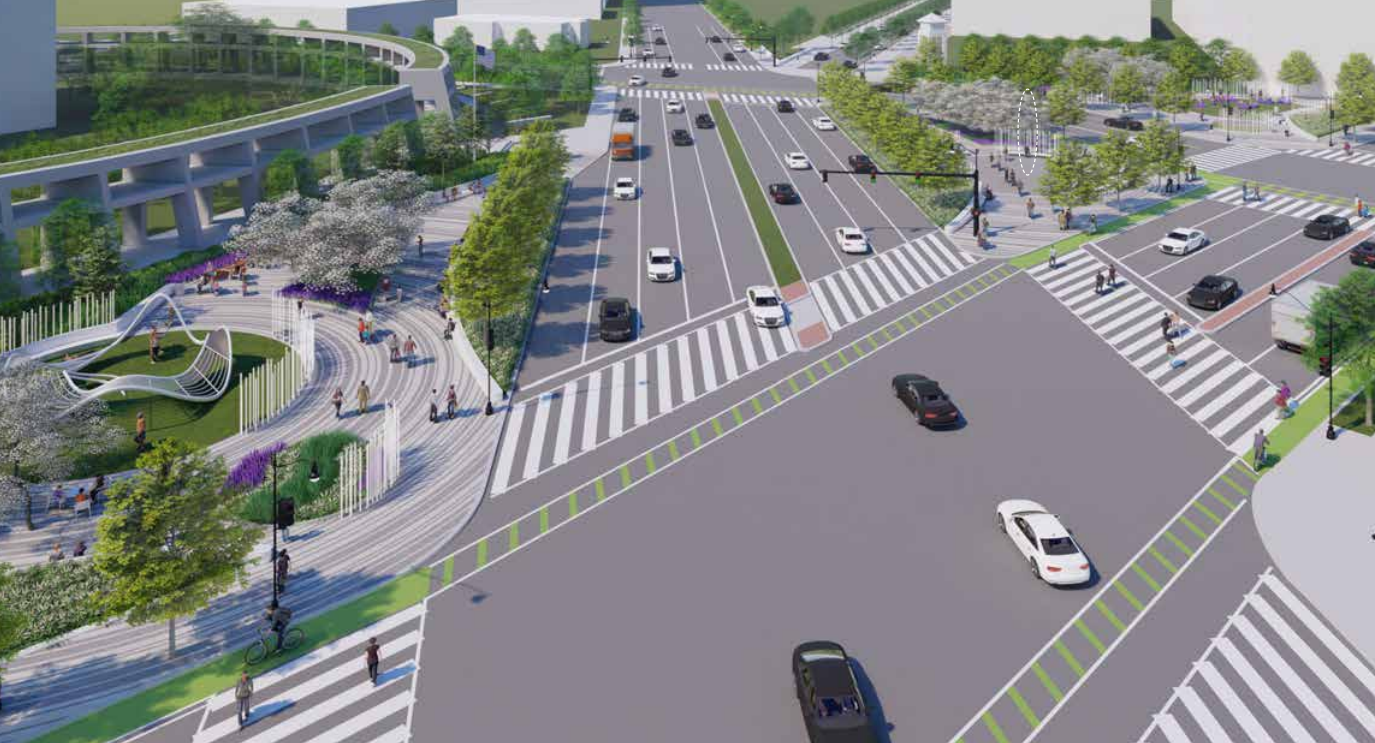
A proposal to redesign the notorious “Dave Thomas Circle” drew critical marks from a federal design review board Thursday.
The U.S. Commission of Fine Arts says the plan for the putting parks at the intersection of New York Avenue, Florida Avenue and First Street needs to be simplified and should be re-evaluated at a future meeting.
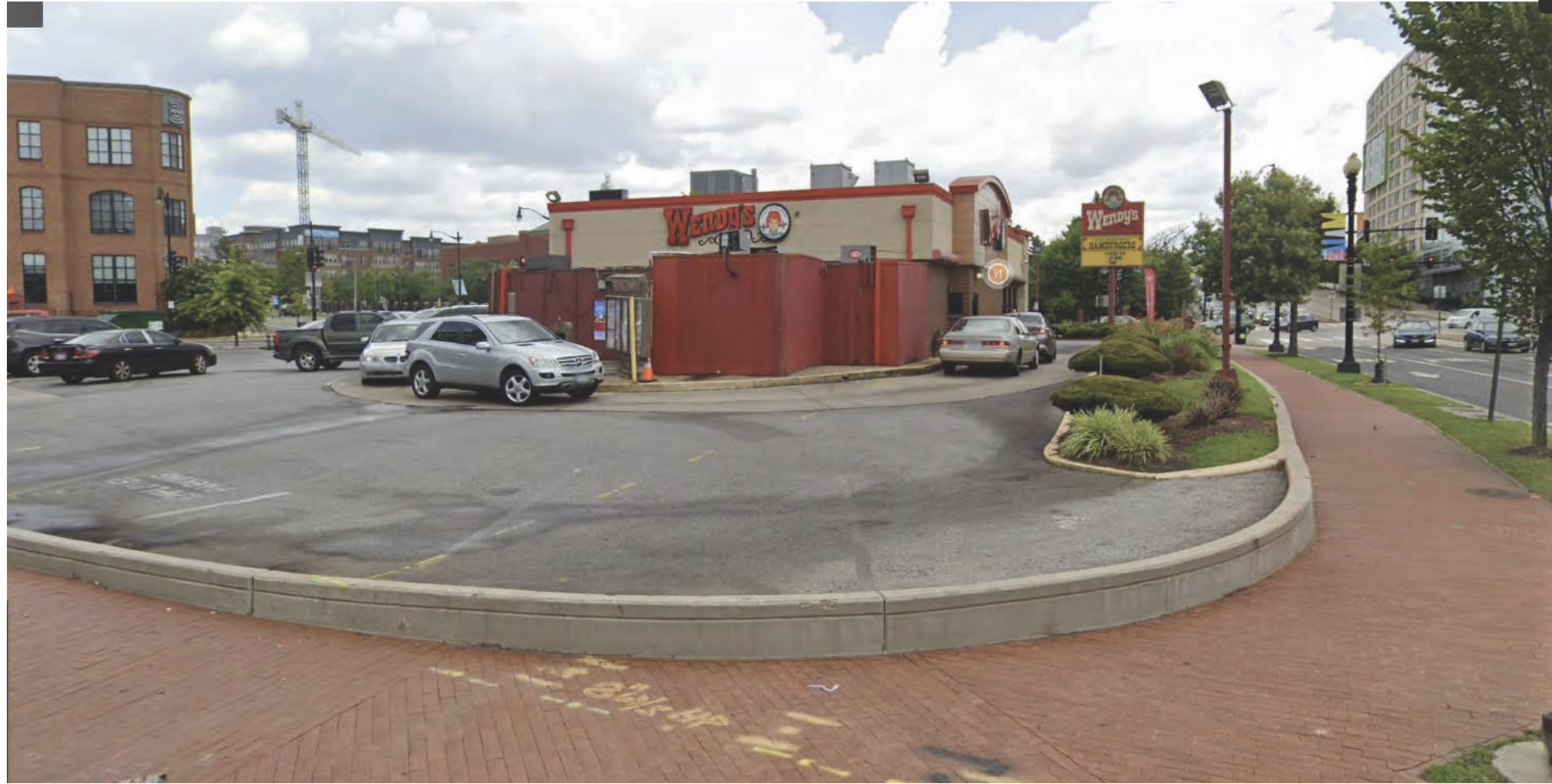
The project to re-do the complicated intersection — complete with a Wendy’s in the middle — is slated for construction in late 2021 or 2022. But first, the commission, which is in charge of reviewing design matters and aesthetics affecting federal interests, needs to approve the public space plan for the area. (The Wendy’s will be no more, though, if D.C. succeeds in removing it by buying it or using eminent domain.)
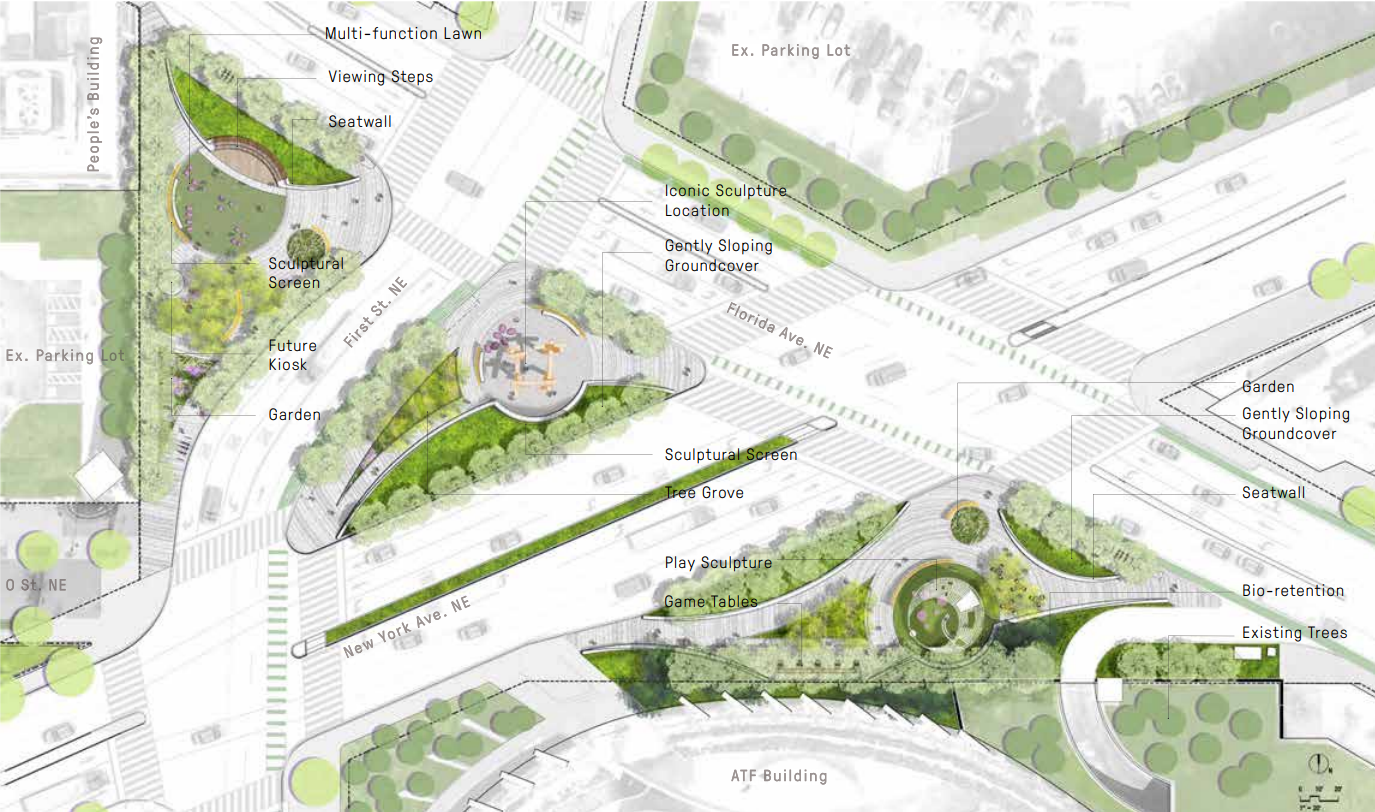
The plan was submitted jointly by the NoMa Business Improvement District and the District Department of Transportation. It aims to create three mini-park areas that total 1.3 acres. It would bring more green space to a neighborhood that has little, foster a sense of community, and use art as a place-maker. Originally, DDOT had submitted a plan with just grass and trees, but NoMa officials said they’d pay for additional outdoor public space design because of the importance of the area.

The Commission focused on more of the green space design rather than the street design during the hearing on Thursday.
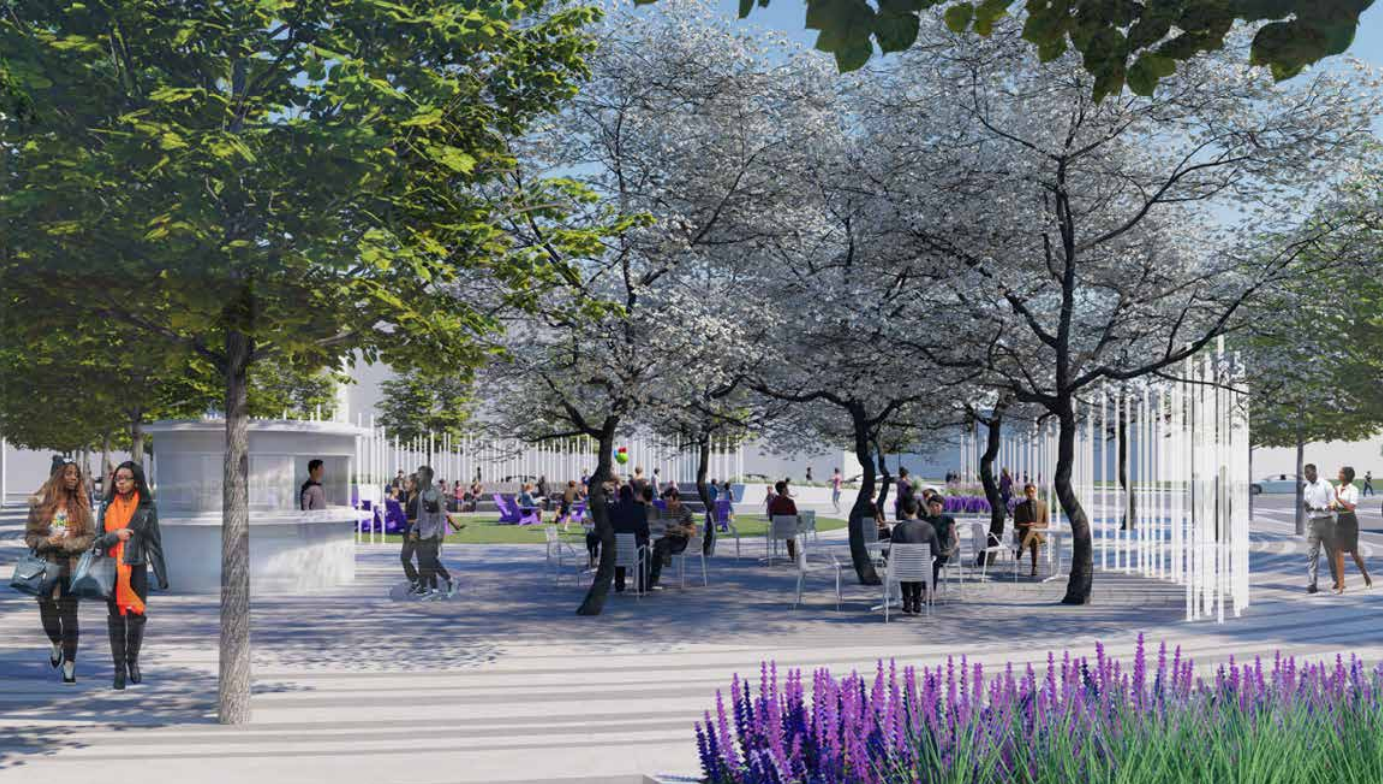
The design features one area for social activity, one area for a big art piece, and another area for “art and play.” You can see more renderings from the presentation here.
But the commissioners said the plan is trying to do too much in a small area. Elizabeth Meyer called the space “over-designed” and said the wishlist from the NoMa BID was too big for the room they have to work in.
Robin-Eve Jasper, head of the NoMa BID, later countered that the neighborhood drastically lacked outdoor space and that these plots could help a changing neighborhood. Jasper argued that at ground level, the spaces would not be too “busy” and that each area served one purpose.
Tom Balsley of the design firm behind the renderings, SWA/Balsley, took the criticism constructively and said they’d retool the plan. He said it was a challenge for designers as they usually have one contiguous park.
“What we have is pieces of park divided by streets and boulevards,” he said.
Some commissioners didn’t think many people would want to flock to parks surrounded by nearly 15 lanes of traffic.
“All three places are full of people [in the renderings], and I find it hard to believe they will be full of people,” commissioner Alex Krieger said.
Others hoped more green space could absorb some of the noise and pollution from the highway.
“This is a really messy loud, big vacuous intersection,” Toni Griffin said. “It’s going to continue to be loud… it’s a truck route.”
Much of the edges would be buffered from noise by berms and plants, Balsley said.
Most commissioners wanted to see First Street eliminated from the intersection to make it more pedestrian-friendly, but Amanda Stout, head of the project for DDOT, said that isn’t possible. She did say that while First Street still needs to function as a road, the overall new design is much safer for everyone, including pedestrians. Both Florida Avenue and First Street will be turned into two-way traffic instead of one-way.
Krieger argued that road design still had too many lanes.
“First of all, somebody should say it is certainly better than the existing condition,” he said. “Secondly, we wish that somehow another lane or two could be squashed away. It just still seems to be much too driven by an older idea about how many lanes you need to kind of move traffic.”
Robin-Eve Jasper of the NoMa BID says she’s still optimistic about the overall plans moving forward.
“This is good design, but they had a lot of comments,” she said. “I think we can incorporate those [comments]… and still deliver beautiful, useful spaces without losing the genuine forward-looking community interest.”