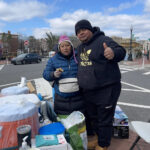
Ward 1 Councilmember Brianne Nadeau has introduced legislation aimed at formalizing the sidewalk vending economy and establishing designated zones for vendors.
Nadeau introduced the Sidewalk Vending Zones Amendment Act of 2020 this week along with At-Large Councilmembers Elissa Silverman and Robert White.
The legislation would amend the Vending Regulations Act of 2009 to create designated zones where sidewalk vendors can legally operate. It would also establish two new licenses: The first would be for a single sidewalk vendor, while the second is geared toward organizations and cooperatives vendors can register with to access the sidewalk vending zones. Once vendors are licensed or registered, they can operate and move between vending spaces in the zones.
Nadeau previously worked with Vendedores Unidos, an organized group of vendors, to develop a training and grant program for sidewalk vendors to meet D.C. Health standards, but a moratorium on vending licenses in parts of the city created roadblocks.
“They have done everything asked of them, cutting through red tape for years, and they still have not been able to obtain licenses,” Nadeau said in a press release. “For many in Ward 1 and across the District, vending is a main source of income and a way to share their culture. This legislation will allow them to continue working, but now as small business owners in full compliance. We want government to work for the people that it serves.”
The bill would also provide amnesty for unpaid civil citations, retroactively for up to five years, for vendors who get a license or register with a vending zone manager, and reform the city’s enforcement response, exempting sidewalk vendors from criminal penalties in an effort to minimize interactions with police.
“Unlicensed vending is not a public safety issue and our response should not be to send armed police officers to enforce these regulations,” Nadeau said in the release. “I want this legislation to begin to help sidewalk vendors feel safe again in their own community.”
In July, Nadeau and several other councilmembers introduced a separate bill to decriminalize street vending without a license.
Last November, local activists and street vendors were outraged after police confronted a 15-year-old girl selling food on the sidewalk, resulting in the teenager on the ground screaming that someone had hurt her knee.
Many said the incident, which was caught on video, was the culmination of years of harassment from some D.C. police officers for selling on the sidewalk in Columbia Heights. They said police had chased, insulted, and ticketed them, and sometimes even thrown away their wares. Nadeau represents the area, which is popular with vendors.
Following the incident, calls for the city to enact protections for vendors escalated.
If the bill is passed, a Columbia Heights Sidewalk Vending Zone would kick off the program.
Megan Macaraeg, an organizer with Many Languages Once Voice — which worked with Nadeau’s office on the legislation — says the COVID-19 crisis has made the need even more dire.
“As people were able to start to come back out of shelter in place, they had increasingly lost their jobs,” she says. “There was more and more of a need to actually street vend to feed their families and try to survive the pandemic.”
It is challenging for street vendors to meet the District’s licensing requirements, which are overseen by the Department of Consumer and Regulatory Affairs, particularly for vendors that sell prepared foods. Requirements include the need for an attached sink, for example, and obtaining a license through DCRA can cost hundreds of dollars.
“One of DCRA’s primary functions is to issue licenses to businesses, including sidewalk vendors. Before a license can be issued, the applicant must demonstrate that their business is in compliance with the District’s regulations,” DCRA director Ernest Chrappah told DCist in November in an emailed statement. “When a vending operation does not meet the District’s regulations, they cannot be issued a license. DCRA has issued several licenses to sidewalk vendors in Columbia Heights who follow the regulations in place to protect the public.”
Macaraeg says this bill is an attempt to start creating a system of codes and permitting that is hospitable to vendors.
“I think that this is a critically important first step in overhauling the licensing regime,” she says.