Héctor Alejandro Arzate
This story was republished by El Tiempo Latino. Puedes leer este artículo en español aquí.
The D.C. Council voted unanimously on Tuesday to pass a bill that will loosen restrictions around street vending.
The Street Vendor Advancement Amendment Act of 2023 will decriminalize vending without a license, create vending zones, and waive unpaid civil citations related to licensing. Its passage comes after years of campaigning from street vendors and their advocates, who filled the council chambers during the legislation’s second reading.
Over the past few years, there have been several attempts to overhaul street vending in D.C., with the latest being a combination of previous two bills that were reintroduced by Ward 1 Councilmember Brianne Nadeau and Chairman Phil Mendelson.
“It’s an emotional moment that this day has finally come,” said Nadeau. “This legislation would not have come into existence, and likely would not have gone very far, were it not for [street vendors’] tireless advocacy.”
Both Nadeau and Mendelson, along with At-Large Councilmember Christina Henderson, amended the legislation to establish a new category for licenses following concerns from the Health Department over potential changes to D.C.’s current cottage food laws. Now, under what will be called a “microenterprise home kitchen business permit,” vendors who sell food via carts, tables, or stands will be able to prepare it in their homes.

Under the new rules, vendors will be accountable to DC Health over how they prepare, handle, and store food. The agency will also be authorized to inspect vendors before they begin operating and will be able to conduct additional inspections, issue citations, or revoke permits if either the vendors fall out of line with the law or are determined to be the source of a foodborne illness.
Additionally, the bill was amended to clarify that enforcement officers may only request an individual’s identification if they refuse to provide their legal name and address or if the officer has reason to believe an individual is providing incorrect information.
The amendment also redefines the term “detain”. It now means that officers will verbally ask individuals to remain at their current location – this is to curb the use of force when trying to identify unlicensed vendors when they are doling out civil infractions.
Lastly, a third amendment was established to clarify the language around providing amnesty for delinquent minimum sales tax payments in coordination with the Department of Licensing and Consumer Protection.
“[Street vendors] all desire to be licensed and to follow rules without the risk of arrest, harassment, or devastating fines,” said Henderson.
“I am thrilled today as we begin to lift those fears and weights off their back by opening pathways to regulated sidewalk vending. I also appreciate the work that has been done to address food safety concerns from DC Health because I know these suggestions will make customers feel more comfortable making purchases, which in turn means more money and stability for our vendors.”
The bill still needs to be approved by Mayor Muriel Bowser, and go through a Congressional review period before it can be enacted into law, and eventually be funded. Once it passes the first two steps, street vending without a license will be effectively decriminalized. According to Nadeau, she is trying to secure funding during this current budget cycle.
“As excited as I am, there’s still work to be done,” Nadeau told DCist/WAMU.
For Genesis Lemus, the unanimous vote is a step toward justice for those who are trying to make a living through vending. In 2019, she was pushed to the ground during a confrontation with a police officer for allegedly selling goods without a license in Columbia Heights. That event was caught on video and became a catalyst for the campaign to decriminalize.
“You know it feels victorious to be finally be able to say that the police will never harass us again,” says Lemus. “We will be able to share our culture and our food with D.C.”
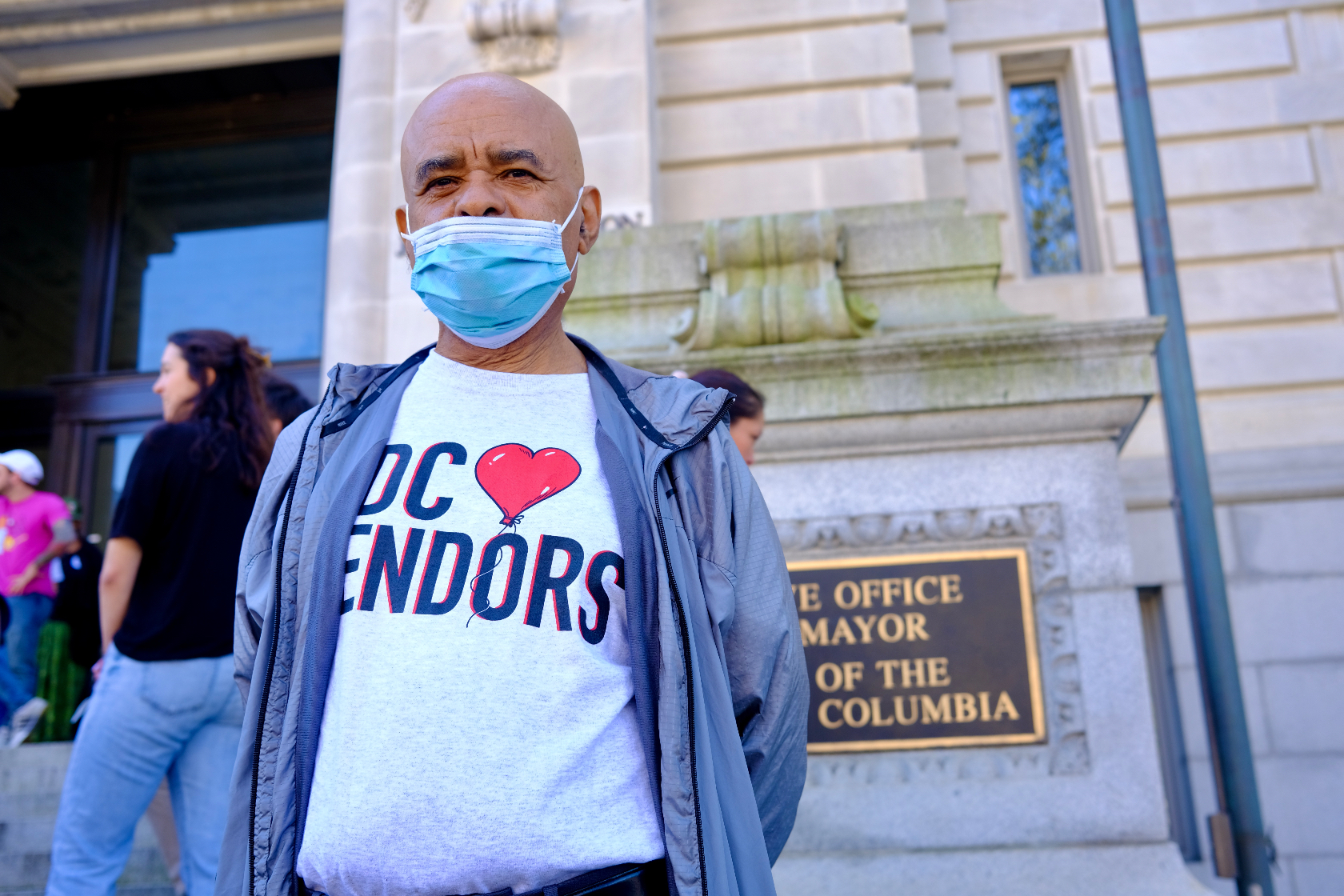
Kahssay Gebrebhran is an Ethiopian street vendor who used to sell hot dogs and half smokes but hasn’t been able to because he owes more than $3,000 for failing to pay taxes at the outset of the pandemic. Due to D.C.’s Clean Hand Certificate, which requires applicants to show they don’t owe more than $100 in fees, fines, or taxes to the District, Gebrebhran can’t renew his license. But the bill’s advancement means he’s one step closer to having his livelihood restored.
“Our big problem is the tax, so I am very very happy today,” says Gebrebhran. “I am three years stay at home, so I need my job. I miss my people, my customer. So soon, I go back to the work.”
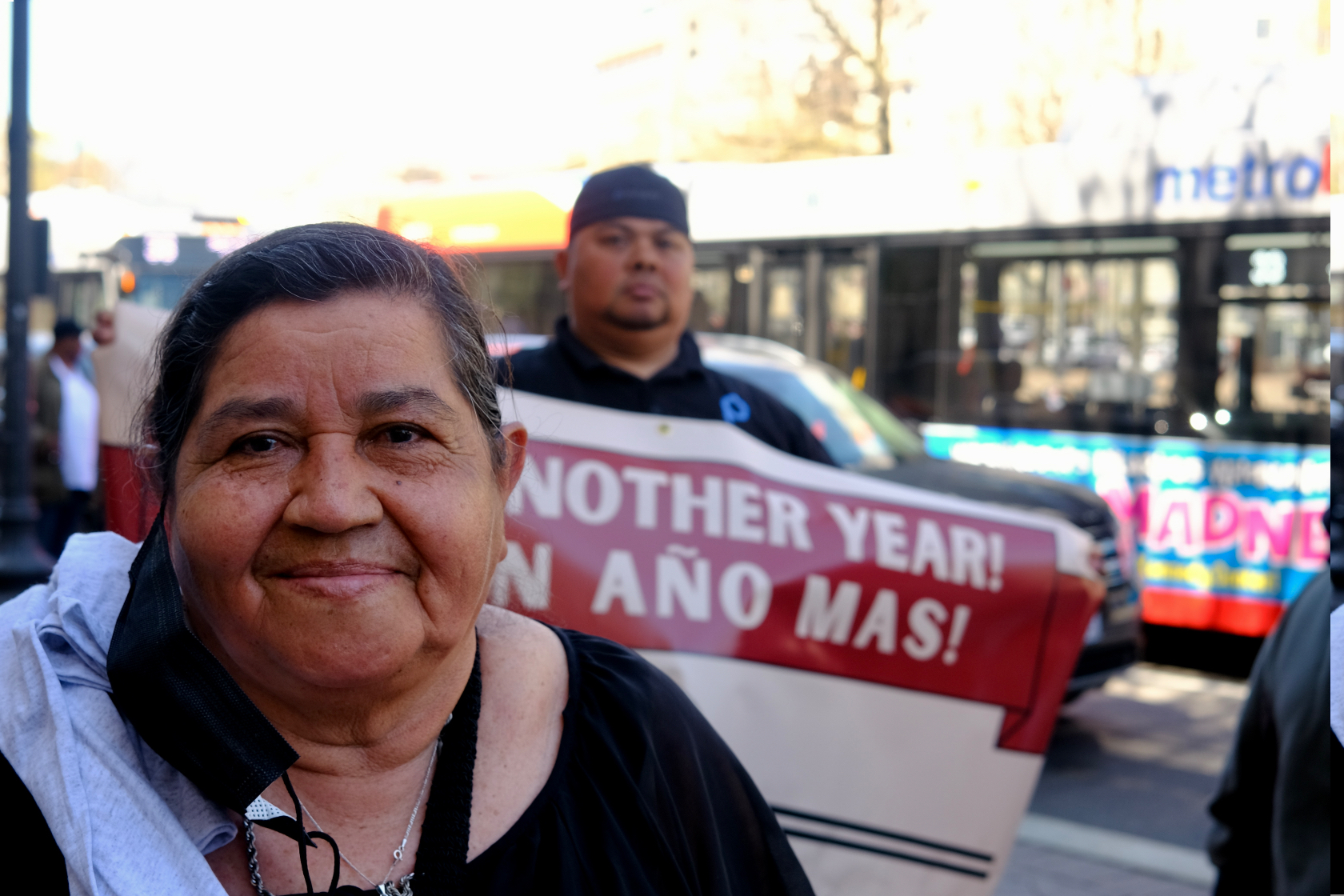
Street vendors Reyna Sosa and Gloria Gomez say they’re excited to see their years of campaigning come to fruition. The two have sold antojitos – meaning snacks like mango, watermelon, yuca, – in Columbia Heights for almost a decade.
“They were very difficult years,” says Sosa. “I think for us, today means a huge victory. And we’re happy, so we’re going to celebrate it too.”
Meanwhile, María Isabel Guevarra – also known as Colochita – says it feels good to be recognized as a positive force for the community. Guevarra has been vending for nearly 30 years and is affectionately known as the abuela of Columbia Heights’ Street Vendors.
“Thanks to my lord, we’re going to be happy selling here. Little things but making an honest life,” says Guevarra.
That feeling of making an honest living is one that motivated Chuck Bradley to get involved in the campaign when he first heard about it. Bradley is a formerly incarcerated street vendor who sells socks, t-shirts, and jackets.
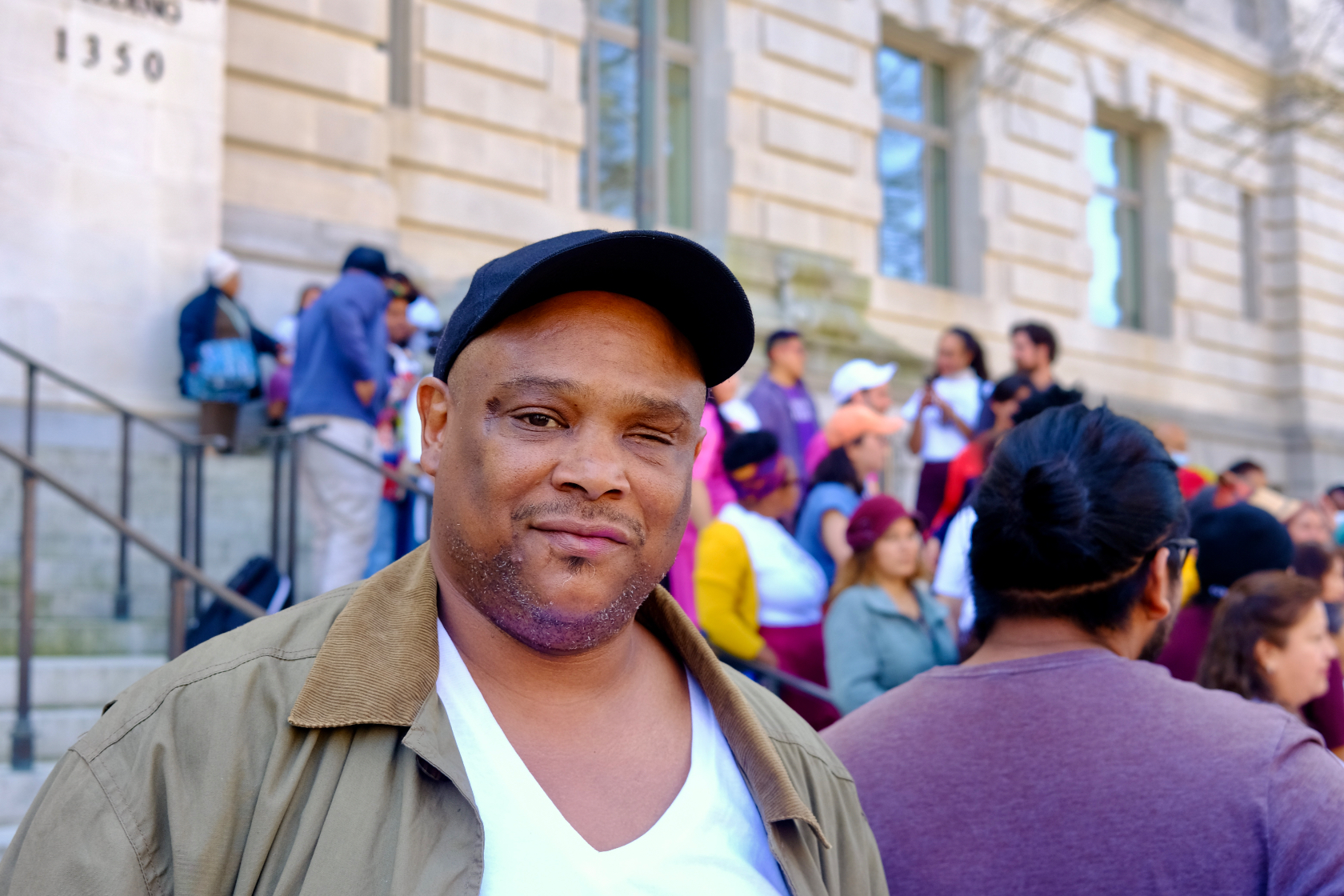
“I feel awesome, man,” says Bradley. “If we don’t fight for our community and our rights, ain’t nobody gonna respect us or fight for us. So we gotta do it ourselves… And I’m grateful that the government is seeing it our way.”
Through the bill, the cost of basic licenses would decrease from more than $1,000 to $99, and they can be renewed every two years. Meanwhile, sidewalk vending would cost applicants about $75.
If enacted into law, the legislation would also make D.C. the third major U.S. city, after New York and Los Angeles, to reform its street vendor licensing regulations.