 Dominique Maria Bonessi
 Christian Zapata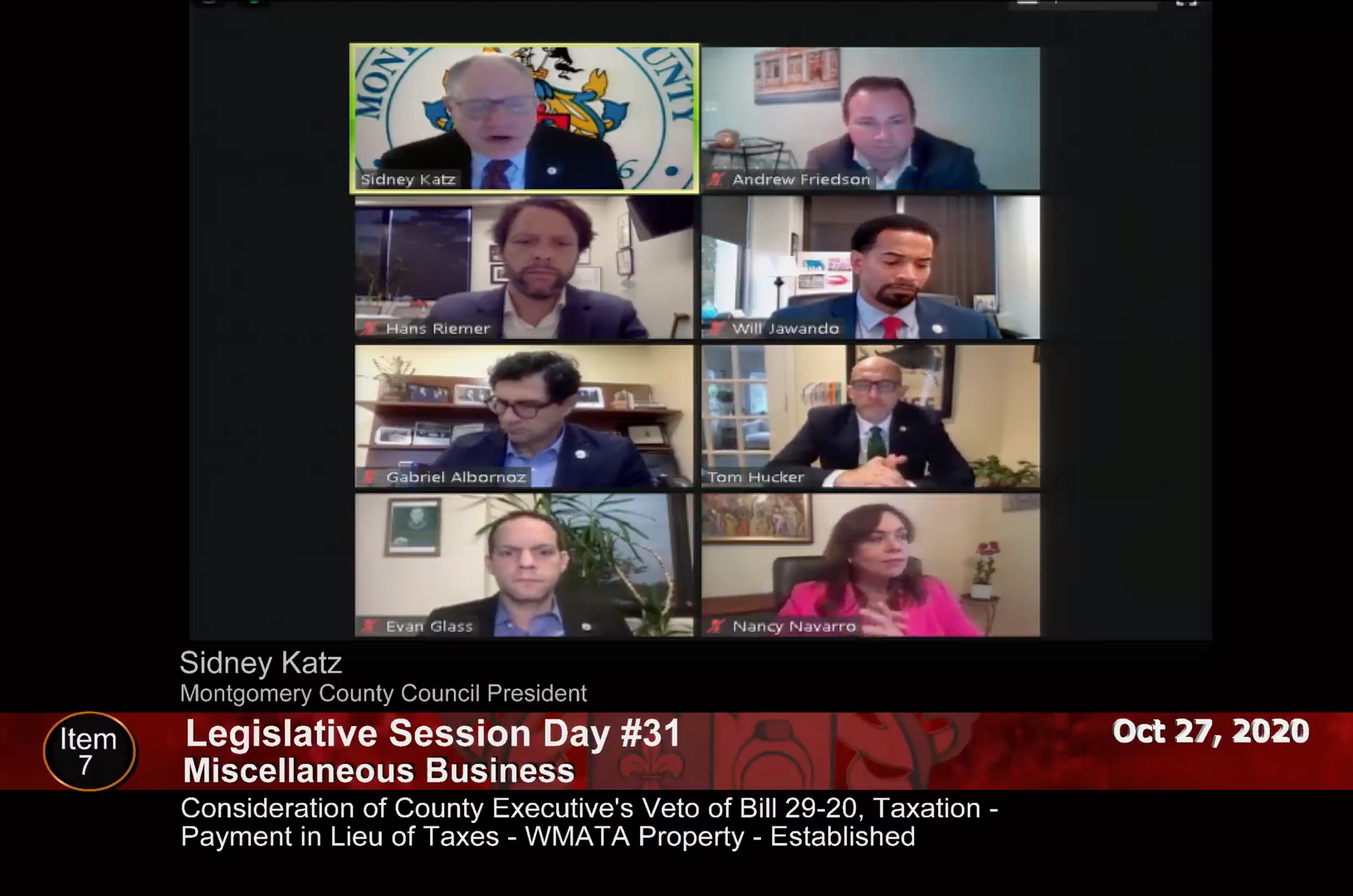
The Montgomery County Council voted Tuesday to override a veto of a bill that would provide a tax break for developers to build high-rise apartments above Metro stations.
The county council voted 7-2 in favor of bypassing County Executive Marc Elrich’s veto from earlier this month. The bill aims to exempt developers from property taxes for 15 years. Half of the apartments would be rental units and a quarter would be “moderately priced dwelling units” for people who earn less than 50% of the county’s median area income.
Councilmember Hans Riemer, who voted in favor of overturning the veto, spoke of the benefits that come with empowering WMATA and developers to build up the area.
Reimer said encouraging development of the properties would in the long run increase tax revenue. “But even more significantly, to transform what is generally a … used parking lot and used parking garage into a place, into a community hub, into somewhere that people live, that people work, that companies may want to locate,” he said.
Councilmember Will Jawando, who voted against challenging Elrich’s veto, said during the meeting that while the county needs to expand its housing stock near public transit, the exemption has the potential for the county to forgo tens of millions of dollars in tax revenue that could otherwise go toward supporting fair worker wages.
“It’s incumbent on us to say ‘how do we make sure we’re protecting the interest of the county’ and a big way to do that is our revenue stream,” he said.
Jawando suggested setting a ceiling where the tax subsidy goes away once Metro has generated a certain amount of revenue, to incentivize development companies to build in the area without risking additional revenue losses.
“I think we’re not doing our responsibility here under this bill to protect taxpayer dollars in knowing we’re going to get some development, as well already have, Twinbrook, other places, on Metro,” he said.
When the county council first voted on the bill earlier this month, it struck the same 7-2 vote. Shortly after, County Executive Elrich wrote his objections to the bill in a letter to the council. This was the first time in Elrich’s tenure as executive that he has vetoed legislation.
“It’s about giving away a bunch of money to developers who want to make more money,” Elrich told WTOP at the time.
Councilman Reimer, who has been a sharp critic of Elrich, said at the time that the bill was part of the county’s plan for smart growth.
“We need to be a more dynamic economy; we need to be a place where there’s more investment and progress and development. We’re not getting enough of that,” he said at the time.
Elrich wrote in the letter that the tax breaks could cost the county a loss of $400 million in revenue. He said that loss of tax revenue could take away funding for much-needed programs in the county that assist vulnerable populations.
“This Bill allows housing to be built for those who can afford it, not for lower-income populations who are disproportionately Black and Latino,” Elrich wrote.