Matt Blitz
 Daniella Cheslow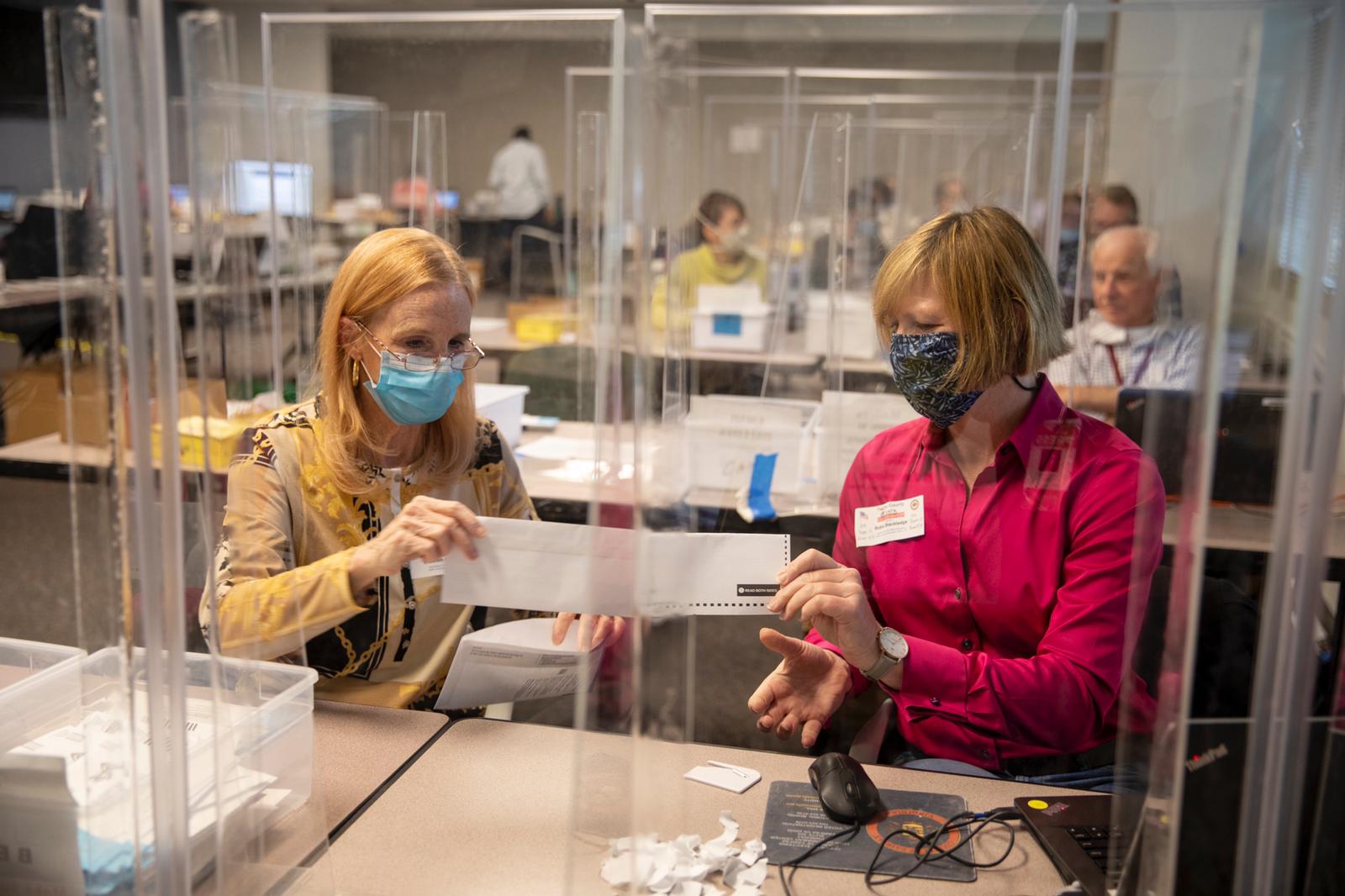
Virginia voters chose Democratic candidate Joe Biden Tuesday, bringing him 13 electoral college votes even as some House races revealed the limits of a blue wave in the commonwealth.
Early Wednesday morning, Democratic candidate Dr. Cameron Webb conceded defeat in a contest he hoped to win against Republican Bob Good, a former Liberty University official.
Republicans ousted the incumbent, Denver Riggleman, earlier this year in a bitter primary, giving Democrats hope of flipping the seat in the 5th Congressional district, which begins in Fauquier County in the outer reaches of the D.C. suburbs and sprawls down to the North Carolina border.
Meanwhile, Abigail Spanberger, who flipped the 7th district in 2018, is fighting to keep her seat against a strong challenge from Republican Nick Freitas.
Their tough election nights helped extinguish Democrats’ hopes of expanding their hold on Congress.
Still, Rep. Elaine Luria, Democrat, appears to to be holding on to her seat in Virginia’s 2nd district, the commonwealth’s third closely watched Congressional race.
Democratic Sen. Mark Warner also won a third term in office against Republican challenger Daniel Gade. Democratic Rep. Jennifer Wexton kept her seat in Loudoun County in the 10th district, as did Democratic Rep. Don Beyer in Arlington’s 8th district and Republican Robert Wittman in the 1st district.
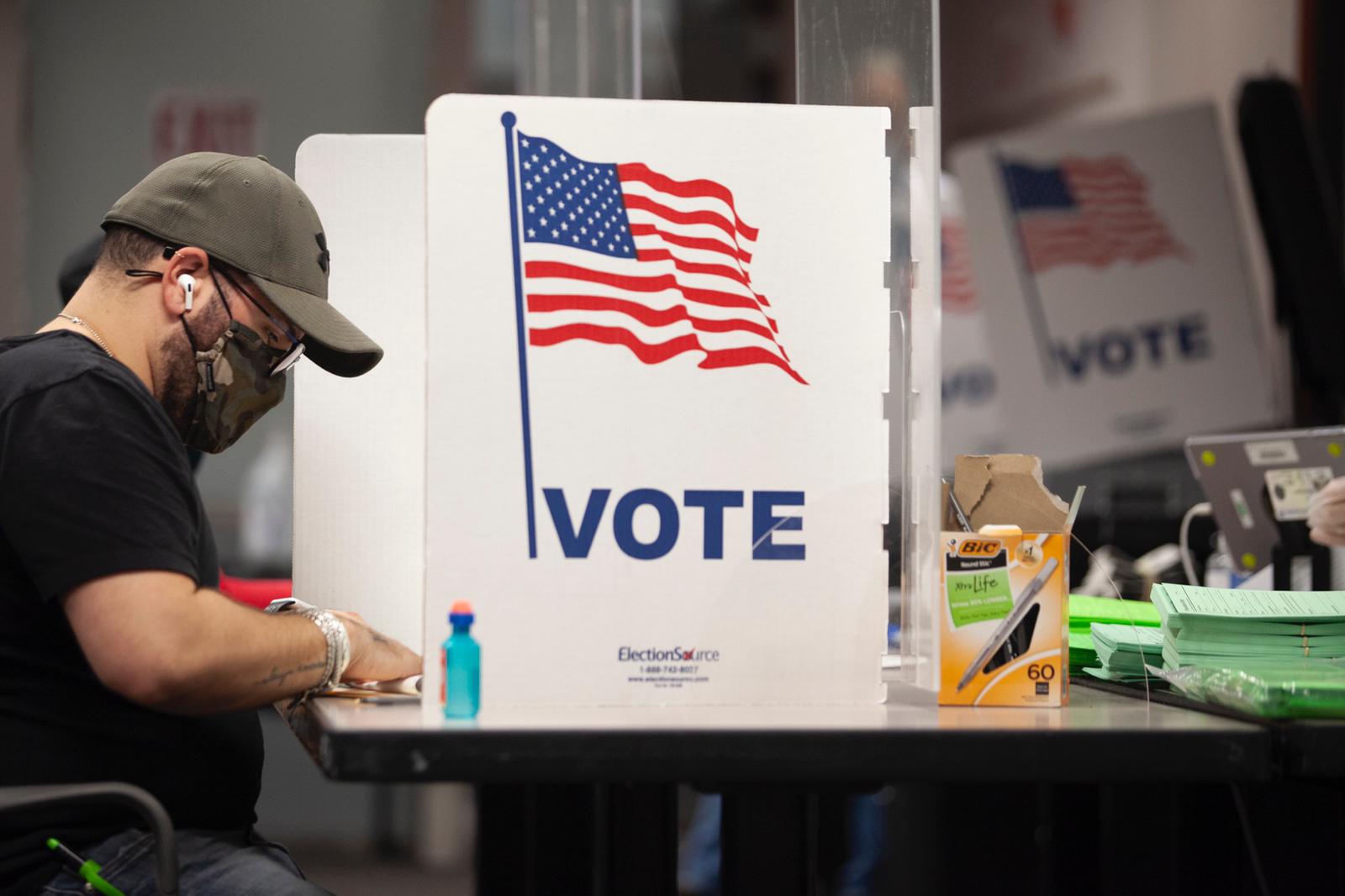
Voters across Northern Virginia lined up before polls opened at 6 a.m. on Tuesday, but the crowds quickly dissipated — even at polling places that had previously seen hours-long waits.
That was in part because of the high turnout seen during the 45 days of early and mail-in voting, during which more than 2.7 million voters across Virginia cast ballots. This unprecedented stretch of advance voting, the longest in the region, was new this year as a result of change spearheaded by Democrats in Richmond earlier this year.
Still, Fairfax County Elections director Gary Scott said in-person turnout was lower on Election Day than he had anticipated. By Tuesday afternoon, turnout appeared to be roughly the same as four years ago, when it was 83%, he said. He cautioned that ballots could still arrive by Friday, Nov. 6. More than 1.1 million mail ballots were requested; as of Nov. 2, more than 962,000 had been returned.
“We anticipate we’ll still get about 20,000-30,000 ballots after today,” Scott said. “I don’t think it will adjust our final result. It might make it different by the margins.”
Virginia was once a swing state but turned deep blue during the Trump administration. An influx of immigrants and liberal new arrivals helped drive a Democratic groundswell in the suburbs of Northern Virginia. Over the past four years, voters elected Democratic Gov. Ralph Northam, flipped three Congressional seats from red to blue, and last year gave Democrats control of both chambers of the General Assembly for the first time in 26 years. A Republican has not won a statewide race in the commonwealth since 2009.
Spanberger’s possible rout cast doubt on those gains. As of late Tuesday she had captured 39% percent of the vote to Freitas’s 61%, although she maintained that several large counties had yet to report their early votes, and that thousands of mail-in ballots were still pending. As of 1:40 a.m., about half the votes in the 7th district had been reported.
A poll published Tuesday by AP shed light on the issues driving Virginians’ decisions: voters largely said the pandemic was the most important issue facing the country today, ahead of the economy, health care, racism and climate change.

Trump’s polarizing influence was palpable in Arlington, when he made a morning stop at his campaign headquarters. Retiree Gloria Knox, 67, unfurled a deep-blue “Trump” flag as she waited for the president to arrive.
“He loves America,” Knox said, “I think even more than I do, and I love America. I will fight for this country.”
Steps away, Sage Chapman, 40, said when she saw the Trump supporters, she scrapped plans to go to the doctor. Instead, she pulled over, stood a few feet away from Knox and held out a Black Lives Matter flag. She called the Trump supporters “racist and misguided.”
“We have to vote out hate,” Chapman said.
The sharpened political environment also translated to voters marking straight-ticket ballots. In Loudoun County, Republican Aliscia Andrews hoped to unseat Wexton, a Democrat in her first term. Voter Marketa Howard, 38, who said she voted for Biden, said Wexton was the easy choice.
“I haven’t seen anything that I dislike about her stances,” Howard said. “And also I’m in support of Mark Warner as well.”
Federal government worker Nick Poliskey, 40, said he voted for Trump because he liked his stance on immigration. He voted for Andrews, he said, because “we used to live by her, so it’s not a Republican-Democrat thing. She’s super sweet.”
They both voted in person on Election Day, Howard because she didn’t trust the U.S. Postal Service could deliver mail on time, and Poliskey because he said he doesn’t believe in early voting.
“I think it was meant to be one day and it shouldn’t be any other day,” he said, echoing a common thread among Republicans who tended to prefer in-person voting, compared to Democrats who viewed mail-in voting more favorably, according to a study by Goucher College in Baltimore.
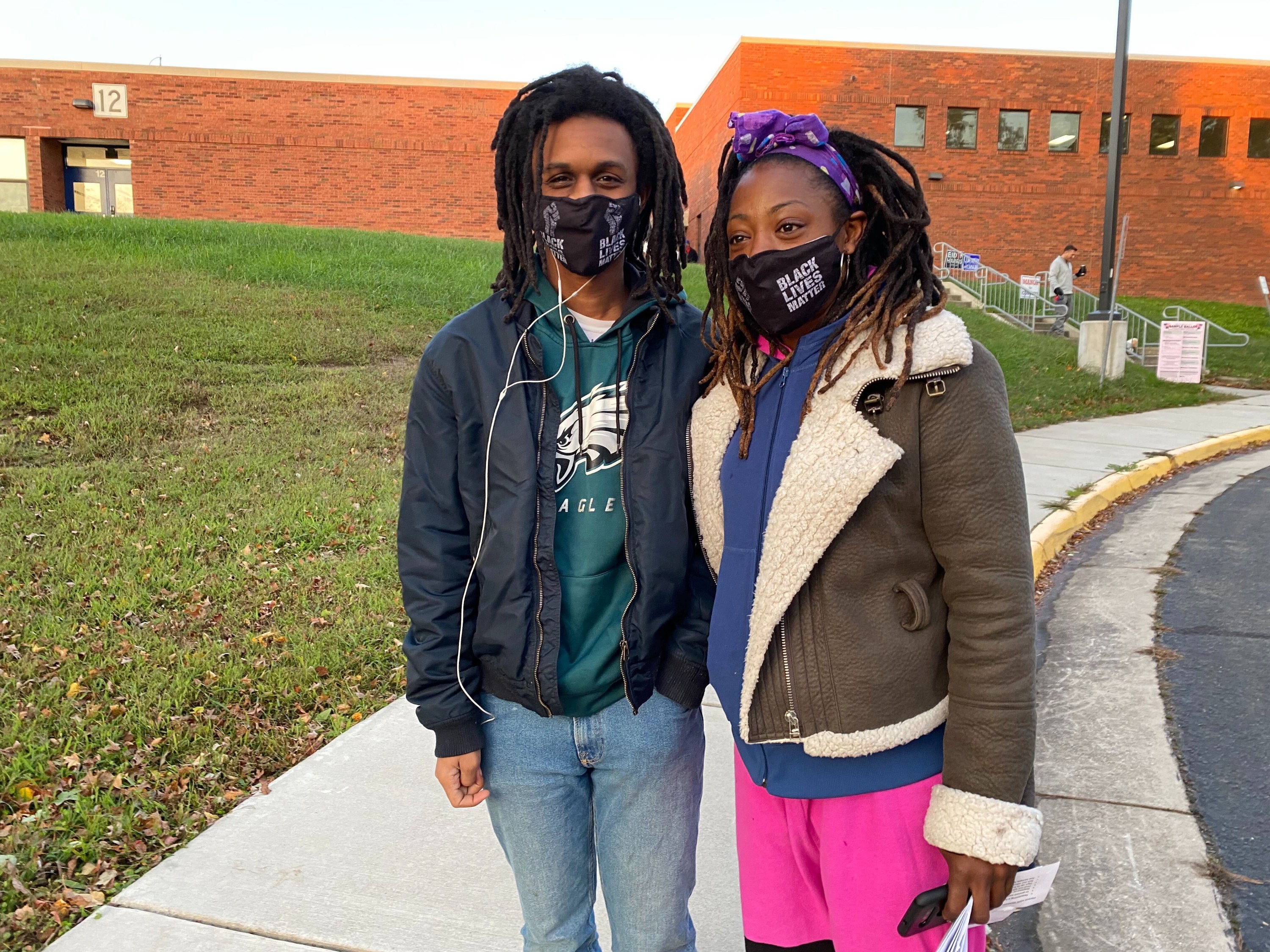
For African Americans in Virginia, vice presidential nominee Harris was an added draw. In Prince William County, art student Clayvon Toran, 20, arrived with his mother, retired veteran Opol Walker, 39. They wore matching “Black Lives Matter” face masks and planned to vote for Biden.
“As a woman of color, I’m all for it. As a woman, period, I’m all for it. I think it’s good to have some kind of change,” Walker said.
Toran added: “One of my sisters wants to be a lawyer when she grows up, so I hope that shows that she can do anything.”
Political science professor Stephen Farnsworth at the University of Mary Washington anticipated that African American enthusiasm would be pivotal nationwide. Although in 2016, Virginia voted for Clinton, Farnsworth said this year many more states might follow suit and go with the Democratic ticket.
“There isn’t much chance of lack of enthusiasm among African American voters this year because not only is Sen. Harris on the ballot, but so too is the performance of the Trump Administration and law enforcement that he has backed over the last four years,” Farnsworth said.
Speaking to reporters late Tuesday evening, Virginia Department of Elections Commissioner Chris Piper said there had been no instances of voter intimidation and sounded a note of relief, saying “it’s been an incredibly smooth day.”
Piper said precincts would announce their in-person results separately from absentee and early voting results, which would be counted and reported by Central Absentee Precincts, also known as CAPs. He said registrars at the CAPs would keep counting until 11 p.m., and if they did not have results Tuesday, they would resume Wednesday.
“I want to again preach patience. These numbers could change significantly,” Piper said.
In Virginia, the end of the presidential election signals the beginning of the governor’s race for 2021. The Democratic field is crowded a year ahead of the vote, and on Tuesday night, one of the contenders, state Sen. Jennifer McClellan (D-Richmond), emphasized the shifting political landscape in the state.
“When I first got involved in the Democratic Party of Virginia 30 years ago, we were a reliably red state,” McClellan said in a statement. “Now, Virginia has voted for the Democratic nominee for four straight elections.”
Former Virginia Gov. Terry McAuliffe, who has filed paperwork to run for a second term, added his congratulations.
“After doing more than 150 events for the Biden-Harris ticket, I have seen how hard Virginians worked to make this victory real, just like we have done every year,” he wrote.