Elliot C. Williams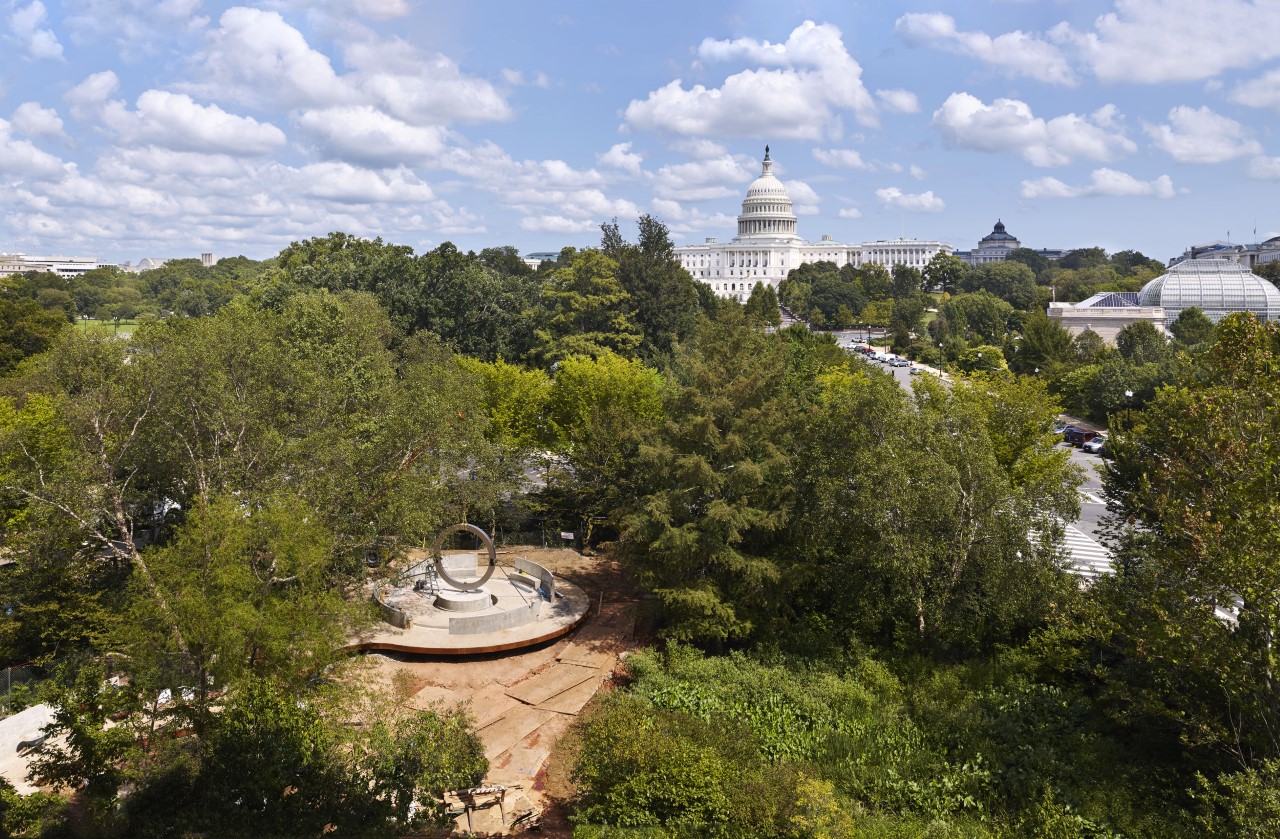
On Veterans Day, the Smithsonian’s National Museum of the American Indian will unveil a new memorial honoring the military service of Native Americans, marking the end of a years-long effort that involved an act of Congress and a national design competition.
The National Native American Veterans Memorial will open with virtual programming, including a tour and video tribute, on Wednesday, November 11.
The memorial is free to visit and open 24 hours a day on the grounds of the museum, located just off the National Mall on 4th Street SW. The memorial honors American Indians, Alaska Natives, and Native Hawaiians, who have served in the armed forces at a higher rate per capita than any other ethnic group and have served in every major conflict since the American Revolution.
“It is a symbol of the country finally giving its ‘thank you’ to the Native American people that have contributed all the way from the Revolutionary War to the present and their contributions to this country,” says Gregorio E. Kishketon, a 54-year-old Marine Corps veteran who lives in Chevy Chase, Maryland, and is an elder of the Kickapoo Tribe of Oklahoma.
The memorial was designed by Harvey Pratt, a veteran himself and a member of the Cheyenne and Arapaho Tribes of Oklahoma, as well as a Southern Cheyenne Peace Chief. In 2018, a jury unanimously selected Pratt’s design, “Warriors Circle of Honor,” out of more than 400 initial submissions.
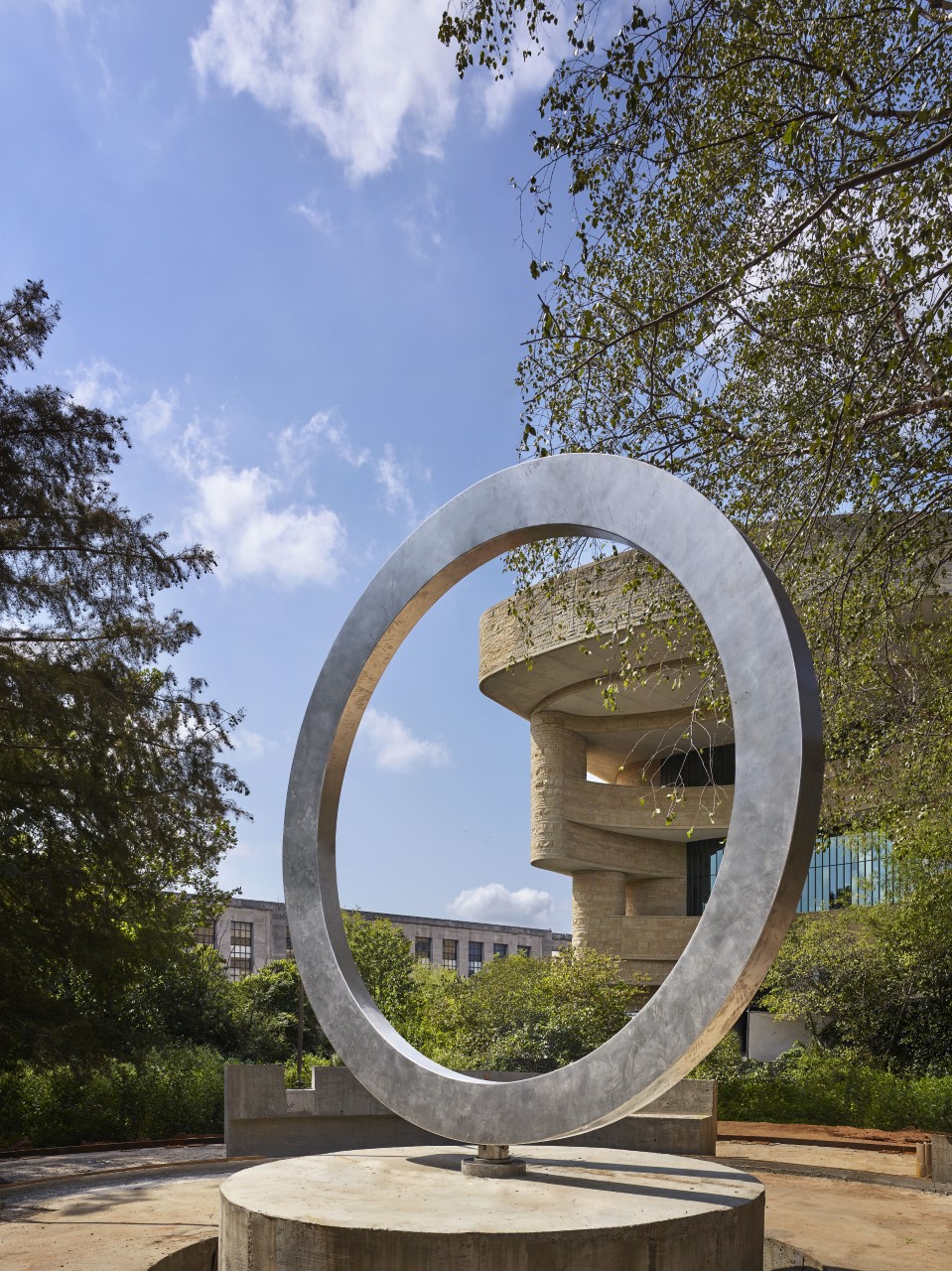
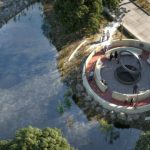
The design centers around a stainless-steel circle that’s 12 feet in diameter and rests on a carved stone drum. Water flows from the center and a fire can be lit during special ceremonies. The seals of the five branches of the armed forces are embedded in a nearby wall. Visitors can leave prayer ties — spiritual symbols that often contain tobacco tied in a bundle — on four vertical lances surrounding the circle. A canopy of trees opens to the memorial’s circular seating area, a quiet pocket on the east side of the museum that has freshwater wetlands.
“It’s really meant to be a place of gathering, a welcoming place, and a place for reflection and healing,” says Rebecca Trautmann, the project curator. “This is definitely not a project that we’re completing and moving on from. It’s really more of a starting point. We’ll continue to have exhibitions, programs, articles in our magazine; we’ll continue to do things around this memorial for decades to come.”
The memorial coincides with Native American Heritage Month, as well as the museum’s release of a new book, Why We Serve: Native Americans in the United States Armed Forces. The 240-page book details two centuries of military service and is accompanied by an exhibit that will go online Wednesday.
When his design was chosen, Pratt said he was inspired by the cycles of time and life, the seasons, stars, and planets. “It’s a sacred place,” he said. “It’s amazing to think about my design being on the National Mall with the other 11 or 12 national monuments. We’re going to be a part of that.”
Congress originally commissioned a national memorial for Native American veterans in 1994, a decade before the Museum of the American Indian was opened in D.C. The museum curators began conceptualizing the project in 2014.
Kishketon, whose father, grandfather, and great-father also served in the armed forces — from World War I to the Gulf War — says the memorial is a long time coming. He was part of the initial board that sifted through design submissions.
“I can’t begin to fathom what my ancestors would think about this monument,” he says. “I know that George [Kishketon], my great-grandfather, would be extremely proud.”
A large procession of veterans was originally planned for the opening, but that was postponed due to the pandemic. Kishketon says that he will watch the tribute online Wednesday and will be there whenever a grand opening is allowed.