 Jenny Gathright
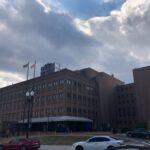
Dominique Davis has spent the last eight months in the D.C. Jail—the site of a large coronavirus outbreak in the spring—despite not being charged with a crime.
Davis was arrested in February on assault charges, but the U.S. Attorney’s Office dropped the case. But because Davis had been on parole when he was arrested, the U.S. Parole Commission still issued a warrant for his arrest. Now, according to a lawsuit filed by the Public Defender Service in October, Davis is languishing in a legal limbo. Because the pandemic has halted normal hearings, he is still waiting for the day when the commission will decide whether it will revoke his parole.
A spokesperson for the Parole Commission says the agency cannot comment on matters related to pending litigation, and added that in addition to criminal charges, someone on parole may remain in jail because they have a history of failing to report for supervision. But attorneys with the Public Defender Service say Davis’s situation is far too common during the pandemic.
As of September, public defenders say they were representing 45 people who are in similar situations. They say these clients remain in jail even though their charges have been dismissed, they have been determined eligible for release by a judge, or they have been “no-papered,” which means prosecutors didn’t charge them with the crime they were arrested for.
Before the pandemic, parole violations were a significant driver of incarceration in D.C, representing more than 14% of men and 8% of women in D.C.’s jails in April. Since March, though, the number of people held for violations has fallen by half. The U.S. Parole Commission says this is because it has been more carefully weighing the risks associated with jail time during the pandemic.
But defense attorneys say the reduction isn’t nearly enough. They say some of their clients are still being jailed over relatively minor parole violations, which the Parole Commission previously said it would limit. Further, they say the pandemic has brought legal delays that are keeping dozens of people in jail even after the charges brought against them have been dismissed, or a judge recommended they be released.
“Because of the pandemic, this group of people has been stuck at the DC jail, with no opportunity to challenge their imprisonment,” writes Rashida Edmondson, Acting Chief of the Parole Division of the Public Defender Service for the District of Columbia, in an email to DCist/WAMU. “There is no bail or bond that they can pay, and the [U.S. Parole] Commission’s refusal to release them effectively overrides the Court’s decision to either dispose of the case altogether, or to release the person while awaiting resolution.”
Parole can be revoked if a parolee commits a crime, or if they commit a technical violation. These include things like missing appointments with parole officers, not showing up to work or treatment programs, or not submitting a drug test on time. When an officer decides that a violation warrants notifying the U.S. Parole Commission, the Commission can bring the parolee into custody while it determines whether they will be released, lose their parole, or have their sentence extended.
According to data from CSOSA—the agency that supervises D.C. residents on probation and parole—most people do not ultimately end up having their parole revoked, but many await that decision while locked up. A recent report from The Prison Policy Initiative, a research group that advocates against mass incarceration, found that for people in the D.C. Jail whose most serious alleged offense was a parole violation, the average length of stay is nearly four months. Andrea Fenster, who authored the report, says this “could in some cases actually outlast even full misdemeanor sentences.” The report also found that in 2019, 40% of parole violations in D.C. deemed serious enough to notify the U.S. Parole Commission were due to missed appointments or other technical violations.
“Incarceration comes with this extreme loss of liberty, privacy and self-determination,” says Fenster. “Technical violations take all of that away for completely, entirely non-criminal behavior—things that don’t result in jail time for other people, like having irregular work or missing an appointment.”
When the coronavirus started spreading in the D.C. region, advocates called for the Parole Commission to reconsider its decisions to incarcerate people for parole violations. In particular, they asked the commission to reconsider jailing people for technical violations, because of the particular risk that the coronavirus poses in jails and prisons.
At the same time, advocates worried local voices would not have much influence on the Parole Commission. Unlike states, D.C. has no parole board of its own; The District relinquished control of much of its criminal justice system in the late ‘90s because the city was in financial trouble.
In March, Congresswoman Eleanor Holmes Norton urged the parole commission to release people who were incarcerated for technical violations, writing that the commission had “the authority to protect the health of individuals under its jurisdiction without jeopardizing public safety.”
In response, the U.S. Parole Commission put out new guidelines that said it would stop issuing warrants for certain technical violations. The guidelines also recommended that the commission should no longer revoke parole for people who were arrested for new alleged crimes but who ultimately weren’t prosecuted, had their charges dropped, or were acquitted.
And, according to Edmondson, these guidelines resulted in changes at first: On April 14, for the first time in her 13 years of handling parole cases, she saw a day where there were no initial hearings on the docket for people who had been brought in on warrants from the Parole Commission.
On March 11, 274 people in D.C.’s jails were there because of parole violations. By the end of October, just 131 people were in jail for parole violations. This decline, a spokesperson for the parole commission wrote, “is a reflection of the heightened scrutiny that USPC has been giving to returning prisoners to custody on violations of supervision during the pandemic.”
But defense attorneys say people are still being sent to jail for technical violations and then being held there for months—and the number of new warrants has been increasing. Edmondson said that in October, public defenders represented clients at as many initial hearings as they did in December of last year, before the first case of the coronavirus had been identified in the District.
“Just as pre-pandemic, people are being sentenced to an average of 8 months for violations like having unstable residence, not being able to reliably call in to supervision, not having access to charge a GPS, or struggling with substance abuse,” Edmondson wrote.
Defense attorneys say the U.S. Parole Commission continues to detain people like Davis who no longer face charges, but who are awaiting hearings. This is partly because pandemic precautions halted these hearings, and partly because of a subsequent disagreement between the Public Defender Service and the Parole Commission over whether the hearings can be conducted over video conference. At the end of August, the Parole Commission offered to start scheduling hearings this way, but the Public Defender Service argued in a lawsuit filed in October that the video hearing format violates defendants’ constitutional rights.
When asked about its decision to hold people who no longer face criminal charges for the arrest that brought them into custody, a spokesperson for the Parole Commission wrote that though they could not comment on specific cases or types of cases, “status of criminal charges are just one reason to consider when releasing someone from the custody of a warrant. The USPC may also consider whether the person has absconded from supervision or even refused to report for supervision when last released.”
Defense attorneys say the term “absconded from supervision” can be used to refer to missing appointments with a parole officer, a violation that should not justify being put in jail during a pandemic. And on top of the protracted limbo for dozens of D.C. residents held by the parole commission, defense attorneys say they have also noticed a recent uptick in new arrests for parole violations.
Typically, the Parole Commission holds probable cause hearings—the initial hearings people are entitled to within five days of being brought in on a warrant by the Parole Commission—two days a week, over video because of the pandemic. There is room for eight hearings a day. But as Rashida Edmondson with the Public Defender Service wrote at the end of October, “for three of the last six weeks, an additional day of hearings had to be scheduled because the Commission arrested too many people to hold hearings in the scheduled two days of dockets.”
And, Edmondson argued, even though the Parole Commission has been releasing some people at the time of their probable cause hearings, it would be better to not to jail those people for the five days before the hearing.
“It would save the useless week of incarceration that the person experiences, risking carrying infection between the jail and the community, and often having devastating disruptions to employment, housing, and childcare,” Edmonson says.
At least 217 people incarcerated at the D.C. Jail and the adjacent Correctional Treatment Facility have tested positive for the coronavirus, most in connection with an outbreak at the jail that began to accelerate in early April. One inmate and one corrections officer have died after testing positive for the virus. And now, as the District is experiencing what appears to be another fall spike in coronavirus infections, many fear another outbreak in the jail.
In addition to putting them at risk of exposure to the coronavirus, advocates say that continuing to jail people for parole violations disproportionately harms those who are already struggling with housing instability and addiction. About 11% of people who are on supervision in D.C. lack stable housing. And people who have their parole revoked are more than twice as likely to suffer housing instability than people who were not sent back to jail, according to Andrea Fenster at the Prison Policy Initiative.
“It’s particularly concerning because people on supervision are often in this really difficult and arduous process of transitioning back to their communities,” Fenster says. “Sending them back to jail for months at a time for mere technical violations or parole violations, even halts any progress that they could have made in its tracks.”
This story was updated to correct the spelling of Rashida Edmondson’s last name.