Jacob Fenston
The public pools were dry. The spray parks weren’t spraying. Even public fountains were turned off. But D.C.’s heat and humidity didn’t take a break during the COVID-19 summer.
But people found other places too cool off — places they might usually avoid because high levels of E. coli bacteria, and a city-wide ban on swimming in natural bodies of water.
Rock Creek, with its lush tree canopy, was particularly popular according to a new report by the nonprofit Anacostia Riverkeeper. Compared to last summer, there were 160% more people observed by the creek this year, between May and September. The biggest increase in activity: five times as many children were seen playing in the creek compared to last year.
“Rock Creek is this nice, idyllic park, but unfortunately, it does suffer from some of the worst water quality in D.C.,” said Robbie O’Donnell, watershed programs manager with Anacostia Riverkeeper.
On the Anacostia River, there was a 36% increase in recreational activity. On the Potomac, however, there was a marked decrease of 39%, likely because of a suspension of group activities such as rowing.
The recreation data comes from a volunteer water quality monitoring program, headed by Anacostia Riverkeeper and other local environmental groups, and funded by the District Department of Energy and Environment. Starting in 2019, volunteers have been gathering water samples weekly at 22 sites on the city’s three main waterways. While collecting those samples, volunteers also take note of any people the see recreating on the water.
In 2019, there was only one instance of “water play by children” recorded, involving 14 people. This year, water play was observed dozens of times in Rock Creek, involving more than 70 people.
The water quality monitoring program showed a slight increase in water quality across the District in 2020, despite the fact that it was rainier than 2019. Rain is one of the biggest factors influencing bacteria levels at any given time. Rain washes pollution from roads and yards into waterways and causes sewer overflows.
Testing sites on the Anacostia passed water quality standards 41% of the time in 2020, up from 34% in 2019, while sites on Rock Creek passed 4% of the time in 2020, up from .08%. On the Potomac, water quality decreased slightly, from a 49% passing rate last year to 48% this year.
Water quality varied by location. Rock Creek and the upper Anacostia were consistently bad, largely because they have low levels of water flow — not enough to wash away the sewage and pollution flowing in. By contrast, several locations in the Potomac and lower Anacostia passed water quality standards nearly all the time, meaning they are safe to swim in. Those include Buzzard Point, Washington Channel and the Tidal Basin.
Swimming has been banned in D.C. rivers since the 1970s due to pollution, though in recent years officials have added exemptions for permitted swim events, and discussed eventually lifting the ban altogether. Rock Creek Conservancy, one of the groups involved in the water testing program, launched a campaign this summer informing people of the ban and urging them to stay out of the creek.
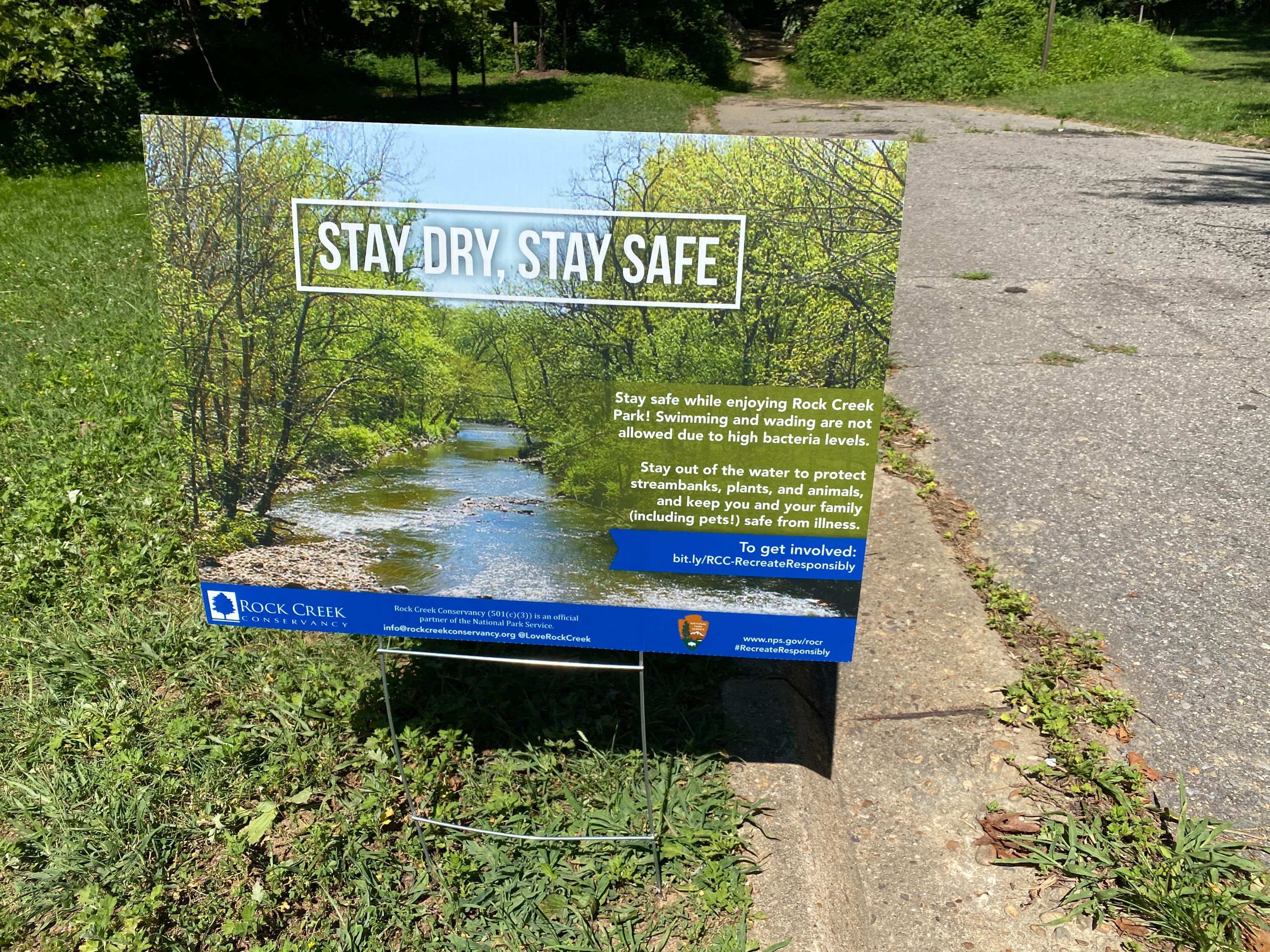
The recreation data are limited, but do comport with reports that park visitorship hit record levels across the region this year, and with anecdotal evidence that more people have been getting in the water in Rock Creek. Water samples and observations were generally conducted on Wednesday each week, so represent only a snapshot of activity during the work week.
On the Potomac and Anacostia Rivers, volunteers observed an increase in a number of solo or small group activities, including kayaking, sailing and fishing. There was a decrease in power boating, paddle boarding and rowing.
Water quality is improving on D.C. rivers in large part thanks to a massive sewer project DC Water is undertaking. It’s already reduced sewage overflows on the Anacostia River by 98%, and will result in similar reductions on the Potomac and Rock Creek by 2030.