Debbie Truong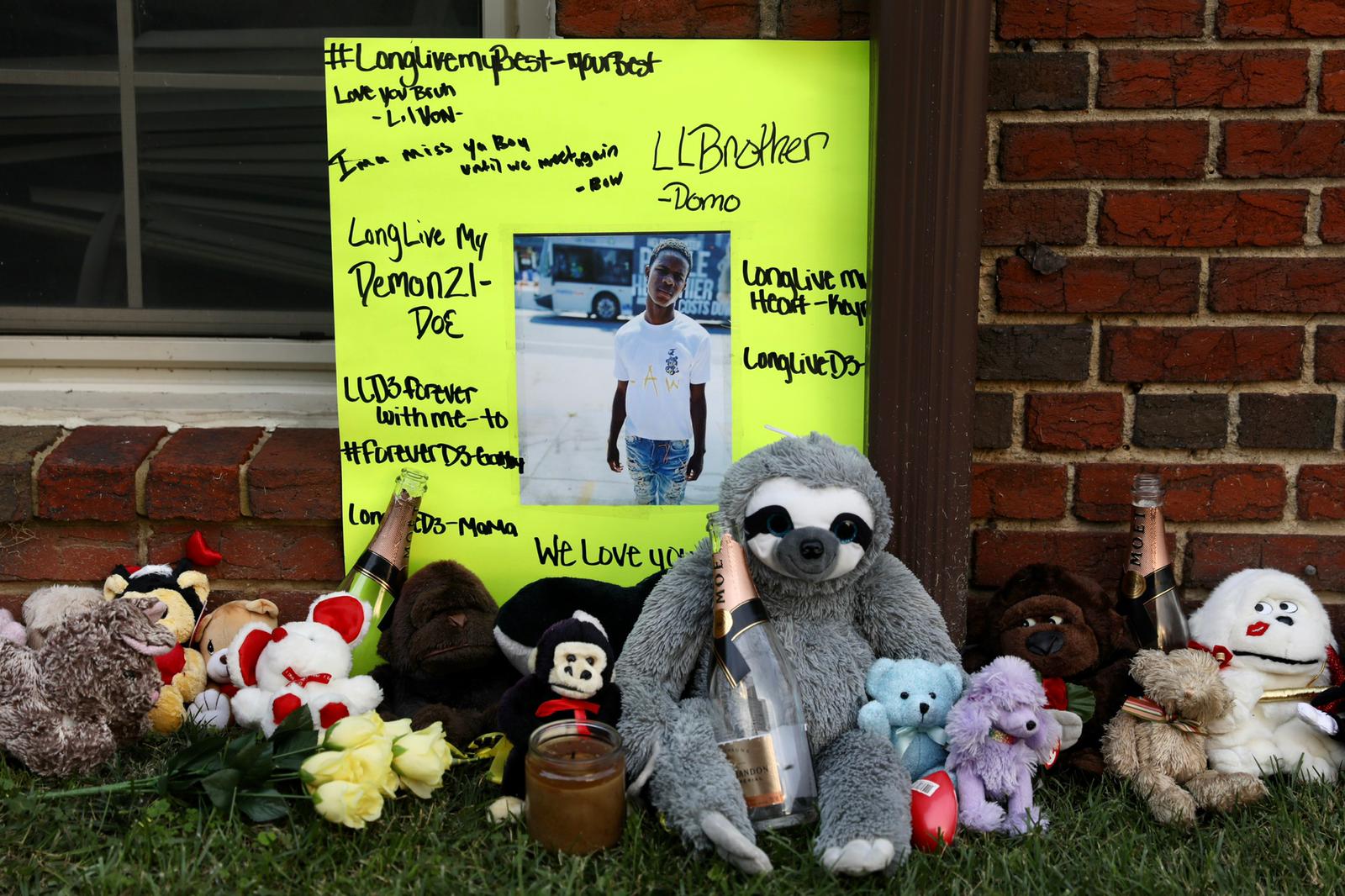
Federal prosecutors will not pursue charges against the D.C. police officer who shot and killed an 18-year-old man earlier this year.
The U.S. Attorney’s Office for the District of Columbia said Thursday it could not prove “beyond a reasonable doubt” the officer violated federal law by firing a single shot at Deon Kay, who held a gun in his hand during the Sept. 2 encounter in Southeast Washington, according to a news release from acting U.S. Attorney Michael R. Sherwin.
“The investigation revealed no evidence to establish beyond a reasonable doubt that the officer willfully committed a violation,” the release said. “Specifically, the U.S. Attorney’s Office is unable to disprove a claim of self-defense or defense of others by the officer involved.”
The Metropolitan Police Department will conduct its own administrative investigation to determine if the officer’s use of force was justified, a department spokesperson said Thursday. The District’s independent auditor is also conducting a review of the shooting that led to Kay’s death, as well as four other fatal shootings by D.C. police since 2018.
D.C. police shared its account of the incident and released body camera video of the shooting the day after it happened.
Police saw four people live streaming on Instagram from inside a parked car with guns on the 200 block of Orange Street SE, authorities said. When police arrived, an officer who city officials identified as Alexander Alvarez, rushed out of his police car to chase a person who was not Kay.
Alvarez turned around and encountered Kay, who was holding a gun, according to video footage and federal investigators. The officer shot Kay once in the chest.
Kay was transported to George Washington University Hospital, where he died, according to the U.S. Attorney’s office.
Several protests and vigils were held after Kay’s death. Educators remembered the 18-year-old as someone who cultivated strong relationships and sought mentorship.
Grandville Martin, Kay’s mentor, said earlier this year he felt the events that led to Kay’s death were an unfortunate result of his environment, not a referendum on his character.
“I would always tell him, ‘One day, you’re going to see when you grow up — you wasted a lot of time, but you’re going to get better,’” said Martin, who was Kay’s middle school science teacher. “Because his turnaround was coming.”