Margaret Barthel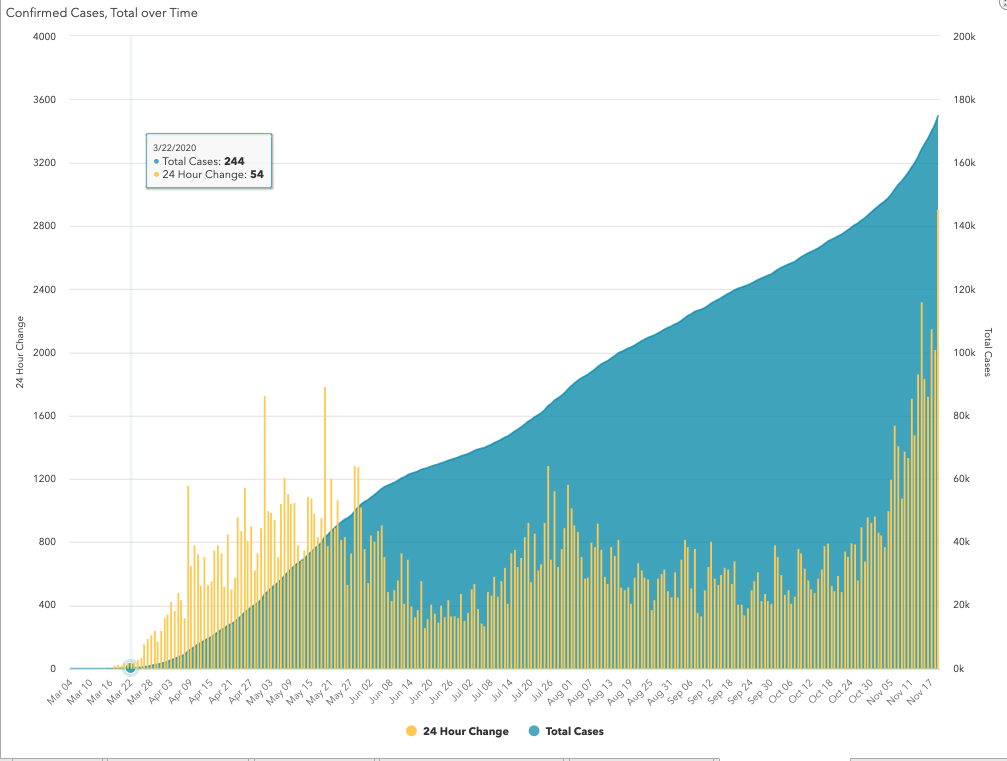
Maryland is reporting a record high of new coronavirus cases. On Thursday, the state added 2,910 cases, beating its previous record of 2,321 from Nov. 14.
Virginia and D.C. also reported high numbers of new cases — 1,954 and 213, respectively — though neither set a record. Both jurisdictions have seen new highs recently, though: Virginia’s highest number of new cases so far came on Monday, and the District’s second-highest case count ever happened on Tuesday.
Even more worryingly, all three jurisdictions are seeing clear upward trends in their 7-day rolling averages of new cases per 100,000 people, the metric public health officials use to monitor the trajectory of the pandemic while accounting for one-off single-day spikes. In Maryland and Virginia, the 7-day rolling average number has far outpaced spring highs — and, in fact, are well on their way to doubling them.
Positivity rates — the measure of how many people test positive out of the number of people tested — are also on the rise around the region. Maryland and Virginia are both above 7%, above the 5% benchmark for reopening set by the World Health Organization. D.C. is approaching that metric, with a positivity rate of 4.8%.
Area governments are reimposing some modest restrictions as cases skyrocket. In Maryland, Governor Larry Hogan is now requiring all restaurants, bars and other establishments selling food and alcohol to close by 10 p.m. All retail businesses, houses of worship, and gyms in Maryland will have to operate at 50% capacity.
“Our highest priority right now is preserving capacity at our hospitals so that doctors and nurses can do their jobs and make sure that people get the right critical life saving treatment,” Hogan said.
In Virginia, Governor Ralph Northam made a few changes to the state’s reopening last week. He reduced the number of people who can attend an indoor gathering to 25, down from 250, and said restaurants, bars and other establishments can’t sell food or alcohol after 10 p.m.
D.C. Mayor Muriel Bowser announced expanded hours for testing locations in the District on Wednesday, and hinted at coming new restrictions.
Hospitalization rates around the region are rising steeply, though they haven’t yet surpassed spring highs in the region — though, nationally, they have. Hospitalization is a “lagging indicator,” meaning that upticks follow increased case counts by a week or two, as the people who have contracted the virus get sicker.
The coronavirus surge comes as many locals are wrestling with decisions about Thanksgiving travel and gathering plans. The Centers for Disease Control and Prevention — as well as beleaguered local public health officials — are begging residents to cancel plans to travel for the holiday and to host gatherings with other households outside.