Matt Blitz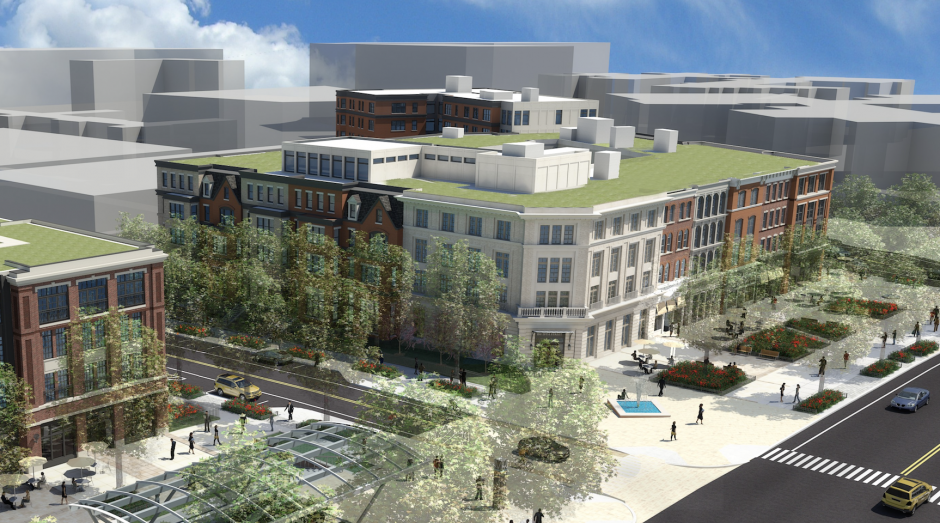
After years, there seems to finally be movement on developing the about 11 acre portion of land once referred to as Reservation 13 in Ward 7.
Today, D.C.’s Office for Planning and Economic Development (DMPED) announced a request for proposal (RFP) for what they are now calling the “Hill East Phase II Development.”
The request calls for proposals for a mixed-use development with a particular focus on affordable housing. Priority will also be given to teams that are led by “individuals determined to be part of a socially disadvantaged population.” This is a new strategy initially launched by the Mayor’s Office back in July.
Symbolically, the announcement comes on the 95th birthday of Robert F. Kennedy. Nearby RFK Stadium is on a piece of land the city also wishes to one day gain control of and develop, in much the same fashion as Hill East.
“Making Hill East a high opportunity neighborhood is within reach and will change outcomes for generations, and our effort here demonstrates our will, desire and approach if we are successful in capturing the entire RFK campus,” Deputy Mayor for Planning and Economic Development John Falcicchio said in the press release.
Currently, the federal government owns the RFK campus, which includes the 190 acres that the stadium sits on. In March 2019, Eleanor Holmes Norton introduced a bill in Congress that would allow the District to purchase the land at fair market value. It has yet to pass.
There’s also a provision in the RFP that calls for a “living memorial for Robert F. Kennedy” that reflects “his vision for a more just, equal, and fair America.” That could translate to the naming of a building, a public art piece, or some kind of memorial, reports Washington Business Journal.
For two centuries, a portion of Hill East was the site of D.C. General Hospital which, at the time, was the only public hospital in the city. It closed down as a hospital in 2001 and became an emergency shelter for families experiencing homelessness until late 2018. It was long criticized for being dilapidated, unsafe, and dysfunctional. In fact, today, Falcicchio said the shelter was “too big to succeed.”
D.C. General is being demolished and the city has nearly completed its plan to build smaller, newer shelters across the city to replace it.
Two equally-sized parcels of land are available for development on the site. Developers can pitch one or the other, but not both.
In terms of affordable housing, the city is asking for an even divide between “deeply affordable” apartments, which are available for people making no more than 60% of the median family income, and “middle income” units available for those making between 60% and 120% of the median family income.
The hope is that it will get the city closer to D.C. Mayor Muriel Bowser’s stated goal of 36,000 new housing units in the city — including 12,000 affordable units — by 2025.
Proposals are due Feb 1, 2021, according to Washington Business Journal.