Colleen Grablick
A year ago, you might have crossed paths with friends, family, colleagues and 30-plus strangers in a Metro car — all in the course of one day. Now, every so-called “close contact” could mean exposure to a deadly virus that has surged throughout the country for the better part of a year.
Over the past eight months, some have chosen to form social pods or bubbles with friends, family or neighbors. And they have become an indispensable tool for children and adults alike as they try to navigate a year marked by isolation, grief, and uncertainty.
These purportedly small and closed bubbles, where everyone shares a mutual understanding of risk in order to safely see each other, have allowed families to vacation with other couples, children to group with peers in homes-turned-classrooms, and friends to reconnect after months of loneliness in the pandemic’s beginnings.
But with the nation plunged into a worsening phase of infections, colder months creeping up, and experts warning of the “darkest days” to come, both the need for social interaction and the risk around it have intensified. Officials across the D.C. region have advised residents to stay home for the upcoming holidays as cases surge to and surpass spring-like levels. Health experts, meanwhile, are sounding the alarm over “pandemic fatigue” as residents tire of coronavirus restrictions and let their guard down around people they don’t live with.
While podding isn’t a novel concept at this point in the pandemic, experts say forming a pod correctly could be more important than ever this winter. Locals who spoke with DCist about their pod experiences say that forming circles with people outside their homes brought tough decisions and uncomfortable conversations with loved ones, but were an invaluable boost to their mental health.
D.C. resident Catherine Dill describes herself as an introvert, so the initial weeks of the city’s stay-at-home order didn’t wear on her quite as much as others. Still, after months on her own, Dill formed a pod with three close friends.
“It took a lot of work to think through … how to do it safely, but now that we have a routine, it’s just really comforting and emotionally uplifting to be able to share the same space with people again,” Dill says.
Her bubble includes a friend who also lives alone and a married couple, all of whom live a few blocks apart in D.C. But the pod is not “static,” Dill explains — households will temporarily leave the bubble whenever someone takes on a new level of risk.
“If any of us go indoors somewhere, then that person is out of the pod for two weeks,” Dill says. And she means it: they’re all largely getting groceries delivered (a luxury not everyone can afford during the economic crisis), so even going into a supermarket means cycling out of the pod.
In one recent instance, a member wanted to be a poll worker during the election, so she knew that meant taking a two-week leave of absence from the pod after Election Day.
To manage everyone’s activities, the members share a Google calendar where they note whenever someone’s had significant contact with people outside the group. Making the social circle work requires them to be “emotionally open,” and willing to have honest conversations about their individual red lines, according to Dill.
“I know that all the other pod members, when they’re outside, are going to wear a mask and are going to try to maintain as much distance as possible,” Dill says, “And I trust that. I think, you know, it would be a lot harder if I was in a situation where I didn’t have that same level of trust.”
While a shared Google calendar may seem intense, Amanda Castel, an epidemiologist at George Washington University, says that maintaining open and constant communication is critical to minimizing risk in a pod. Castel goes so far as to suggest writing up a contract with pod members (Johns Hopkins even created a template contract), ensuring that everyone is on the same page about what activities are or are not permitted, and tracking everyone’s risk profiles.
“It’s like a commitment, a relationship to get through the next several months,” Castel says. “You want members of that pod to be forthcoming and to be able to share information openly with you.”
Castel emphasizes there’s no risk-free way to socialize outside of the home during the pandemic, but says there are ways to mitigate risk.
The first step is determining who will be included (Castel recommends a closed group of no more than 10 people). For example, she says parents may need to decide between podding with older family members, or joining with another family if their children need to socialize — both can’t coexist safely in one pod.
She says it’s important to establish clear rules for the group, like what activities are permissible, and to create a contingency plan in case a member tests positive.
Several locals told DCist that, when forming a pod, they’ve had to respect the risk-tolerance of the most cautious person in their group.
“At the beginning, it felt like asking a new boyfriend if we’re monogamous, you know, making sure that we are adhering to the same standards, the same set of rules,” Betsy Purves, a D.C. resident, says.
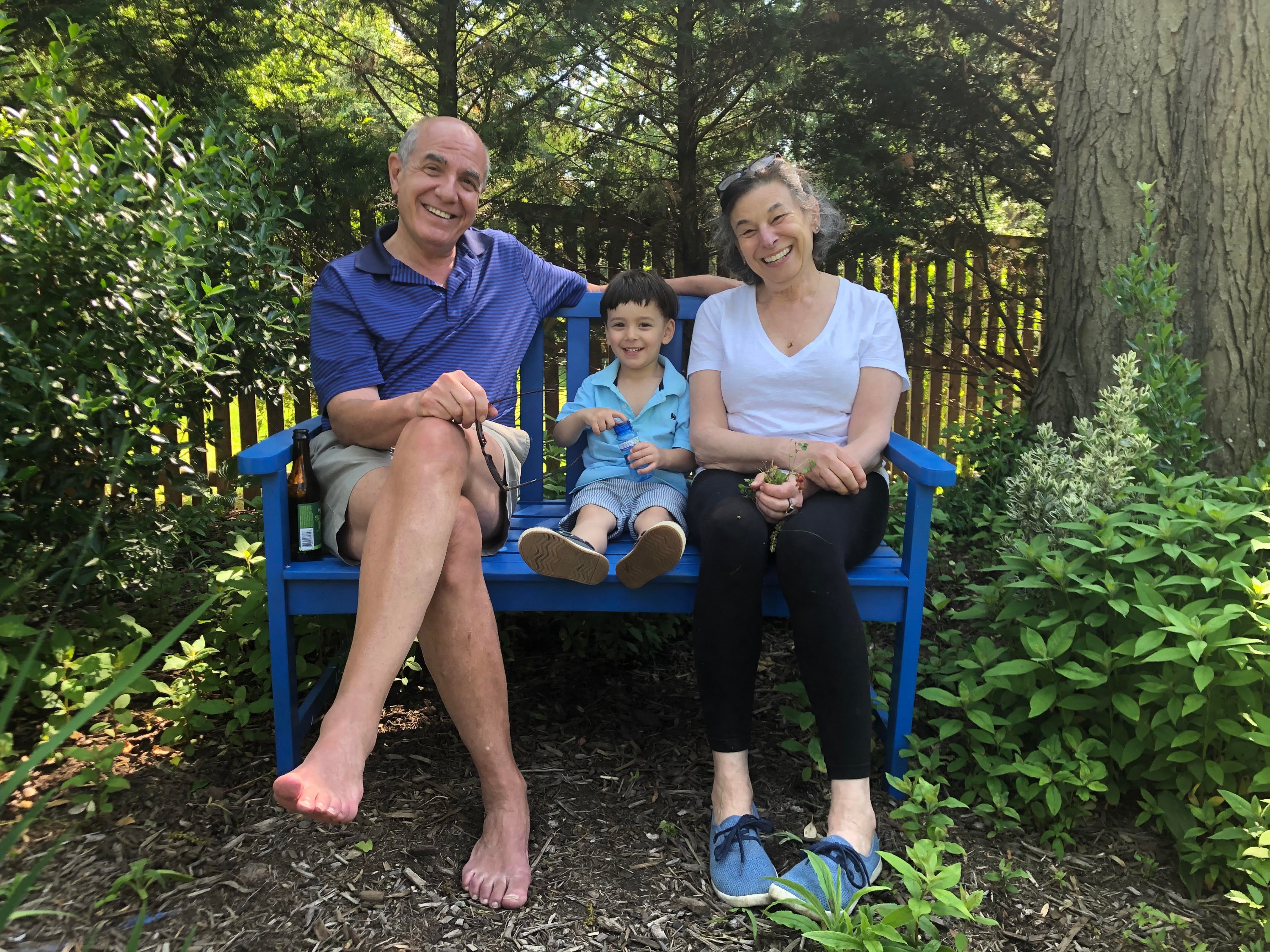
Purves’ pod include her husband Jon, their son Robbie, and her parents, who live 15 minutes away in Silver Spring. This set-up has meant the Purveses get some help watching their almost 3-year-old son as they both attempt to work from home.
And for the time being, they’ve prioritized seeing family over sending Robbie back to daycare.
Echoing Castle, Dr. Neil Jay Sehgal, a public health professor at the University of Maryland, says that building a pod of people that an individual can trust, and who can discuss their pandemic activities frankly, may not always include an individual’s closest friends. This, Sehgal says, can make conversations uncomfortable, but essential nevertheless.
He likens discussing coronavirus risks with a social circle to discussing safe sex with a partner.
“If you can’t talk about safer sex practices, you shouldn’t have sex with someone. That is the core of the harm reduction in sexual health and wellness,” Sehgal says. “In the same vein, if you can’t talk to someone about their risk behaviors in society, you probably shouldn’t be in a pod with them.”
While it might feel like a break-up of sorts, both Castel and Sehgal stress selectivity when forming a pod. That means considering everyone’s risk profile and aspects of one’s life that could make them vulnerable to transmission (like working an essential job or parenting a child that goes to daycare).
Even adding just one person who does not adhere to the same rules as the rest of the group — for example, avoiding indoor dining, or only seeing pod-outsiders in outdoor spaces while masked— would jeopardize the entire group.
“You’re only as safe as the least safe person in your pod,” Sehgal says.
Some people who spoke to DCist/WAMU were honest that their pods aren’t completely closed off. Members have seen people outside the bubble, without taking precautions like social distancing.
One Columbia Heights resident said her sister, and pod member, went to social gatherings with people outside the group, and that made the set-up feel less secure.
She says it can be hard to begin the tough conversations with her sister about safety within the pod: “it’s a little harder … to trust the pod.”
Crystal G., who asked to only use her last initial for privacy, has what she calls a “quaranteam” with a handful of friends from her church, all single women who live alone. While Crystal, who lives in Prince George’s County, says the pod has been a boon to her mental health, it didn’t come without difficult and honest conversations amongst pod members.
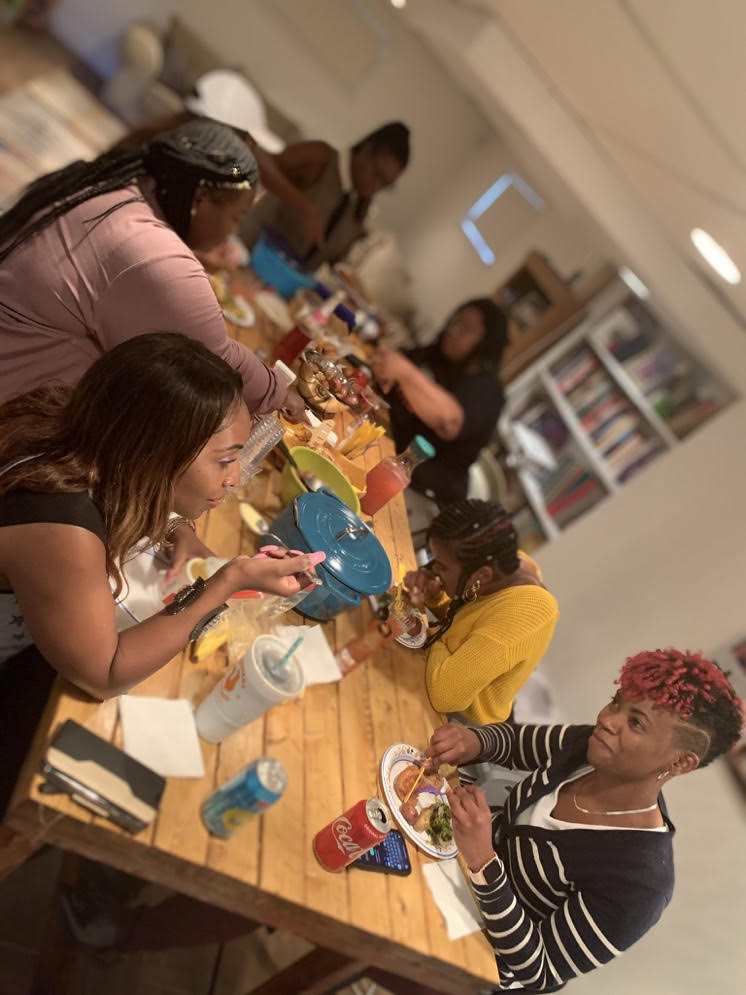
They all get together for dinner every Sunday and watch movies, but Crystal also sees her siblings indoors once or twice a month indoors, and the other pod members have had occasional interactions outside the “quaranteam.” Plus, Two members have gone back to work in person.
There have been a few serious conversations as they all tried to get on the same page in terms of risk, especially as businesses in the region began to reopen in the early summer.
“There have been two difficult conversations with this person who broke ranks first,” Crystal says of the first pod member who announced she’d eaten inside a restaurant with friends.
As coronavirus cases have surged this month, D.C., Virginia and Maryland all clamped down on restaurants with new restrictions. Health officials have raised alarm bells about the link between dining out and case increases, and voiced concerns about small social gatherings driving the virus’ spread.
Across the board, leaders have acknowledged the fatigue felt by many, as the period of social distancing and mask-wearing continues without a return to normal in sight. And while health experts agree that the way to eliminate the risk of contracting the virus is to cut out all social interaction outside the home, mental health professionals worry about the prolonged impacts of isolation. Some are encouraging people to pod — even with just one other person — for the sake of their mental wellbeing.
Dr. Jelena Kecmanovic, founder of the Arlington/DC Behavior Therapy Institute says that some form of socialization, if one can do it safely, is necessary to make it through the next several months.
“It is going to be probably the hardest stretch,” Kecmanovic says of the winter. “And we are also exhausted, sort of, dealing with this. And so we really need to have that pillar, the social pillar, as much as possible.”
Kecmanovic says that especially for parents of small children, forming a safe social pod with another child and their parents can be crucial for children’s social development even if the parents aren’t the closest of friends.
For Crystal, who has seen some friends and family, the risk of contracting COVID-19 from her social pod doesn’t outweigh the impact of isolation on her mental health.
“Maybe if I had — I’m not married, I don’t have children, I live alone — maybe it would be different.”
It helps her to know that all of her friends, and her siblings, live alone, as well. Her philosophy has been: “Me being physically healthy and mentally unhealthy doesn’t solve or help anything. So, it is trying to find a balance, and my balance has been, I’m not closing my door.”