 Dominique Maria Bonessi
Maryland’s 2020 election results were by no means unexpected, but they do serve as a good weather vane for the future of the state’s politics and what might come of the 2022 gubernatorial election.
Democrats easily won seven of the state’s eight U.S. House seats; lone Republican Rep. Andy Harris from the Eastern Shore also retained his job. President-Elect Joe Biden won by a slightly larger margin than Hillary Clinton in the 2016 presidential election. The state also approved a ballot initiative that would give the Democratically-controlled legislature more authority over the state’s budget.
Political science experts tell DCist that all these results could signal a further solidifying of Democratic control of the state’s legislative districts, and a possible 2022 win for the party after two terms of Republican occupancy of the governor’s mansion.
Increased calls for fairer congressional redistricting
With congressional district lines drawn by Democrats and the wide margin of victory for Democratic incumbents, Republicans — including Gov. Larry Hogan — have renewed calls to redraw district lines more fairly during the 2022 legislative session.
How lines will be redrawn and what party will have a say in redistricting will have to be decided during the upcoming legislative session.
The last time the congressional districts were redrawn in 2010, Democrats drew the lines to favor themselves. Since then, Maryland’s Sixth Congressional District — which stretches from the D.C. suburbs through Western Maryland — has stood as a symbol of unresolved gerrymandering grievances and rural-urban geographical divisions between both parties. (It also prompted litigation that ended up before the U.S. Supreme Court.)

Delegate Neil Parrott (R-Washington County) lost his race for the Sixth District seat to incumbent U.S. Democratic Rep. David Trone. Parrott is considering running again in 2022.
“What does make [the Sixth District] attractive two years from now is that redistricting will occur,” Parrott told DCist. “What happened in 2010, should never happen again. That was a complete embarrassment to the Democrats in particular, because it was Governor [Martin] O’Malley who made that map and it was approved by the Democrat legislature.”
Parrott said he’s hoping redistricting will be done by an independent commission. (Not far away in Virginia, voters just approved the creation of an independent panel made up of citizens and legislators to redraw the commonwealth’s legislative districts.)
Mike Ricci, a spokesperson for Hogan, wrote in an email the governor will continue to advocate for nonpartisan redistricting reform.
“[The governor] will be working flat out toward the goal of free and fair elections as we approach the next round of redistricting,” Ricci wrote. “One thing he can and will continue to do is use his bully pulpit on the state and national levels to advocate for reform. It’s needed now more than ever.”
However, Stella Rouse, a political science professor at the University of Maryland, says the Democratically-controlled General Assembly lacks the willpower to do nonpartisan redistricting.
“There’s very little that [Hogan] can do with a Democratic-run legislature, which is not going to change in his remaining time in office,” Rouse said.
Democrats solidified their power in the General Assembly
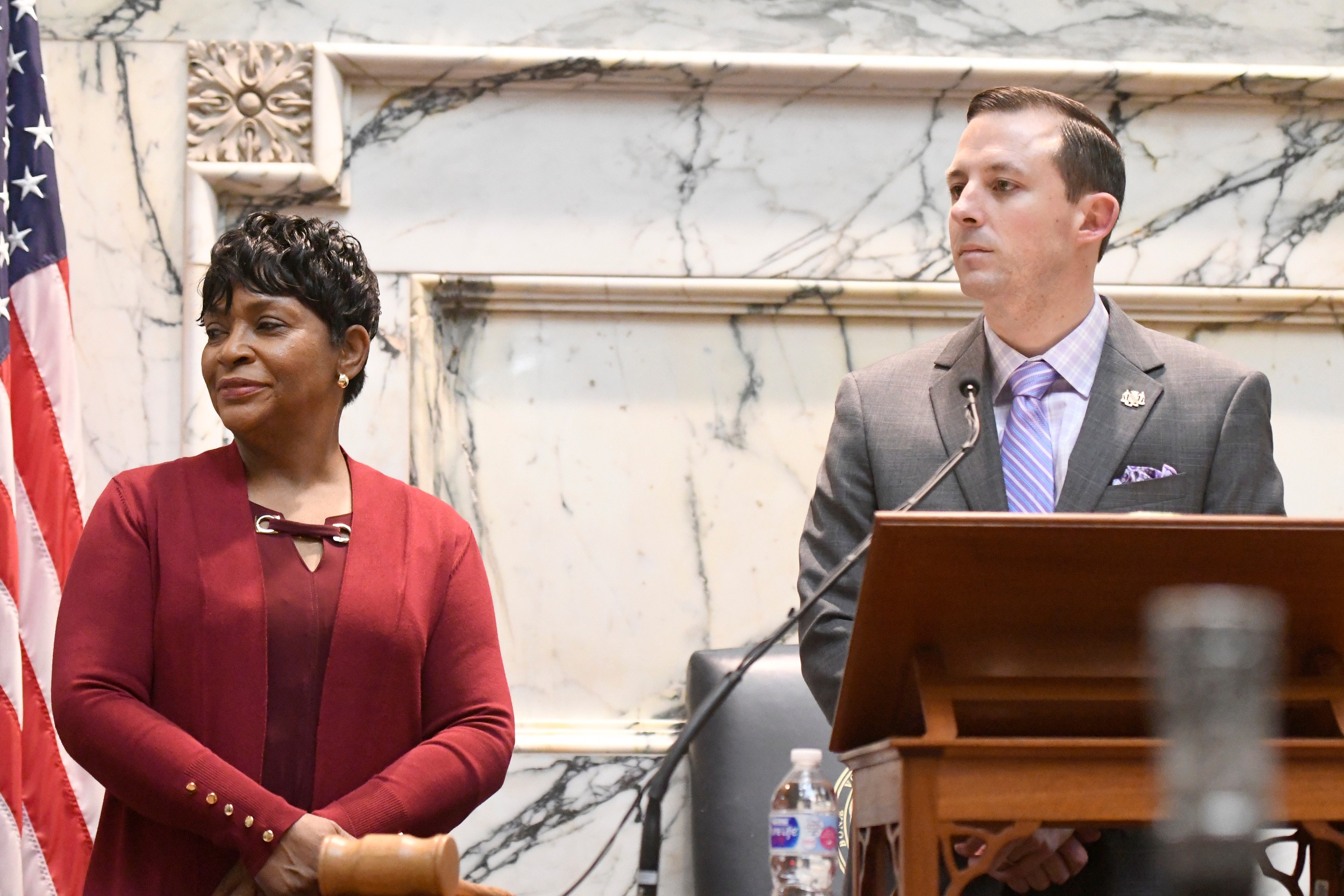
Marylanders approved a ballot initiative will allow the General Assembly to increase, decrease, or reallocate funds in the governor’s proposed budget each year starting in 2024. Maryland is one of the only states where the legislature does not have the authority to do this; legislators currently only have the ability to take money away from programs, not increase or reallocate it.
Hogan opposed the measure, saying that it was a “blatant cash and power grab of multi-billion-dollar proportions.”
However, Antonio Ugues, director of the Center for the Study of Democracy at St. Mary’s College of Maryland, says the state’s budget process is about to get a lot more interesting — and complex — in the legislature.
“I think overall it will provide a much more balanced approach to the budgeting process,” Ugues said.
He says the budget will be especially easy to negotiate if Democrats win the governorship in 2022. They’ll have “much more influence for the state legislature to influence the budget and the contents of the budget, he said.
Still, it’s possible that influences from the D.C. suburbs and the Baltimore Metro area will come to the forefront.
“Even folks from the same party have different legislative priorities,” Ugues said. “And so it wouldn’t be surprising to me if you have a Democratic governor and a Democratically dominated legislature that have opposing views on certain spending priorities.”
However, the whole point of the initiative was to give constituents more influence over the budget process. Ugues says that will depend on how much sway their state representative has in the General Assembly.
Biden’s win could mean good things for Democrats’ gubernatorial hopes
More Marylanders favored Biden over President Donald Trump in this election than they favored Clinton over Trump four years ago, which could signal that Democrats might have the footing to take back the governor’s mansion in 2022.
Biden managed to flip red Talbot County, where the majority of residents voted for Trump in 2016, by a slim margin. He also won by a larger margin in Baltimore, Frederick, and Anne Arundel counties than Clinton did in 2016.
“The Democrats willingness to vote for another Republican governor may have a lot to do with the results,” Mileah Kromer, director of the Goucher College Polls, said.
Hogan’s approval rating has remained steady. In a mid-October Goucher Poll said Hogan’s job approval rating was at 71%, while Trump’s was at 32%.
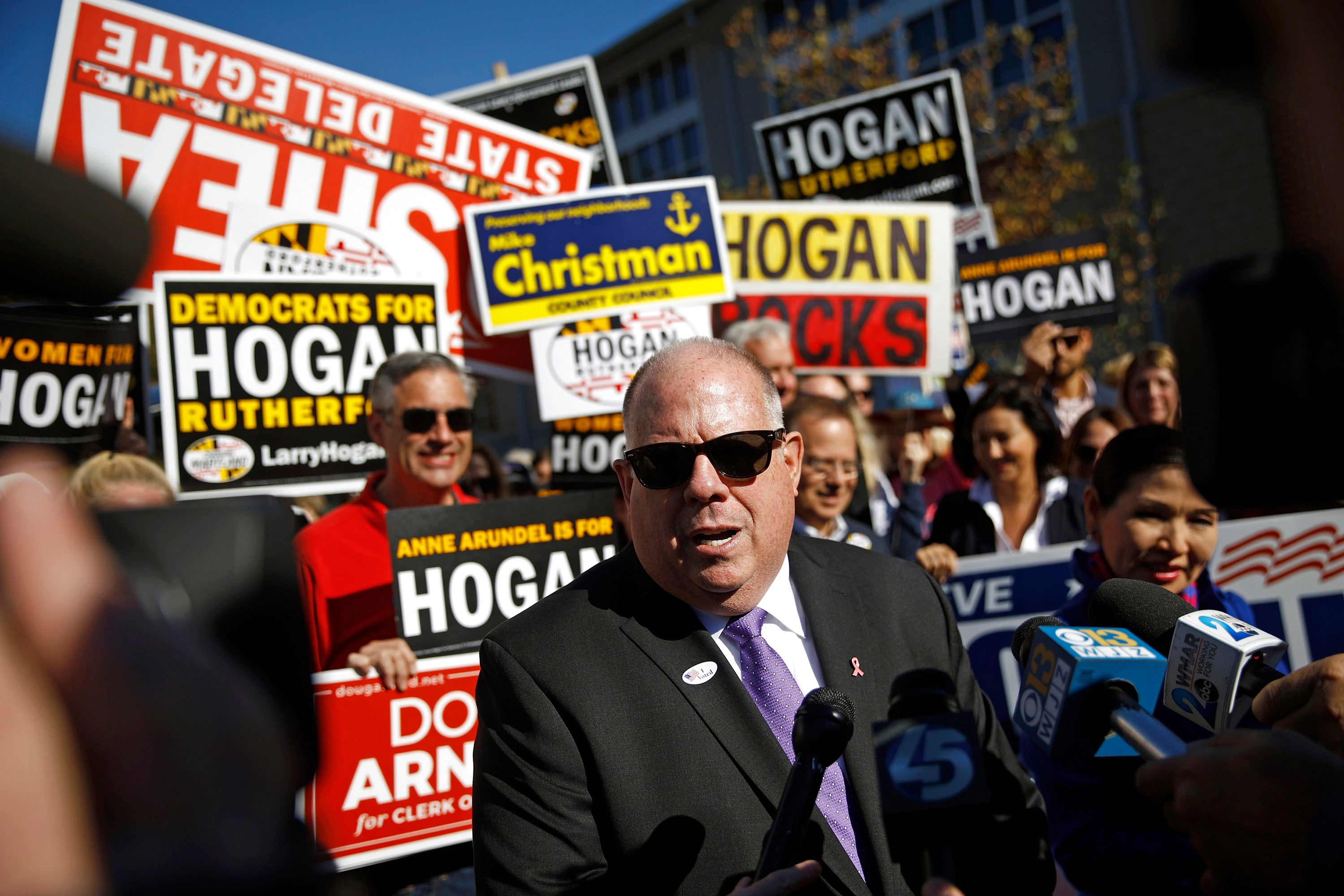
Throughout his tenure in office, Hogan has distanced himself from President Trump and has proclaimed himself a “Ronald Reagan Republican. Hogan praised Reagan as a centrist in a recent speech at the Ronald Reagan Foundation last month following the election, in which he cast a write-in vote for the deceased former commander-in-chief.
“As we search for a way forward, we should look back at how Ronald Reagan transformed our party and restored the greatness of America. I believe that what most Americans truly want, regardless of their party affiliation, is honest, effective leadership and results. They want common sense solutions to the serious problems that face us,” Hogan said.
It seems like that brand of politics has worked on Maryland Democrats. His job approval rating among Democrats in the state sits at 69%, while Trump’s approval rating from Democrats is in the single digits, at 6%. On the other side, Republicans’ approval of Trump sits at 87%, while their approval of Hogan is 10 points lower.
And that calls into question whether a centrist Republican gubernatorial candidate much like Hogan or a populist Republican in the mold of Trump will win the primary in 2022. Regardless, Kromer says, in a general election a Republican candidate will have to win over populous purple counties like Frederick, Baltimore, and Anne Arundel counties — which Hogan managed to do twice.
Biden’s win also calls into question if Democrats will select a centrist or progressive to run for governor.
Rouse says perhaps Democrats reelected Hogan in 2018 as a “backstop to full-on progressive policies” that then-gubernatorial Democratic candidate Ben Jealous was touting. She says there’s a struggle brewing between the real progressive side of the [Democratic] party in Maryland and the more moderate side of the party. Which side wins out has yet to be determined.
Some of the preliminary contenders for the 2022 gubernatorial election are State Comptroller Peter Franchot (D), U.S. Rep. Anthony Brown (D) and Robin Ficker (R).