Jacob Fenston
 Tyrone Turner
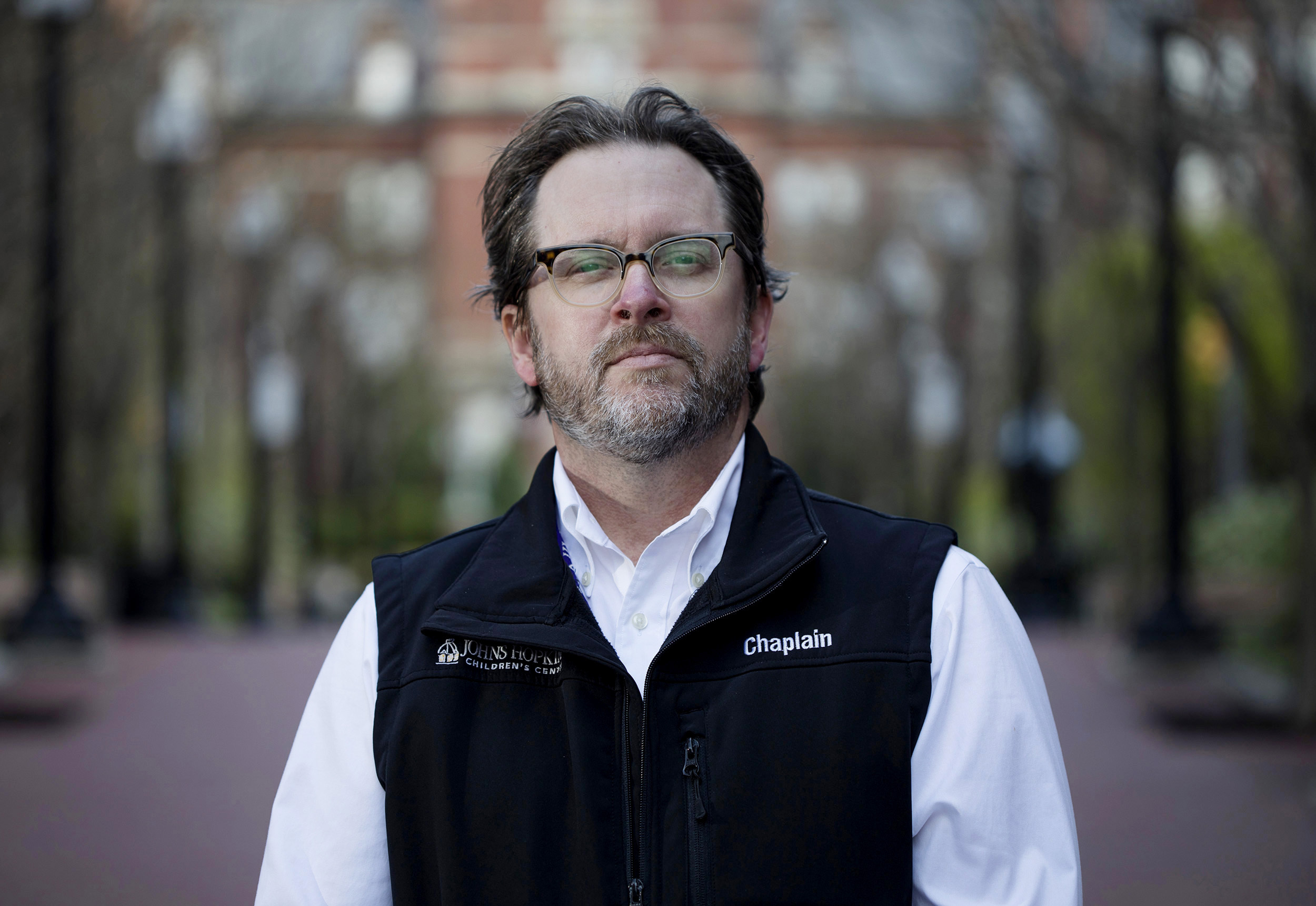
More than eight months into the pandemic, you can hear the weariness in Matt Norvell’s voice.
“It’s just pushing everybody to the emotional brink all the time it feels like,” he told me, when we talked in late November.
As the death rate from COVID-19 rises across the country, heading into what health experts say will likely be the worst months of the pandemic, many of us are removed from the daily toll of the virus. Matt Norvell confronts that toll every day. He’s a chaplain at The Johns Hopkins Hospital in Baltimore. It’s his job to bring comfort to people near death and their families, as well as to support hospital staff.
“When it all started, we all thought, ‘Oh, man, this is going to be bad for a couple of months,” he remembered. “We had no idea — nobody — literally people had no idea how it was going to go.”
I first met Matt on April 8, a cool spring day, outside the hospital. It was just a few weeks after the world shut down, and Matt was still marveling over it. His schedule, packed with conferences and events — was suddenly empty.
“It’s just amazing to watch the things fall off the calendar,” he said at the time.
Matt and the other chaplains at Johns Hopkins were still figuring out how to do their work with all the new coronavirus restrictions in place. A hand on the shoulder, or a hug, was no longer an option.
“Our normal practice would be, you go in and you pull up a chair next to someone’s bed and you spend time talking to them. Are you providing support to staff? You sit right next to them at the nurse’s station or in a workroom. That’s all out the window right now.”
Breaking through intense isolation
Since the start of the pandemic, we’ve all been living with some level of isolation. Working from home. Hiding our faces behind masks. But inside hospitals, that isolation is so much more intense.
Starting in March, the hospital put strict limitations on visitors: most patients can’t have any — period. Children and adults near death can have one. Chaplains and other staff stay out of patient rooms as much as possible, in part to conserve N95s and other personal protective equipment.
It’s Matt’s job to break through the isolation, however he can. He gave me one example of that, when I talked to him again in early May.
He told me about family he had met: a mom, dad and daughter who all had COVID-19, and who were all separated. He talked to the mom from outside her hospital room, which happened to have a glass door.
“I was able to stand on the outside of the door and talk to her by phone, so I didn’t have to use the protective equipment to go in. That was satisfying for her and satisfying for me.”
Through the glass and over the phone, they prayed together. Matt also asked her about life at home — the only non-medical conversation the woman had recently.
And he was able to help her feel a bit more connected to her daughter, elsewhere in the hospital.
“I was able to say, ‘I’ve looked through the door and seen your child also, and your child seems to be comfortable and resting.'”
They recovered, and were eventually able to go home.
‘There’s nothing about this that makes any sense’
Matt mostly works in the pediatrics department — and thankfully, children haven’t been as hard hit by the virus. But kids have not been spared entirely.
“The other day, I got called to our pediatric intensive care,” Matt said in a recording he sent me from May 23.
“There was a patient that had decompensated really fast. The day before he was OK. I mean, he was scared. But then he was starting to have some breathing problems, and then by the time I got called, he wasn’t able to breathe on his own.”
Then suddenly the boy’s heart stopped. Hospital staff raced to try to revive him. They did chest compressions, but … to no avail.
Because of visitor restrictions, only the boy’s mom was in the room. Matt went downstairs with a nurse to get his father. The parents were shocked and devastated.
“Their child had been — like a week ago, there were zero problems,” Matt said.
He sat with the parents. They prayed and talked.
“They just kept saying, ‘This doesn’t make any sense, this doesn’t make any sense.’ I kept agreeing with them: ‘There’s nothing about this that makes any sense.'”
Matt said he found out later the boy died of multi-system inflammatory syndrome — a rare disease that afflicts some children who’ve been infected with the coronavirus.
Exhaustion ‘you can just about touch’
When I talked to Matt over the summer, he said people working at the hospital hit an emotional low point in June. Case numbers were down, but it was starting to sink in that the coronavirus wasn’t going away. Both hospital staff and patients were having trouble coming to terms with the new reality.
“The overall life adjustment, the frustration and the grief that it’s not the way it was before, and it’s hard to imagine when we’re gonna go back to the way it was before,” Matt said.
By November — COVID infections were soaring to record levels. After eight months of hyper-vigilance, uncertainty and daily exposure to a deadly virus, hospital workers were wiped out.
“We’ve been hanging out with this anxiety about another surge for three or four months, and now that it’s really coming, the sort of corporate exhaustion from everybody is — I mean, you can you can just about touch it,” Matt told me. “Everybody’s crankier, everybody’s sadder, everybody’s angrier.”
Even the great news about vaccines on the horizon felt like a distant glimmer of hope, many months off.
‘We’re all permanently changed’
Matt said throughout the pandemic, he’s felt his faith — his connection to God — deepen. He’s Christian, but one thing that’s helped him cope is a Buddhist teaching.
“So much of the suffering that we experience is suffering that we create because we’re having this expectation that it ought to be different, but it’s not. It just can’t be different.”
During the pandemic, Matt says he’s been working on coming to terms with those unchangeable aspects of life right now.
“Personally, I’ve come to accept this is just going to be hard and different for a long time. That’s helping me — once I accepted it.”
Matt says this process of acceptance is similar to what happens when someone you love dies.
“Yes, we can continue to be sad about it. And: there’s some relational realities that we have to accept that this person is gone now. I wish that they were still here, but they’re not.”
In the same way, he says, “We’re not ever going to go back to the world as it was this time last year. We’re all permanently changed. And that’s a hard thing to assent to, I guess.”
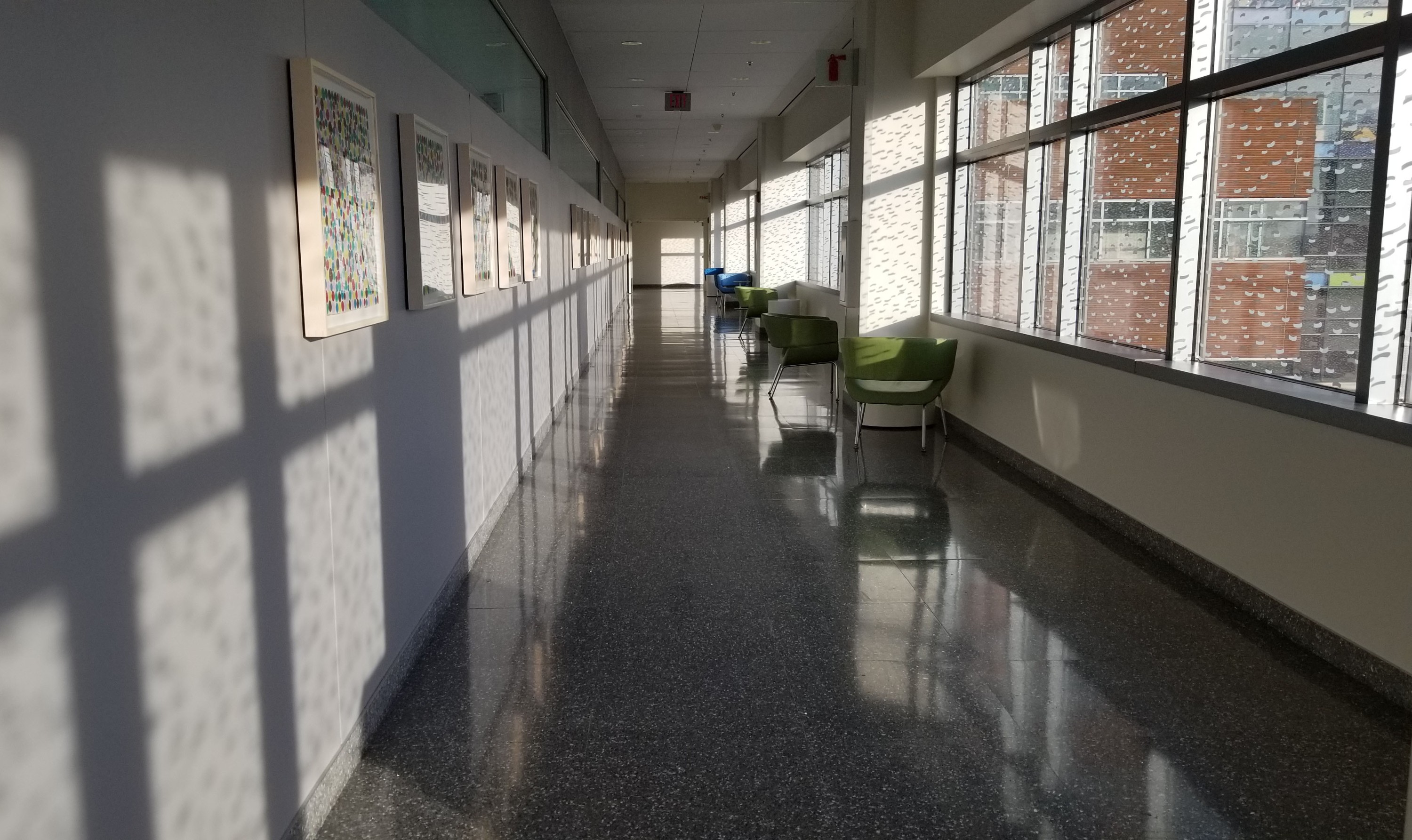
Matt sent me a recording, giving me an audio tour of the hospital as he went about his day. At the end of the recording, toward the end of his work day, he was heading back to his office, through a long, empty hospital corridor. It’s a time of day when he likes to pause to reflect.
“I mean, it’s weird. It’s weird working in a hospital like this. You’re going in and out and some people can’t go in and out, because of their health. They’re in a place where they can’t leave.”
He reflects on his feeling of gratitude for his own health, his family’s health, and that he’s able to do this work.
“I try to do my best to go home and take care of myself, so that I can have the strength and the inspiration to come back and do it again tomorrow.”
This story is part of the WAMU series, Portraits From A Pandemic, following Washingtonians whose lives have been upended by the coronavirus. The first story about Margaret Sullivan published April 23.