If you had to identify clusters of coronavirus cases without testing people, what would you look at? Discarded face masks? Air particles? The walls of outdoor restaurant bubbles?
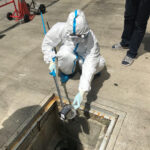
You could also try poop. That’s exactly what DC Water, the city’s water and sewer authority, is doing as part of a national study on potential COVID-19 hotspots. The study is being led by the U.S. Department of Health and Human Services and involves several wastewater treatment agencies.
“The samples will be taken from the waste stream, where feces can indicate the presence of a COVID 19 infection even if the person is showing no symptoms and may not even be aware they are sick,” DC Water explains in a release. “Because SARS-CoV-2, the coronavirus that causes COVID-19, shows up in stool samples, it provides an almost immediate indicator of the presence in the local community.”
The first phase of the national research will collect samples from 100 wastewater treatment facilities that together serve about a tenth of the U.S. population. The second will include facilities in 42 states that serve almost a third of the U.S. population, although the details of the sampling protocol haven’t been determined yet.
“The goal is to have a broad but also diverse cross section of the national population getting sampled so that health officials can look for signs of any COVID-19 spikes before there is community spread and the virus infects others,” says DC Water.
Officials will test the samples for viral RNA, or ribonucleic acid, which carries biological codes for protein synthesis. Similar efforts are underway in Maryland and at dozens of American colleges. As a University of Maryland professor recently told WJLA: “Everyone goes to the bathroom every day whether you are positive or negative [for COVID-19]. But not everyone is getting regularly tested.”
You may be wondering at this point: Can human waste transmit the virus?
“There has not been any confirmed report of the virus spreading from feces to a person,” the U.S. Centers for Disease Control and Prevention says in a frequently-asked-questions page on its website. “Scientists also do not know how much risk there is that the virus could be spread from the feces of an infected person to another person. However, they think this risk is low based on data from previous outbreaks of diseases caused by related coronaviruses, such as severe acute respiratory syndrome (SARS) and Middle East respiratory syndrome (MERS).”
The same goes for wastewater that’s been treated properly, according to the CDC: Standard disinfection methods degrade the virus so it becomes inactive.