Martin Austermuhle
“Goddamn shit is confusing as a motherfucker, man.”
Ward 7 Councilmember Vincent Gray may not have known it, but he was speaking for all of us when he inadvertently uttered those words while unmuted during a D.C. Council session in July. While he was specifically referring to a particularly complicated debate that lawmakers were having that very moment — virtually, no less, given the pandemic — Gray’s words aptly summarize the trainwreck of a rollercoaster of a dumpster fire that 2020 has felt like.
There’s been a bit of everything in D.C. politics this year: ethical lapses, generational changes in the city’s legislature, testy fights over tax policy and rent control, a symbolic step forward for D.C. statehood, and a controversial presidential endorsement. And that’s not even accounting for a pandemic that upended daily life as much as it did the city’s finances, and a reckoning over racial justice that could well reshape policing in D.C. for a generation to come.
It was, well, a decade of a year.
The end of the Evans era
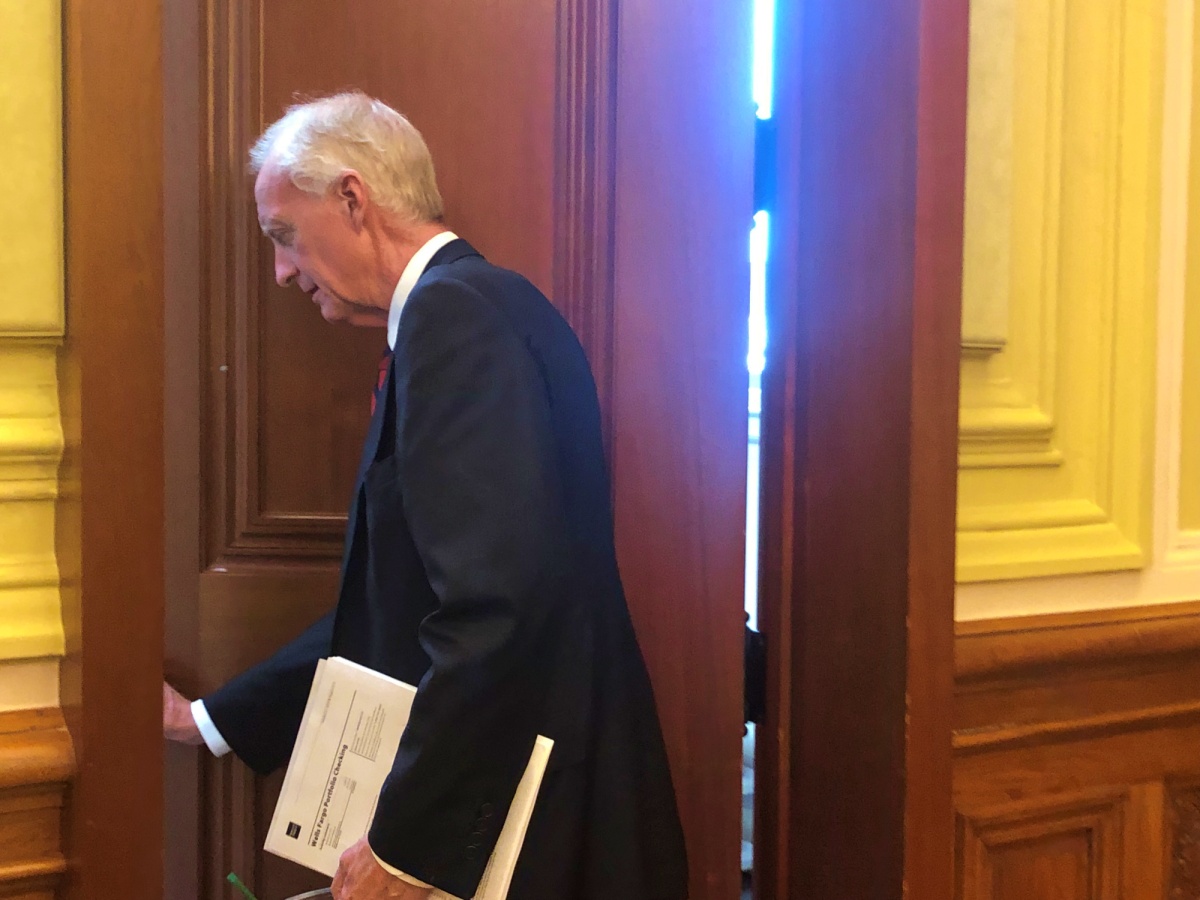
After three decades on the D.C. Council, Ward 2’s Jack Evans’ resignation in early January was as expected as it was sudden. Facing a possible expulsion vote after an investigation found that he had abused his position for private gain, Evans’ decision to step down wasn’t just a face-saving exercise — it was also something of a political earthquake in the small world of the city’s legislative body. Evans was both the council’s longest-serving member — he first took office in 1991 — and also a consistent supporter of the business community, chairman of the powerful finance committee and reliable ally to Mayor Muriel Bowser. He didn’t go quietly, though; Evans quickly announced he would run for re-election to the seat he had just resigned, an effort that faltered badly when he placed seventh out of eight candidates in the June primary. And his replacement was a surprise, too: political neophyte Brooke Pinto emerged from virtual political nowhere to squeak by in the primary and handily win a four-year term in November. At 28, she’s the youngest member of the council, and replaces a man whose term in office lasted longer than she’s been alive.
Bowser and Bloomberg
Before she was with Biden, Bowser was all in for Michael Bloomberg. How could we forget? The former mayor of New York and late entrant into the already crowded Democratic presidential primary made an outsized splash during his brief run, largely because he spent ungodly amounts of his personal fortune to try and win. (How ungodly? It was more than the federal stimulus Congress approved.) And Bowser — who said he was a “problem-solver” — was alongside him the whole way, giving cover when Bloomberg was criticized for NYPD’s use of stop-and-frisk during his tenure as New York’s mayor and making sexist comments about women. There were brief whispers that Bowser could be in line for a cabinet position in a Bloomberg administration (vice president, even!), his run didn’t amount to much — he dropped out after a dismal showing on Super Tuesday, when his only victory came in American Samoa. For her part, Bowser quickly jumped to Team Biden, and after his win made a trip to Delaware for his victory speech — likely violating her own city’s rules on travel and quarantining.
The pandemic hits
It was early March when D.C. recorded its first known case of COVID-19. Little could many residents imagine what would have followed: almost 30,000 positive cases, more than 760 lives lost, a city brought to a virtual standstill, schools shuttered, a historic spike in unemployment, and more. In political terms, the pandemic pushed the council onto Zoom, heralding a new era of democratic process and engagement that is as novel as it can be confusing. More importantly, though, COVID-19 has busted the budget, costing the city hundreds of millions in revenue and sparking debates over how to best support the many businesses and residents who have been hammered by the virus. Some officials say cuts are inevitable; others say it’s time to increase taxes on those who can most afford it. Either way, what is clear is that the pandemic has again exposed D.C.’s persistent racial and social inequalities: Black communities are painfully overrepresented among COVID casualties, kids in under-resourced communities continue to struggle with virtual learning, and many Black and Brown residents are essential workers who can’t simply work from home (or had trouble getting access to government assistance). There have been moments of hope, though — mutual aid efforts across D.C., the initiatives to help kids keep up with school, residents donating their stimulus checks to others, and more. But there’s little question that the recovery will be long, and require tough political decisions. And coming early next year is a big one: how and when D.C. should reopen schools.
Plaza politics
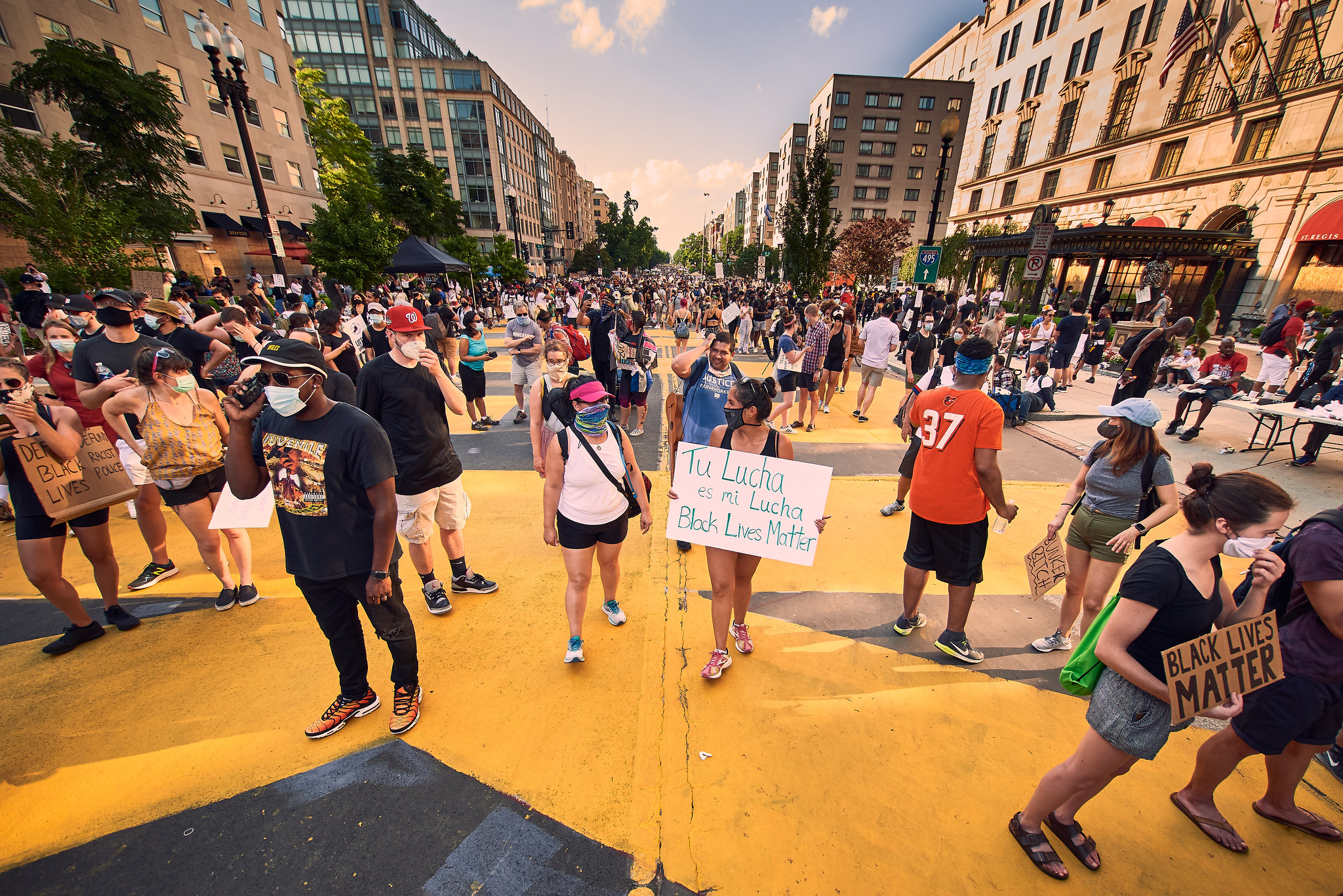
It was political posturing at its finest. With a few buckets worth of yellow paint spelling out “Black Lives Matter” on a two-block stretch of 16th Street NW in early June, Bowser loudly sided with the nationwide protests against police brutality, attracting worldwide media attention while also issuing a not-so-subtle dig to the occupant of the White House only a few blocks away. Almost overnight Black Lives Matter Plaza became a focal point of activism and protests in the city; everyone from parents with their kids to politicians like the late John Lewis and Vice President-elect Kamala Harris stopped by for pictures, while others tied the knot and celebrated Biden’s win there. But while Bowser was hailed (and mimicked) nationally for commissioning the mural, local activists have grumbled of what they say is a growing disconnect between the words written on the street and the actions of the city in making them a reality — even more so when police and protesters clashed repeatedly at the plaza over the summer, and after the police killings of Deon Kay and Karon Hylton Brown. For them, Bowser has unfairly appropriated a slogan and a movement. Still. for many visitors to the plaza, it remains a powerful statement. More recently, it has also become contested territory — in two recent pro-Trump protests, the white nationalist Proud Boys made getting to the plaza a focus of their violent efforts.
D.C. statehood takes a step forward
If you’ve lived in D.C. long enough, you know not to hold your breath for statehood. But over the summer, something big happened: the U.S. House of Representatives, for the first time ever, passed a bill to make D.C. the nation’s 51st state. The success, which was years in the making, came as a growing number of Democrats have signed on to the cause, local officials have become more assertive about it, and Republicans managed to make the case for statehood better than anyone. That was most clear over the summer, when President Trump brought federal police forces into the city in response to racial justice protests — something made possible by the fact that D.C. remains federal territory. Trump himself said statehood “will never happen,” congressional Republicans pushed to retrocede the city to Maryland, and statehood became a prominent campaign line for Republicans in their fight to hold their majority in the Senate. And then there was Sen. Tom Cotton (R-Arkansas), who memorably said D.C. could never be a state because… it doesn’t have as many miners and loggers as Wyoming. (What D.C. does have, though, is more people.) But as with most things statehood, the House vote was something of a step forward and then — nothing. While a Democratic House and White House bode well for the fight, the Senate remains an obstacle. Still, activists remain optimistic — they say their hope was always to win a bigger Senate majority in 2022, and then move forward. Maybe, but don’t hold your breath yet.
The award for most improved D.C. agency goes to…
D.C. Board of Elections, come on up. After a disastrous June primary (who doesn’t want to wait in line for five hours to vote?), the agency decided to go all in on mail voting by sending every registered voter a ballot in the mail. The gamble paid off: two-thirds of the 346,491 people who voted in November did so using those ballots, with an overwhelming majority choosing to leave their ballots at any of the 55 drop boxes that were placed around town. And it wasn’t just the mail ballots; having polling places at Nationals Park and the Capital One Arena was something of a test, but one that proved to be popular. Now, the BOE still has some improvements to make — can we talk about those mailers, for one? — but all told, there’s little question that November’s election was far better than June’s. Of course, when you do something well, people will demand it again — mail ballots and drop boxes, for example. But some are talking about more significant changes, including finding ways to make it easier for voters to navigate massively crowded council races.
Protests and policing
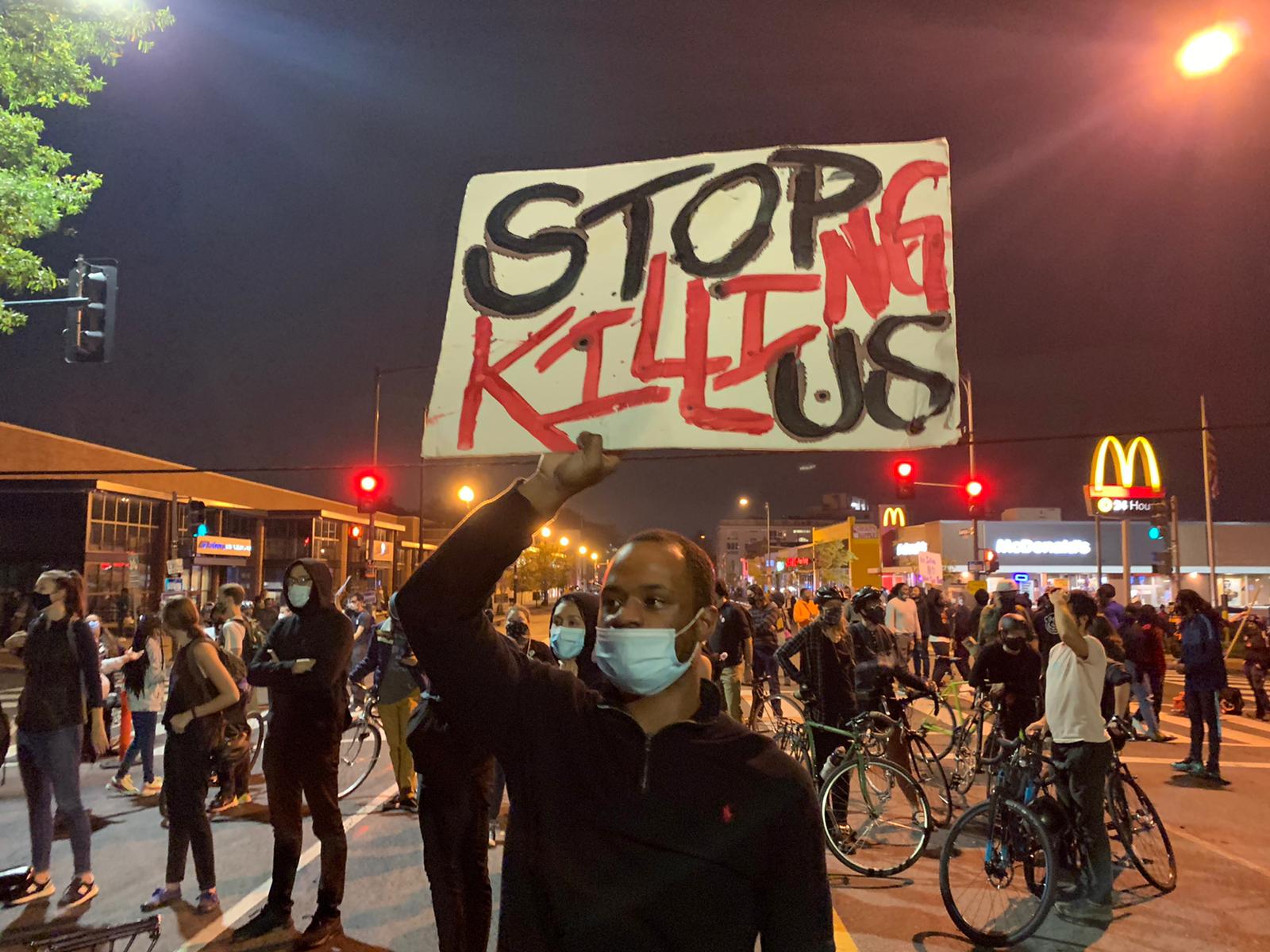
As protests over police violence and racial justice flared up across the nation early in the summer, the Metropolitan Police Department quickly came under the spotlight. Within weeks, the D.C. Council passed a broad police reform bill, speeding the release of body camera footage, changing training and discipline in the ranks and banning MPD from buying surplus military equipment and using chemical irritants on peaceful protesters. Efforts to defund MPD, a primary demand of protesters, were more limited, and officers engaged in controversial tactics against protesters. Local police also killed 18-year-old Deon Kay in September amid a foot chase. The following month, a police chase that may have violated department policy killed 20-year-old Karon Hylton-Brown. All of this happened just as D.C. saw a spike in homicides, with the end-of-the-year body count already at a 15-year high. The council is likely to stay engaged in policing and criminal justice in 2021, and the Police Reform Commission it created to study the department is expected to recommend changes by spring. It of course remains to be seen whether those proposals ever become law, and how amenable incoming Chief Robert Contee will be to reforms or budget cuts. The D.C. Police Union, for its part, is expected to put up a fight; already it has said that the city’s high homicide tally for 2020 stems in part from council legislation, blamed a “crime wave” on a specific councilmember, and aimed criticism at violence interrupters, a violence reduction method favored by progressive reformers.
Notable defeats and departures
No one was a more reliable ally on the Council for Bowser than Ward 4’s Brandon Todd, but in the end her support couldn’t usher him to a second full term in June’s Democratic primary. That’s when he lost to Janeese Lewis George, a self-described democratic socialist who painted Todd as out of touch (which he didn’t help by largely refusing to debate her) and later withstood an onslaught of misleading and inflammatory mailers from a pro-charter group backing Todd. But worry not for Todd: he’s on to his gig as a lobbyist for Washington Gas.
Even closer to Bowser was Rashad Young, who served as her city administrator since she took office in 2015 before announcing this summer that he was departing public service to join Howard University. (His decision to leave followed his role in brokering a multi-million deal between Howard and the city, which earned him a $2,500 for violating city ethics rules.) Also on his way out is D.C. Police Chief Peter Newsham, who announced in late November that he was taking the top cop job in Prince William County. Bowser didn’t do much outside searching in finding his replacement, whom she appointed relatively quickly: Robert Contee, a 31-year veteran of the department.
At-Large Councilmember David Grosso is also departing the Wilson Building — well, kind of. Having announced his decision not to seek a third term in late 2019 (fulfilling a promise he made when he first ran for council), Grosso was able to sit back and watch a 24-person battle play out to fill his seat. And the victor was surprisingly close to Grosso: Christina Henderson, a former staffer in his office. Grosso may soon be paying her a visit; he announced this month that he’s heading over to Arent Fox, a lobbying shop with a number of local clients.
New faces on the council
Because of what happened this year, the D.C. Council will look quite different next year. Along with Pinto’s ascension to the Ward 2 seat, George will be taking the Ward 4 seat and Henderson will occupy an At-Large seat. Together they will make the city’s legislature majority-female for the first time since 1998; George and Henderson will also make it majority-Black for the first time since 2012. But they may also help push the council further left, setting up likely clashes with more moderate members over everything from whether taxes on the rich should be increased to whether rent control should be expanded. Still, local progressives suffered a defeat when their preferred candidate, Ed Lazere, was beat by Henderson in November’s election.
And there was also this…
D.C. voters kinda somewhat maybe decriminalized magic mushrooms, but an effort to do the same for sex work faltered … That whole claim that Brooke Pinto was a Russian plant didn’t really pan out … Sports betting isn’t paying off … “Dumpster fire” actually made it into the council’s official record … A D.C. resident made TIME Magazine’s “Heroes of 2020” list for sheltering protesters … Bat lobbyists finally had their way … Councilmember Gritty could have happened, people … The D.C. Department of Employment Services didn’t do great with unemployment benefits, but it did manage to successfully launch the city’s paid family leave program … A Trump supporter ran for ANC in Ward 8 … A statue of a Confederate general was pulled down by protesters … The council passed a bill giving more people who committed crimes when they were young a chance at early release … Incarcerated felons can now vote in D.C. … Attorney General Karl Racine sued everyone from the NRA and Trump’s inaugural committee to landlords and the D.C. Housing Authority …and Bowser’s house became a favorite destination for protesters this year.
That was 2020. Let’s not repeat it, OK?