Colleen Grablick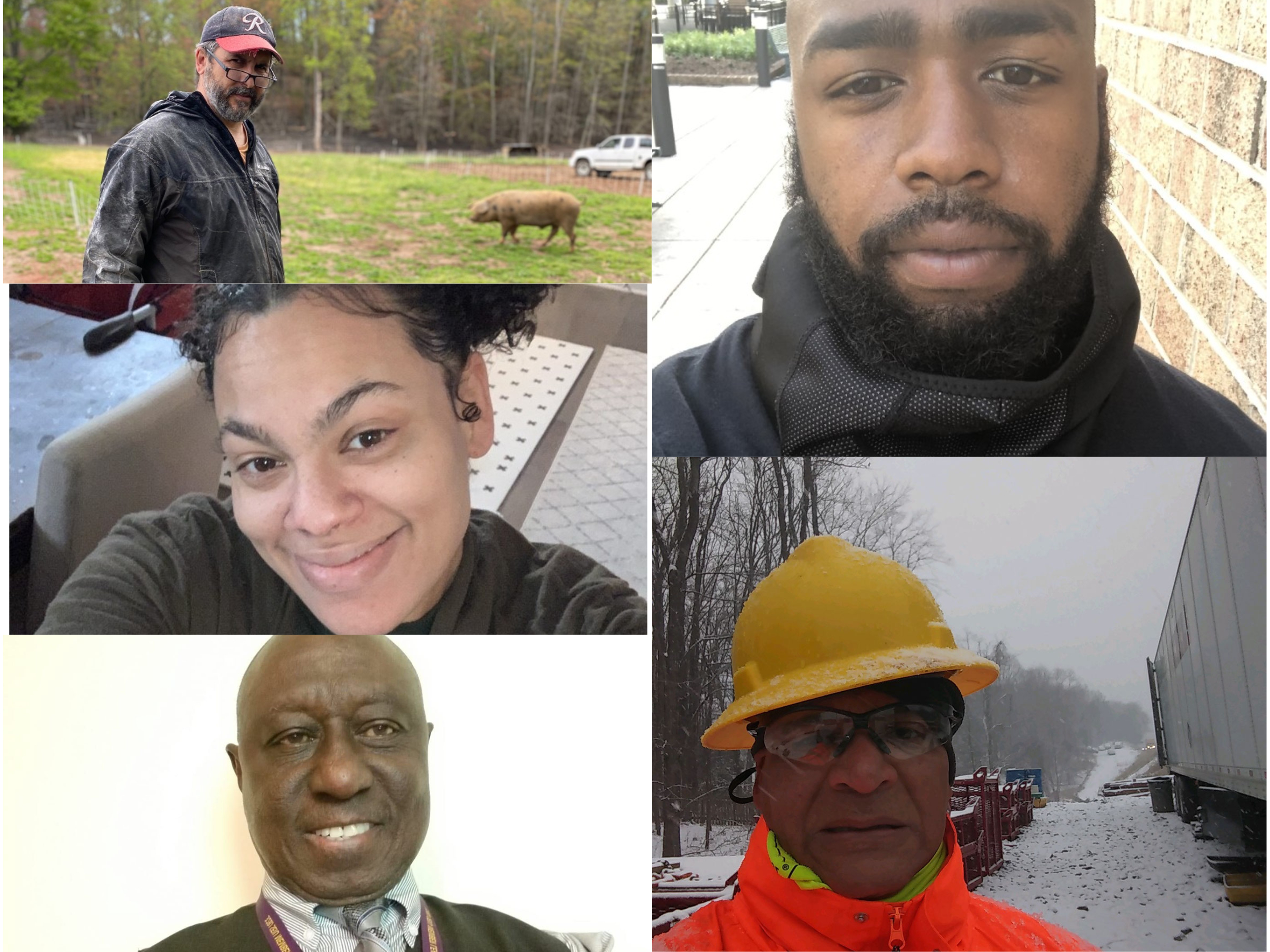
It’s been about nine months since the coronavirus pandemic ambushed our old lives, upending plans and routines and disrupting jobs across the D.C. region. Some local residents hunkered down in their homes, working in sweatpants and attending meetings via Zoom, while others lost their jobs entirely, left to navigate unemployment systems that were being stretched to the brink.
But plenty of locals continued to return to their jobs in person, day after day — risking infection and working through all of 2020’s drastic and unforeseen changes.
Early in the pandemic, DCist spoke to a range of these essential workers: a nanny, a grocery store employee, an airport wheelchair agent and more. Now, at the end of the year — as the D.C. region continues to shatter spring-time metrics and with the first rounds of vaccine distribution underway — we checked in with five of those workers to see what’s changed, and what they’re looking forward to in the next year.
The busy nanny who had to reckon with her nighttime thoughts
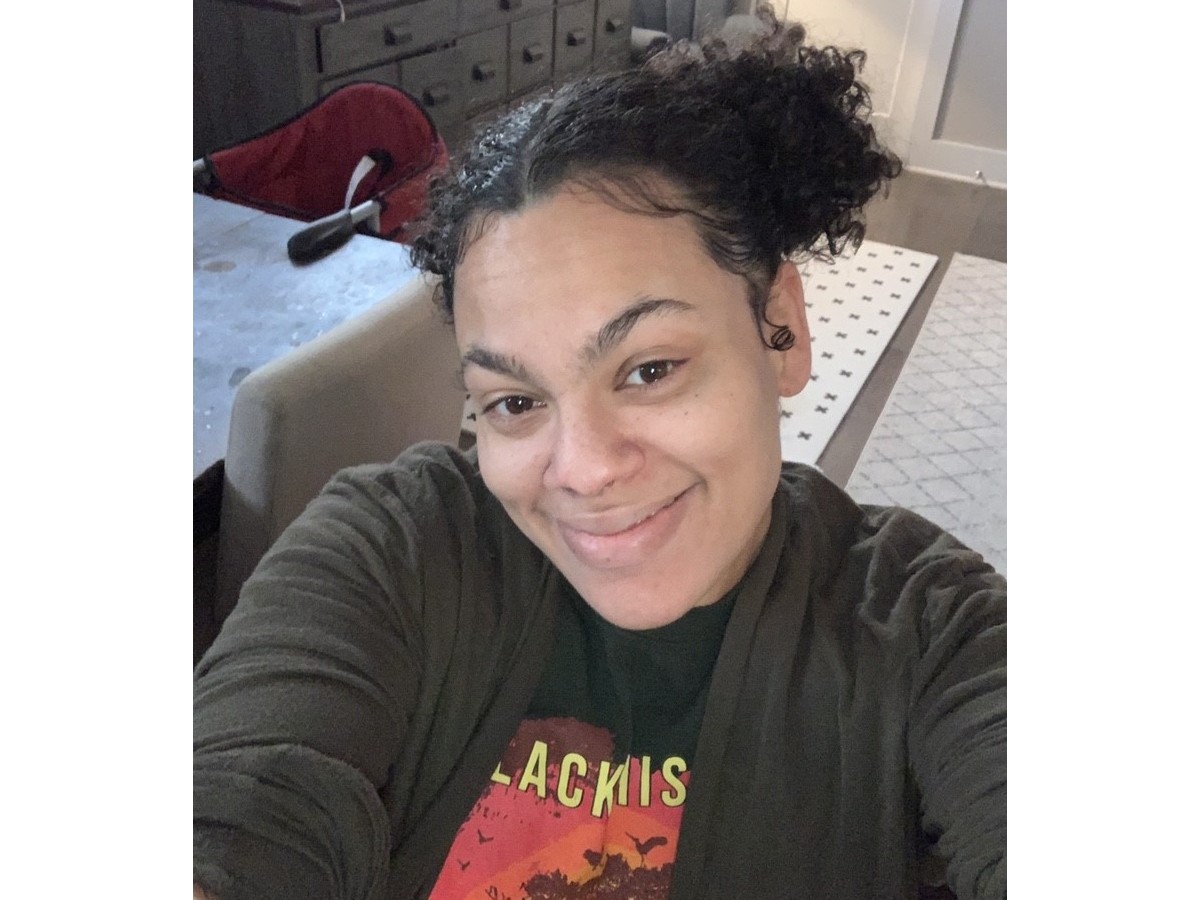
On a Saturday morning earlier this month, Tamara Barnes was savoring her final sips of coffee sweetened with cinnamon toast crunch coffee creamer. The creamer is a treat, one of the highlights of her day, and she was considering a second cup.
The extra caffeine would prove useful: “I’m a busy lady,” Barnes said with a laugh.
She’s not kidding. When DCist spoke to Barnes, a Capitol Hill nanny, in May, she had her hands full working for two families as a part of a nanny share, spending at least nine hours a day with the kids in one home.
But just four days after that first story published, Barnes’ busy life would be profoundly changed again.
In the midst of an already-chaotic summer, her boyfriend – whom she lives with, along with her 14-year-old son – was diagnosed with kidney cancer. Following the diagnosis on Mother’s Day, he underwent emergency surgery three weeks later, on her birthday. So in a way, she says, that day became “our birthday,” since the surgery gave him another chance at life.
“We went from 0 to a million. They were able to remove all of the cancer, and they saved his kidney,” she says. “He has seven scars now, and he’s still in recovery mode.”
Even as she and her family grappled with this new reality, Barnes did not stop caring for the kids in her nanny share, she says. “The whole time, I was working full-time. I never stopped.”
One of the families Barnes worked with has since relocated, meaning the nanny share had to open up to strangers in the middle of the pandemic. A new family ultimately joined the share, and Barnes says “they could have fallen from the heavens – they fit in perfectly.” Now she cares for two kids under age 2, and a newborn due in March will be added to the mix next spring or summer.
After initially stopping outings, Barnes has resumed taking her charges outside during the day. She only visits parks that she knows don’t get a lot of foot traffic, and she starts doing a count before she walks through the gate. If the number of people is too high, she aborts the outing, she says.
After work, Barnes heads home to check on how her son’s day of distance learning went. He’s thriving at school, she says, but misses his friends and activities. She can tell he’s “become desensitized, and not as vibrant or enthusiastic about a lot of things.”
Her boyfriend is doing well, and she says it’s been a “privilege to care for him.” While she acknowledges the diagnosis was probably scarier for him, it rattled her, too. “It showed me the real me,” she says. “I had to be courageous, to have integrity. COVID already had me terrified, but this was another head on the monster. I was afraid of all of it, but there wasn’t room for that — I had to fake it till I made it.”
And she says she would do it again. “I want to look back on my choices and feel proud of things I’ve done in the dark and in the light. Helping is my superpower,” she says.
Still, about a month ago, her stress reached its breaking point. “I went through what I would call my mental breakdown,” she says. Part of that was spurred by her commutes to work on the Metro trains or buses every day. “The tension is crazy. People are very aggressive,” she says. “I wasn’t in a good place. It wasn’t affecting my work performance or my performance as a mom, but I had to reckon with my own thoughts – mostly when I was trying to sleep, when I was alone.” Now, she says, she’s worked through it, and the panic “went back to its hiding place.”
Barnes’ goals for 2021 are straightforward: “As morbid as it sounds, I just hope I’m alive next year,” she says. “I hope that I’m not one of the people that catches COVID, and it ravages me, and I just can’t make it. I haven’t set my sights much higher than that.”
The airport wheelchair agent who can barely pay rent

The holidays are somber this year, like no other year that Kwaku Agyeman can recall. “It’s going to be a quiet one. We’re not entertaining, and we’re not going anywhere,” says the 63-year-old, who lives in Alexandria. “We’re just staying in our home.”
Agyeman is a part-time wheelchair agent at National Airport, a contract position he’s held for more than seven years. Prior to the pandemic, he worked 40 hours a week – but as travel slowed, his hours were cut to about 13 spread over two days, at $12.75 an hour. When he first spoke to DCist back in May, he worried that he and his family might soon face homelessness. He desperately hoped for some sort of financial help from the government.
More than six months later, that help – which did eventually arrive – has already been cut off. When DCist caught up with him in early December, Agyeman’s payments from the Paycheck Protection Program had just ended. “It’s now terrible,” he says. “You can’t pay anything.” His regular schedule at the airport has yet to resume, and he has no sense of when some normalcy will return.
His wife, a nurse’s aide, often works seven days a week, and her earnings help the couple make rent each month. “And then we struggle through how we eat. We don’t know how long we’ll be able to keep on like this,” he says.
Though he’s eligible because of his reduced hours at the airport, Agyeman has not been successful in collecting unemployment. “I just gave up,” he says. “You call, and you can’t get anybody to speak to. It’s difficult. I just let it go at that. Luckily around that time is when we started the PPP, and that helped supplement my lost income. That had been able to push me through until it ended.”
In 2021, Agyeman hopes the economy perks up enough that he can find a second job – anything that won’t interfere with his airport work. For now, he’s putting his energy into hoping that PPP payments are reinstated: “We’re praying that Joe Biden comes in and things might [improve] a little bit for us.”
And despite his circumstances, which he acknowledges are very difficult, he remains thankful. He and his wife haven’t contracted COVID-19, and the only two people they know who did have both recovered. “In that way, God has been gracious,” he says.
The former grocery store manager that’s moving in a new direction
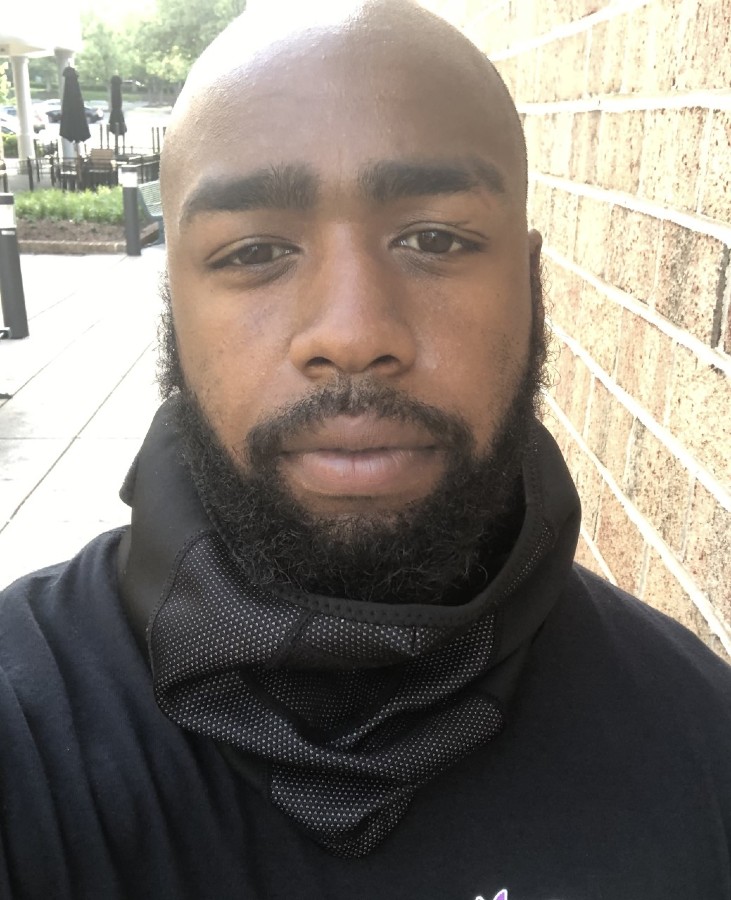
Donte Martin, 28, worked as a manager at a Giant grocery store in Silver Spring, Maryland, throughout most of the pandemic. When DCist spoke with him over the summer, Martin recounted the difficulties of enforcing coronavirus restrictions in the store and navigating conflicts with noncompliant customers.
Months later, Martin no longer works at Giant, which he says is a result of increasing tensions with managers that led to him getting fired in September. He now lives in Georgia with family, working in their real estate business.
The end of his employment at Giant has felt like a relief to Martin, he says. In the months after he spoke to DCist, he continued to have trouble with customers who declined to wear masks or adhere to social distancing guidelines, which added to his anxiety about potentially contracting COVID-19. What’s worse, according to Martin, is that some of his coworkers flouted their employers’ own policies as the months wore on.
“The customers were pretty much the same [as in the spring], some still had difficulties with wearing a mask,” Martin says. “But also, Giant became more lenient towards certain things. They’ll have meetings where everybody in the office is not masked. So it’s like we can have customers wear masks, but behind closed doors we’re not wearing masks.”
According to Giant’s mask policy, provided to DCist by a spokesperson for the company, masks are required to be worn as a part of the company’s dress code at all times, unless eating or drinking in the break room. Employees are also encouraged to use store-issued masks.
Giant declined to comment on the details of Martin’s firing, citing a company policy that prohibits disclosing information about former employees.
Martin also says it was sometimes burdensome to work at the store amid the summer’s social justice protests. Once, a customer took issue with his mask, which had words “I can’t breathe” printed on it.
“He said that was a hot button political issue, or something,” Martin says. “I never really realized that my race was a political issue. I might be at work, but as soon as I take my work uniform off, I’m just another Black guy. It was eye-opening that people looked at it as a political issue, when it’s a human issue.”
During his time with the grocery chain, Martin says he had been advocating to Giant’s corporate team for increasing employee support efforts — like offering mental health counseling — as they navigated both the pandemic and the stress of the protests. While he says his emails went unanswered, the experience motivated him to begin outreach in the communities of Atlanta, his former home.
He says he’s looking forward to one day opening a non-profit or youth recreation center.
“One of my big decisions [in moving to Georgia] was to try to get involved in the communities of Atlanta,” Martin says. “Everyone needs a coach, or words of affirmation. They need things to build them up.”
In the meantime, though, Martin isn’t expecting life to return to normal any time soon.
“2021 is probably going to be just as crazy [as 2020],” Martin says. “With the vaccine rollout, who knows how it’s going to transpire.”
The farmers market vendor who says things are looking up
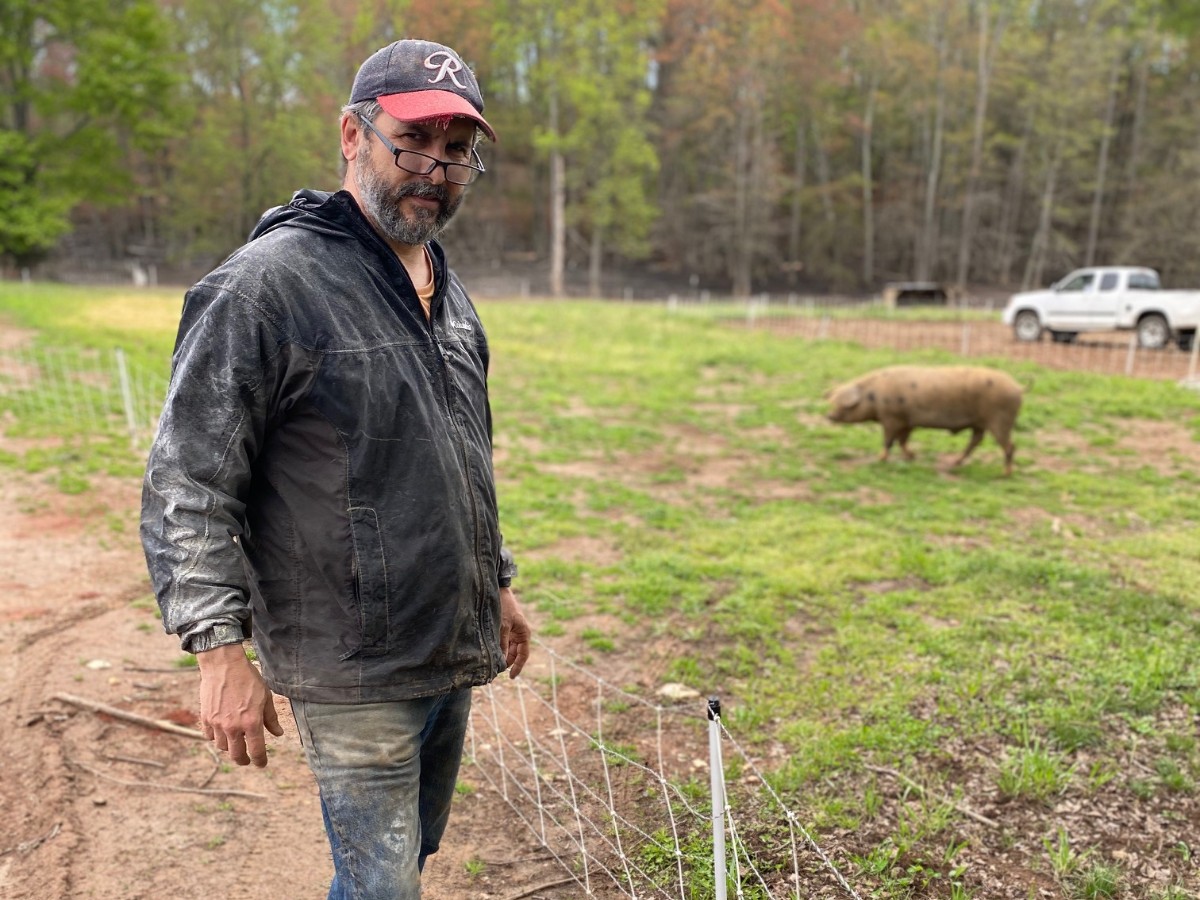
On a recent Friday afternoon, Robert Staples was on the road, heading away from his farm in Goochland County, Virginia, and toward Falls Church. There, he’d stop at a warehouse and prep for the next day, when he’d set up at the Columbia Heights Farmers Market.
Staples raises about 150 heritage pigs at Hog Haven Farm, and on weekends, he sells his goods at Washington-area farmers markets, including the H St. NE market and Old Town Farmers Market in Alexandria. When he first spoke to DCist back in May, he was frustrated with heightened regulations, like a ban on onsite food preparation.
Since then, “it’s improved pretty significantly,” he says. “More people are coming out, and for good reason. The natural buffer of the tent with the table in front, and all the precautions and social distancing and masks, make farmers markets pretty safe. I would say safer than restaurants and grocery stores.”
Staples says he’s only aware of one person in the farmers market vendor/management circles who contracted COVID-19, and that person had been exposed via a family member.
Regulations at the markets have relaxed, and Staples can prepare and sell hot food again, including his famous breakfast sandwiches. Masks are no longer required at the outdoor markets in Virginia, but it’s rare to see someone without one. “A couple of the markets, like Stafford and Fredericksburg, sent an email out and said ‘We think you probably should be wearing a mask, but you don’t technically have to anymore.’ Almost everybody continued to do it.”
As COVID-19 numbers spike in Washington, he worries that some restrictions, like the ban on hot food, may return. “I’m a little nervous they’re going to take steps back to more like it was early in the year. So I hope that doesn’t happen. I hope (the pandemic) doesn’t get any worse.”
Still, thanks in part to online sales – a new component of his business – Staples is close to where he was last year, profit-wise. “We’re not gonna be that much under what we were last year, and that’s saying a lot. Last year was our best year ever,” he says. “And it’s mainly because the customers are coming out and supporting the farmers markets, and I think they’re making a wise choice. If they’re gonna go out and shop for food, and get something to eat, the farmers market is high on their list of places to do it, rightfully so.”
The construction worker who hopes for a “brighter tomorrow”
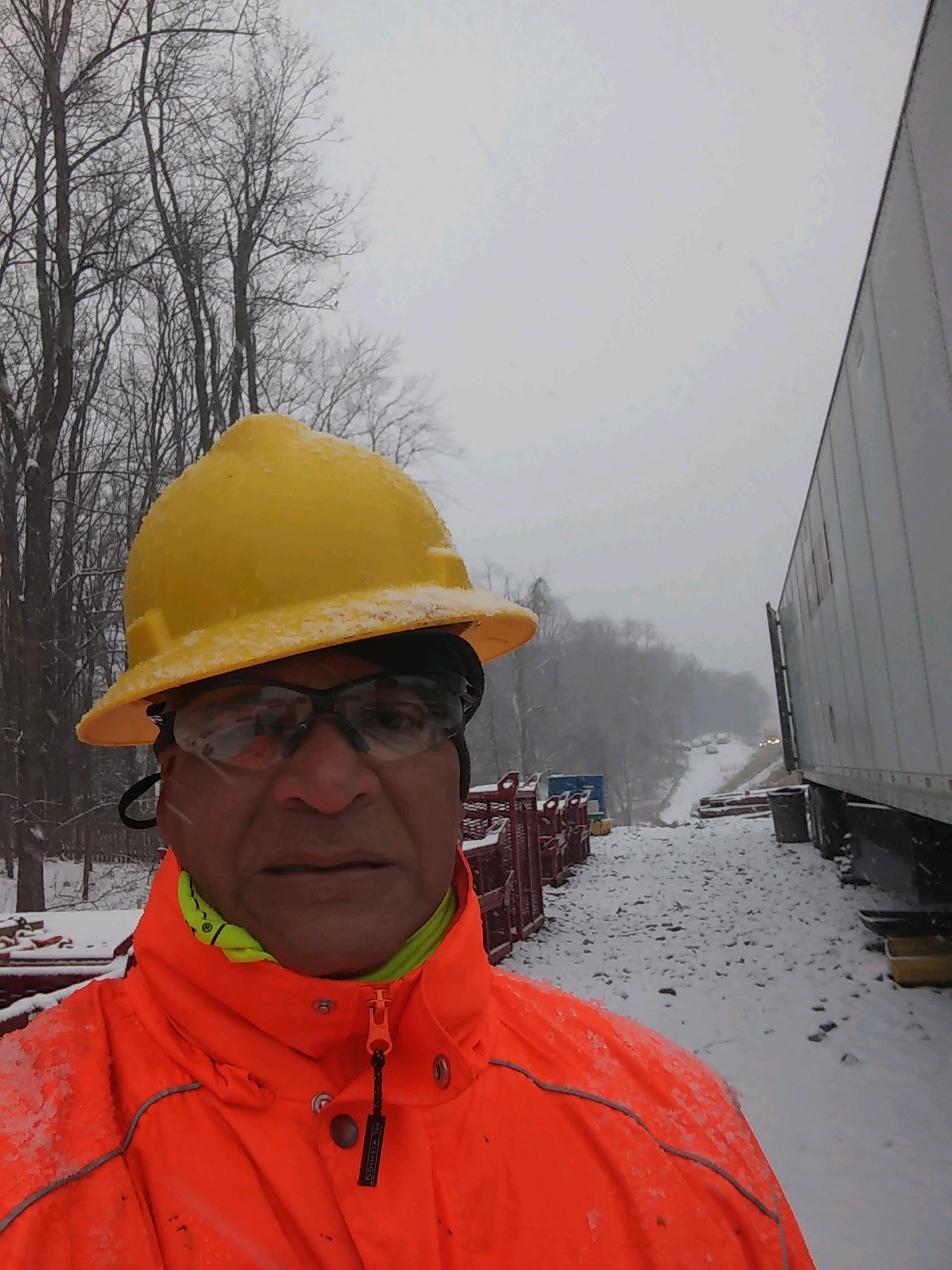
When DCist spoke to local construction worker Robbie White in May, he had only a few weeks left at his current job, working to build a 7-mile natural gas pipeline in Catlett, Va. For someone like White, who says staying occupied with work has been a saving grace during the pandemic, finding his next position was imperative.
“Waiting and hoping that [there was work] for me…was stressful because I didn’t want to sit around, I didn’t want to get bored,” says White, 58. “I’m not a workaholic, but I’m one to want to keep working and keep occupied.”
Fate panned out in White’s favor as he went on to secure work and avoided any gaps between projects. After the pipeline in Catlett wrapped, White moved briefly to a U.S. Pipeline construction project in Aldie, Va., before ending up at his current position with Michael’s Construction in October, working on a natural gas pipeline along Route 7 in Falls Church. He’s likely to stay with Michael’s for at least a year, he says, affording him some security into 2021.
“I’ve been told this [pipeline] could last a year or more,” White says. “It does ease things knowing that you’re going to work the next day, and you know you’re at least gonna keep yourself busy in that sense.”
Through all three positions, White says he’s stayed COVID-19 free (as have many of his on-site coworkers) by monitoring his symptoms, frequently washing his hands, and wearing a mask while on the job. His employers have been vigilant about safety precautions, according to White (temperature checks before starting a shift and hand-washing stations at each worksite), which has eased some of his worry.
White, who lives alone, says he’s managed his pandemic anxieties fairly well (using his few spare hours a week to run the trails near his home), and is thankful to have stayed employed. But after a year of losses — both big and small — White says he’s hopeful that vaccine distribution will usher in a “brighter tomorrow.” He’s not sure when he’ll get it, but when he does, he has a plan for who he’d like to see.
“I have a friend of mine I used to do yard work for, his wife is 74 and he’s like 73. I call them and check in on them from time to time, because I know they’re scared, and they’re hanging around the house,” White says. “I haven’t seen them in a while, and I always think ‘will everything ever get normal where I can go over and rake the yard and talk?’ It wasn’t so much about me doing work for him, but I talked to them.”