 Mikaela Lefrak
 Jordan Pascale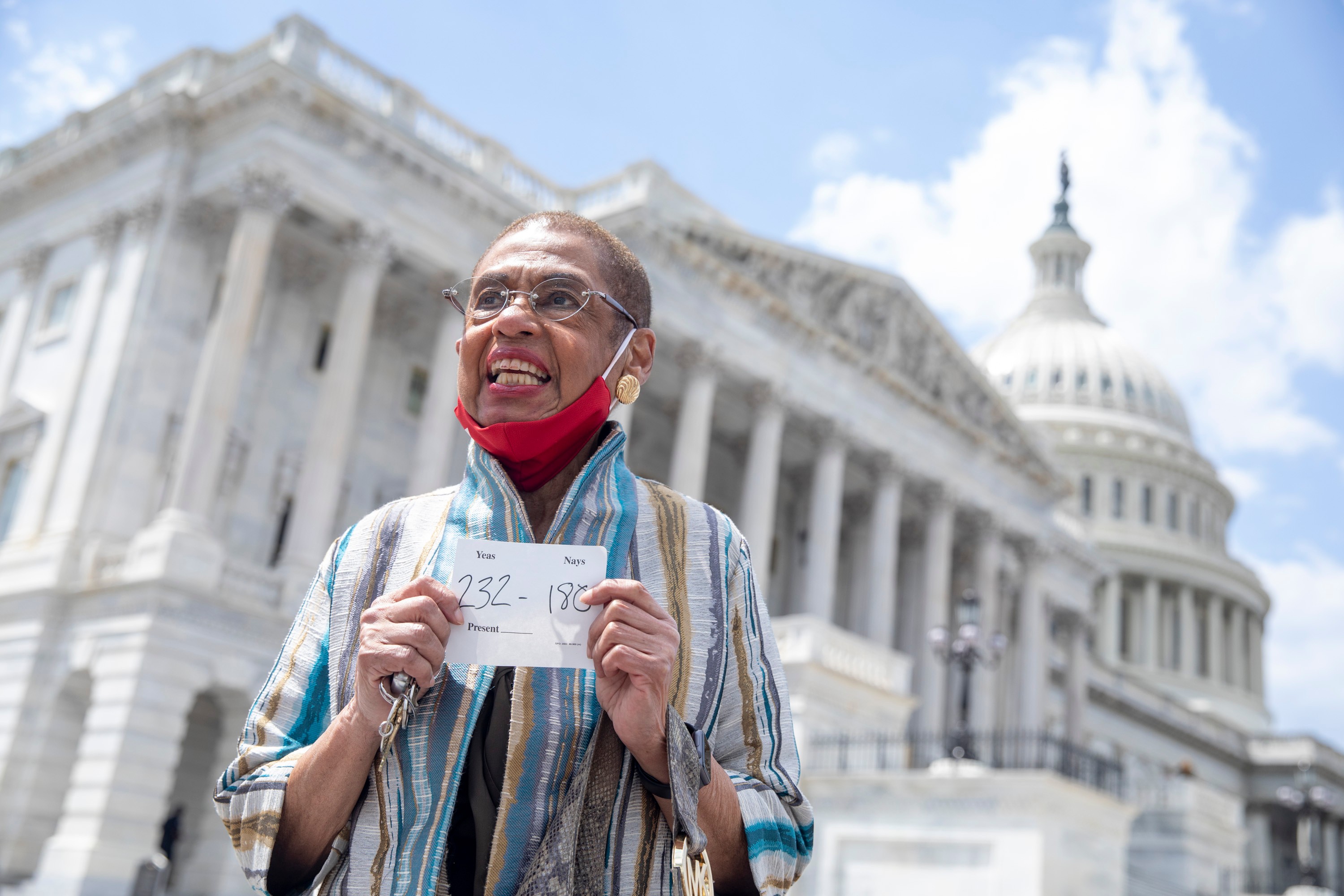
Members of the 117th Congress were sworn into office on Sunday. The start of a new Congress means the legislative push for D.C. statehood begins anew, but the path to statehood for the District will still face many hurdles.
D.C. Delegate Eleanor Holmes Norton (D) wasted no time in re-introducing the Washington, D.C. Admission Act, H.R. 51, on the first day of the new Congress.
“This is the most important bill I introduce each Congress, and it made historic strides in the last Congress,” Norton said in a statement. “I look forward to building on our historic momentum.”
D.C. Mayor Muriel Bowser also voiced her continued support for Norton’s bill.
“2020 was a historic year in our fight to become the 51st state with the first-ever House passage of a statehood bill,” Bowser said in a statement Sunday. “Now, we carry that momentum into 2021 with renewed hope and a president who knows our struggle and supports our cause.”
The bill passed the House for the first time last June with a 232-180 vote, marking the first time in history a chamber of Congress has ever passed such legislation. Since then, it has attracted more public support from Democratic politicians across the country.
This year, it looks as though the bill will easily pass the House again, as Democrats retained a narrow majority in the 2020 elections.
But the legislation will likely stall again in the Senate, just like it did last year. Control of the Senate will be decided based on Tuesday’s two runoff elections in Georgia. If Democrats win the two seats, the Senate will be evenly divided, with Vice President-elect Kamala Harris left to cast deciding votes. But 60 votes — not a simple majority — would be needed to overcome an expected Republican filibuster of a statehood bill.
Statehood advocacy organizations like D.C. Vote are therefore already looking to the next election cycle. In 2022, 34 Senate seats will be up for grabs, 13 currently held by Democrats and 21 by Republicans.
“The class of senators that is up for reelection in 2022 is more conducive to statehood-friendly members winning than is the class of 2020,” DC Vote executive director Bo Shuff told DCist in November.
In a statement about the reintroduction of H.R. 51, House Speaker Nancy Pelosi said, “The sacred right to vote and to have a voice in our government is a core pillar of our freedom. This Congress, Democrats will once again bring Congresswoman Norton’s crucial legislation to the Floor as we fight to secure access to the ballot box for Washingtonians, for historically disenfranchised communities and for all Americans – and we will not stop until that right is a reality for all.”
Norton said the Constitution does not establish any prerequisites for new states, but “Congress has generally considered three factors in admission decisions: resources and population, support for statehood and commitment to democracy.”
She laid out her argument this way: “D.C. pays more federal taxes per capita than any state and pays more federal taxes than 22 states. D.C.’s population of 712,000 is larger than those of two states, and the new state would be one of seven states with a population under one million. D.C.’s budget is larger than those of 12 states, and D.C.’s bond rating is higher than those of 35 states. D.C. has a higher per capita personal income and gross domestic product than any state. Eighty-six percent of D.C. residents voted for statehood in 2016.”
Reporting for this story comes from 51st, a six-part podcast series about Washingtonians’ fight for representation. Listen and subscribe here.