Margaret Barthel
 Jordan Pascale
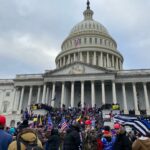
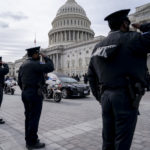
United States Capitol Police Chief Steven Sund, the head of the force that was overwhelmed by insurrectionists who took over the U.S. Capitol for nearly five hours, will resign effective January 16, according to the department.
House Sergeant of Arms Paul Irving, who sits on the oversight body for the United States Capitol Police, also resigned Thursday, per Politico. And incoming Senate Majority Leader Chuck Schumer said he will fire Senate Sergeant of Arms Mike Stenger, also a member of the Capitol Police Board, later this month, according to NPR. The two men are the top law enforcement officers for their respective houses of Congress.
The leadership shake-up comes amid a promised congressional investigation into the security failures that resulted in the breach by a right-wing mob on Wednesday.
In the chaos, one insurrectionist was shot by officers and later died, and three other people died of still-unexplained “medical emergencies.” The extremists ran rampant through the historic halls, destroying property, looting, vandalizing and trashing offices. More than fifty officers from the Capitol Police and MPD were injured in the action, according to a statement from Sund.
Capitol Police said they made 14 arrests, most of them for unlawful entry, while D.C. Police made 69 arrests on Wednesday night and Thursday morning.
House Appropriations Committee Chair Rosa DeLauro (D-CT) and House Legislative Branch Appropriations Committee Chairman Tim Ryan (D-OH) will lead the investigation into the extraordinary security breach, and it is slated to include hearings where lawmakers can question law enforcement leadership.
In a joint statement, DeLauro and Ryan said the break-in “raises serious questions” about law enforcement’s actions, or lack thereof.
“It is obvious that there was a severe systemic failure in securing the building’s perimeter and in the response once the building was breached,” they wrote. “To ensure the safety of those who work and visit here, we must get to the bottom of these breakdowns and prevent them from ever happening again.”
The Appropriations Committee has approved a more than $516 million budget for the Capitol Police, which is more than 2,300 people strong, in the next fiscal year.
The force’s response has come under heavy criticism from both national politicians and local leaders, who provided the only public information on Wednesday. It took the U.S. Capitol Police more than 12 hours to release any statement on the events.
When it did come, Sund’s statement provided few details about why it was unprepared for the mob break-in, despite open conversation of extremist violence on right-wing social media sites.
“The violent attack on the U.S. Capitol was unlike any I have ever experienced in my 30 years in law enforcement,” he wrote. “Maintaining public safety in an open environment – specifically for First Amendment activities – has long been a challenge. The USCP had a robust plan established to address anticipated First Amendment activities. But make no mistake – these mass riots were not First Amendment activities; they were criminal riotous behavior.” He promised a “thorough” internal review of the events.
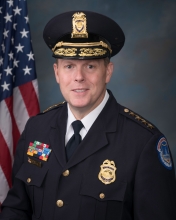
Sund joined the Capitol Police as an assistant chief in 2017 and was promoted to chief two years later, but he has been a fixture in law enforcement in D.C. for decades.
He spent 25 years at D.C.’s Metropolitan Police Department, starting his career as a patrol officer in the Sixth District, which covers parts of Wards 7 and 8. By 2006, MPD had promoted him to captain and assigned him to the Office of Homeland Security and Counter Terrorism, according to his official biography.
In 2011, he was promoted to the rank of Commander of the Special Operations Division, in which he oversaw the Emergency Response Team, Special Events and Dignitary Protection Branch, Automated Traffic Enforcement and the Domestic Security Operations Unit.
Sund had his hand in numerous Inauguration plans over the past two decades. He was also the on-scene incident commander during the 2009 shooting at the National Holocaust Museum, the 2012 shooting at the Family Research Council, and the 2013 active shooter incident at the Washington Navy Yard.
Irving, too, has extensive law enforcement experience in D.C., according to his official bio. He worked for the Secret Service, including the presidential protective division under George H.W. Bush and Bill Clinton. Later, he became the Secret Service’s Assistant Director for Administration, a post which oversaw the agency’s strategic plan and $1.6 billion budget.
Stenger became Senate Sergeant at Arms in 2018, having served in protective roles in the office for seven years. Before that, he had a 35-year career with the U.S. Secret Service, according to his biography.