 Jordan Pascale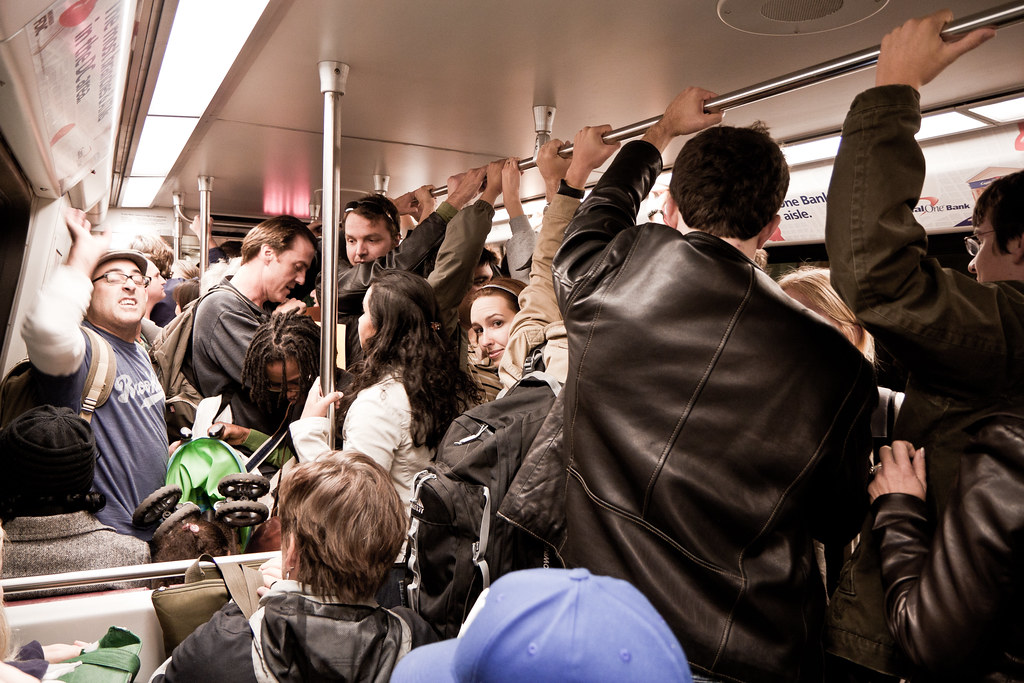
Metro is getting $600,000 from the Federal Transit Agency to test and evaluate the effectiveness of enhanced air filtration and purification technologies on its subway cars. The goal is to make trains safer during the pandemic and restore public confidence in transit.
Metro will use Ultraviolet-C light to kill coronavirus particles in the train HVAC units. The Food and Drug Administration says UVC lamps have been used for decades to reduce the spread of bacteria and are often called “germicidal” lamps. The FDA says UVC radiation can destroy the outer coating of the SARS-Coronavirus, which is a different virus from the current SARS-CoV-2 virus. But, the FDA says those same lights may also be effective at inactivating the current coronavirus, though there is “limited published data about the wavelength, dose, and duration of UVC radiation required to inactivate the SARS-CoV-2 virus.”
Metro will also use MERV-13 air filters, which can trap smaller particles, including viruses. The EPA says better filters alone are not enough to protect people from COVID-19, but “when used along with other best practices recommended by the CDC, an upgraded HVAC filter can be part of a plan to protect yourself.”
The new technology will be put on several dozen railcars soon. Engineering teams are working to design the system before installing it. The entire pilot will stretch 14-months. Funding comes from the Federal Transit Administration’s COVID-19 Research Demonstration Program.
Metro says if early results are found to have significant positive impacts, Metro may explore broader fleet-wide implementation in advance of completing the study. It would also help fight other pathogens after the pandemic is over. Several studies have shown that transit is not a large vector for the coronavirus.
“We believe these low-cost, replicable technologies will reduce the circulation of Covid-19 particles, mitigate transmission risk onboard railcars, and help to increase both public confidence and ridership,” Metro spokesperson Ian Jannetta said in an email.
The transit agency hopes these technologies, paired with other steps its taken, will reduce the risk of riding public transit. Metro is requiring (but not heavily enforcing) mask use, cleaning stations, trains and buses after a reported case, and is increasing the number of buses and trains to try to stop crowding and create more room for social distancing.
But unlike other transit agencies, Metro hasn’t particularly focused on the primary way the coronavirus travels — through the air — in its communication with the public about the virus.
The CDC says “the primary and most important mode of transmission for COVID-19 is through close contact from person-to-person. Based on data from lab studies on COVID-19 and what we know about similar respiratory diseases, it may be possible that a person can get COVID-19 by touching a surface or object that has the virus on it and then touching their own mouth, nose, or possibly their eyes, but this isn’t thought to be the main way the virus spreads.”
It recommends mask-wearing, social-distancing, only using transit for essential trips and washing your hands after riding.
Metro says its railcars circulate new, filtered air every three minutes. Figures for buses were unavailable.
Rider Advisory Council Chair Andrew Kierig applauded the move but pointed out several other transit agencies have been many months ahead of WMATA in providing masks and hand sanitizer and highlighting information about their train and bus air circulation.
San Francisco’s BART published detailed information in August.
Let's talk air flow in BART cars:
BART cars filter & replace inside air about every 70 seconds. This was the case before COVID-19 and is still now. Air is filtered more effectively than in an office or grocery store.
We've also begun new pilot tests for better filtration. pic.twitter.com/Wpw87HC49m
— BART (@SFBART) August 13, 2020
Portland’s Tri-Met did so in October.
Airflow matters right now – good ventilation can be key for preventing the spread of COVID-19.
Fortunately, our buses and trains have excellent ventilation: https://t.co/8iGWR0qoHZ
Here's how it works on MAX 👇 pic.twitter.com/BrLZJR0prT
— TriMet (@trimet) October 15, 2020
Metro hasn’t released detailed information to the public about its airflow.
More than 900 Metro workers have contracted the virus and four have died, including the first bus operator, who died in mid-January 2020. Metro does not track the number of cases in riders.
Other Regional Groups Get Grants, Too
Montgomery County’s Ride On transit system also got $450,000 from the federal government to capture real-time automated passenger counts that will inform customers about available capacity.
It will also use the federal funding to provide trip-planning information about alternate transportation routes and allow the county’s bus control center to better track and manage crowding.
Maryland congressional leaders, including Senators Chris Van Hollen and Ben Cardin and Congressmen Steny H. Hoyer, John Sarbanes, Anthony G. Brown, Jamie Raskin, and David Trone applauded the grants.
“This new infusion of federal funding will help WMATA and Montgomery County reduce the risk of COVID-19 transmission on public transportation systems and get riders safely to their destinations,” the lawmakers said in a statement. “We will keep working to secure federal funding that invests in Maryland’s transit systems and improves their ability to deliver safe and reliable service.”
In Virginia, the Department of Rail and Public Transportation will receive nearly $250,000 to develop a “comprehensive collection of resources to help transit providers adapt to a ‘new normal.’”
The toolkit, given to transit agencies across the state, will include a strategy handbook to address employee and passenger safety, long-term sanitation strategies, increasing service frequencies, reducing vehicle capacity, implementing multi-door boarding, deploying contactless payment solutions equitably and zero-fare policies.
DRPT officials say some transit providers lack the resources or technical capacity to conduct comprehensive research on COVID-19 recovery strategies. Others may need assistance creating professional marketing and messaging campaigns to win back ridership during the pandemic.
This story was updated with more information from WMATA.