Jacob Fenston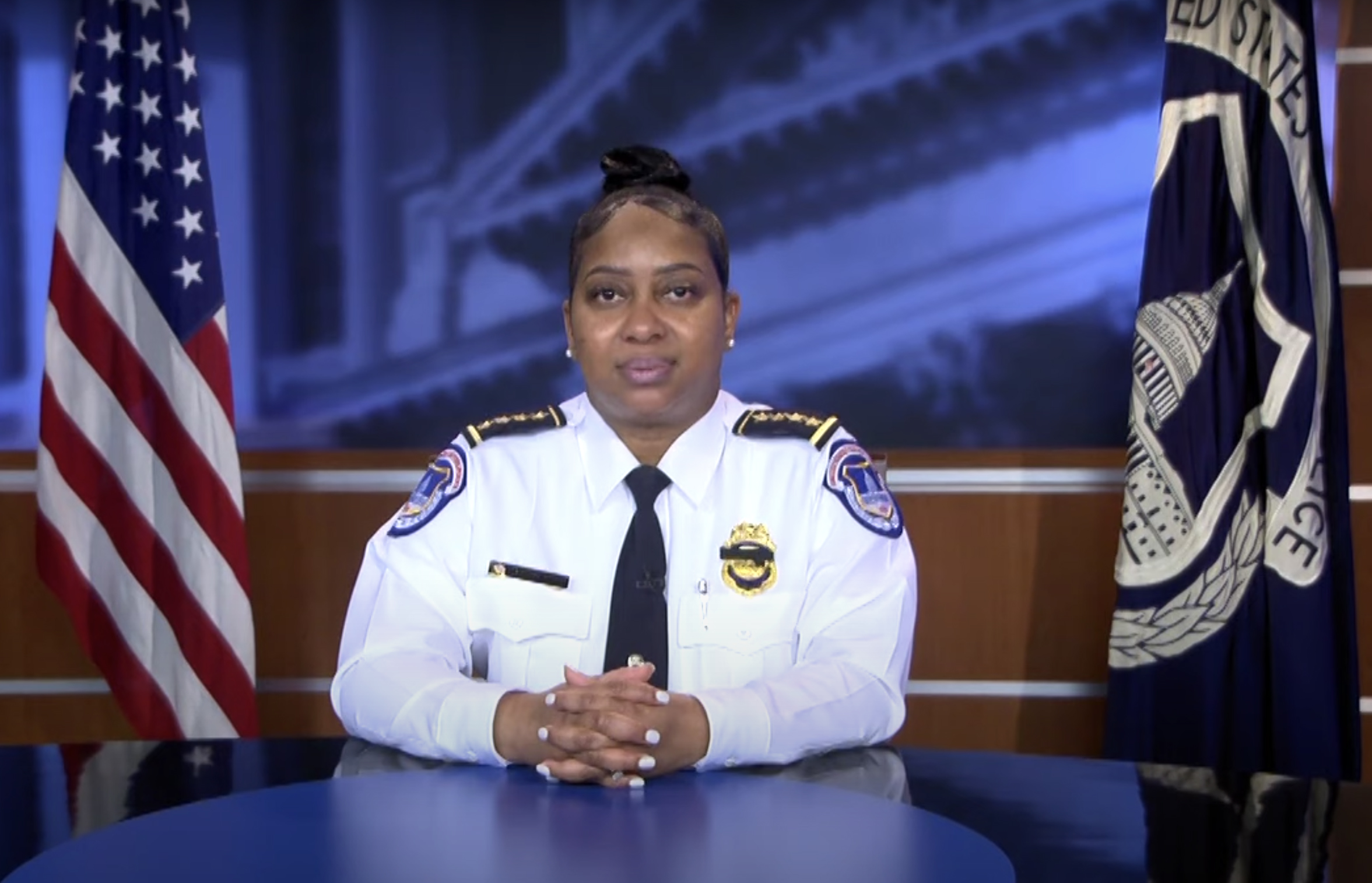
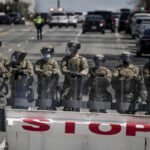
Saturday marks one month since a violent mob stormed the U.S. Capitol in an insurrection encouraged by President Trump. Since then, U.S. Capitol Police leaders have come under fire for their lack of preparation, despite warnings ahead of the attack. The then-chief stepped down two days after the insurrection, replaced by 20-year veteran of the force, Yogananda Pittman, who now serves as acting chief.
Since then, Pittman has testified before Congress, but has otherwise kept a low profile, and has not held a press conference or otherwise answered questions about the Jan. 6 events and aftermath.
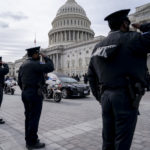
On Friday, Pittman released a video statement, noting that one month has passed since the insurrection. She began by honoring the two officers who lost their lives following the attack, Officer Howard Liebengood, who died by suicide, and Officer Brian Sicknick, who died from injuries sustained while defending the Capitol. On Feb. 2 and 3, Sicknick lay in honor in the Capitol rotunda.
“We will carry these heroes and their families with us for the rest of our careers. Their deaths will not be in vain,” Pittman said in the video statement.
According to Pittman, 125 Capitol Police officers were assaulted on Jan. 6, and 70 sustained injuries.
“The damage extends beyond their physical injuries. From a mental health perspective, many are understandably struggling,” Pittman said, adding that the department is offering 24/7 counseling services to help officers process the trauma they experienced.
Pittman’s numbers differ from those previously cited by police union officials. Gus Papathanasiou, chairman of the union, said that 140 officers were injured, many seriously, according to The Washington Post.
Pittman testified at a closed-door congressional hearing on Jan. 26, and acknowledged that Capitol Police knew in advance that Jan. 6 could turn violent.
“We knew that militia groups and white supremacists organizations would be attending. We also knew that some of these participants were intending to bring firearms and other weapons to the event. We knew that there was a strong potential for violence and that Congress was the target,” Pittman testified.
In her video statement, Pittman described some of the changes that have been instituted in the past month, such as beefing up emergency training for officers. The department is also conducting an internal review, including “an extensive physical security assessment,” of the Capitol.
“We will be making significant changes to our operations, policies and procedures based on the findings,” Pittman said.
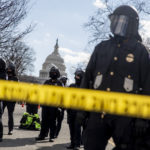
Previously, she has indicated such changes could include a permanent fence around the seat of the national legislature — something many local officials and residents would not welcome.
“In light of recent events, I can unequivocally say that vast improvements to the physical security infrastructure must be made to include permanent fencing, and the availability of ready, back-up forces in close proximity to the Capitol,” Pittman said in a statement released Jan. 28.
In her statement Friday, Pittman said one of her top priorities was to make sure the events of Jan. 6 are never repeated.
“Having been with the department for 20 years, I say with absolute certainty that the Jan. 6 attack forever changed this department,” said Pittman.
There are more than two dozen police agencies operating in the District of Columbia, most of them federal, without the same local level of local oversight and accountability of most police departments. The U.S. Capitol Police, in particular, have been criticized for years for a lack of transparency. The department has more than 2,300 sworn officers, and a budget of roughly half a billion dollars. That force, charged with protecting 16.5 acres, has more officers than the Atlanta Police Department, which patrols an area 747 times larger.
The National Suicide Prevention Lifeline is a hotline for individuals in crisis or for those looking to help someone else. To speak with a certified listener, call 1-800-273-8255.